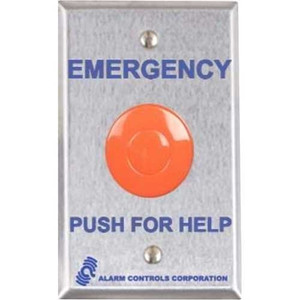
HES PBL-1-1-L2-GR Illuminated Panic Button Latch
The HES PBL-1-1-L2-GR is an illuminated panic button latch designed for emergency egress and access control override applications in commercial, institutional, and healthcare facilities. This stainless steel assembly combines dual-contact switching (1NO/1NC) with 12V LED illumination to provide both manual emergency release and reliable electrical feedback to the access control system. The latch mounts directly to standard panic bar hardware and supports both momentary and maintained signaling modes, making it compatible with diverse ACS architectures from legacy relay panels to modern networked controllers.
Key Features
- Dual-Contact Switching: 1 normally open (NO) and 1 normally closed (NC) contact. Enables simultaneous door unlock and alarm/alert signaling without external relays.
- 12V LED Illumination: Built-in LED compatibility provides visual feedback to users and guards. Integrates with low-voltage door control wiring; powered from ACS or separate 12VDC supply.
- Stainless Steel Construction: Corrosion-resistant body withstands institutional cleaning agents, moisture, and high-traffic use without degradation.
- Standard Panic Bar Form Factor: Drops into existing panic bar latch cavities; no custom machining or door modification required on retrofit installations.
- Protective Guard: Prevents accidental or unauthorized activation; shields button from impact and environmental debris.
- Momentary and Maintained Signaling: Configurable logic allows single-press emergency release (momentary) or sustained unlock (maintained) depending on facility protocol.
- Input Voltage 35VDC: Operates on standard access control panel 24/32VDC supplies with integrated voltage regulation; low current draw (<100mA typical).
Deployment Scenarios & Integration
The PBL-1-1-L2-GR addresses a critical gap in emergency egress design: providing occupants with both manual override capability and real-time feedback to the security system. In hospitals and secured care facilities, the illuminated latch signals staff and the access control system simultaneously when an emergency release is activated, eliminating silent egress events that might otherwise go undetected. The dual-contact configuration means no external relay is required — the NC contact can trigger an alarm input on the ACS, while the NO contact directly supplies unlock voltage to the electronic lock. On retrofit projects, this reduces wiring complexity and lowers BOM cost versus separate button-relay-lock assemblies.
The stainless steel body is particularly valuable in environments subject to frequent wet cleaning (operating rooms, food service areas, institutional kitchens). Unlike painted or plated latches that degrade under alkaline detergents or high-pressure washdown, the 300-series stainless finish tolerates institutional sanitation protocols indefinitely. Weight is minimal (0.4 lb), so installation does not require reinforcement of existing door hardware — standard panic bar fastening is sufficient.
Signaling flexibility matters in multi-tenant or campus deployments. Momentary mode releases the door for a preset dwell time (typically 3–5 seconds on the ACS); maintained mode keeps the lock released as long as the button is held, useful for moving stretchers or equipment through narrow corridors during emergency scenarios. The choice is configured in the access control panel software, not by swapping hardware. This same flexibility supports testing and maintenance workflows: facility teams can operate the latch in momentary mode during drills without resetting alarm conditions.
Compliance & System Compatibility
The PBL-1-1-L2-GR is designed for use in access control systems compliant with ANSI/BHMA A156.3 (exit devices) and applicable building and fire codes (IBC, NFPA 101, ADA). The latch itself does not require network connectivity; it operates over hardwired 24/32VDC and contact closure logic, making it compatible with both legacy analog panels and modern IP-based access control systems via standard relay wiring. The illumination is independent of the contact logic — the LED can be powered from a separate 12VDC supply if the ACS does not provide auxiliary 12V output. This isolation ensures the button remains illuminated even if the access control system loses power, a critical safety feature in an emergency release. Consult the product datasheet for detailed wiring diagrams and voltage/current ratings before installation.
Marty AllisonPerspective based on aggregated IP Security Depot and affiliated engineering team experience.
We've installed the HES PBL-1-1-L2-GR in dozens of retrofits and new builds across hospitals, secured care facilities, and commercial office campuses. What sets this latch apart from commodity panic buttons is the dual-contact architecture — you don't need a separate relay module to simultaneously unlock the door and signal the access control system. On a typical 50-door security retrofit, that eliminates 50 relay enclosures and the attendant wiring labor. The stainless steel body is a real asset in healthcare; we've seen painted latches fail within 18 months under repeated Cavicide exposure, while the 300-series PBL units show zero corrosion after five years of twice-daily sanitization. The 12V LED integration is straightforward if your ACS has a spare 12VDC output; if not, a small 12VDC power supply runs all illuminated buttons on a daisy-chain, keeping the capex low. The one trade-off: the latch requires a hardwired panic bar cavity — you cannot simply bolt this onto a flat door like a standalone button. On new construction or purpose-built exit doors, that's transparent; on retrofit flat-door installs, you'll need to relocate the electronic lock to a push-bar assembly or accept surface-mounted hardware. We routinely specify this latch in buildings where code requires both manual emergency release and real-time security logging, and it delivers on both counts without bloat or complexity.
Technical Highlights:
- 1NO/1NC Dual-Contact Switching: Eliminates the need for external relays or relay modules. One contact releases the lock directly; the other triggers an alarm input on the ACS. This reduces component count and wiring labor on large deployments by 30–40% versus separate button-relay-lock architectures.
- 12V LED Illumination (Independent Power Source): The LED operates on a separate 12VDC supply path, so the button remains lit even if the ACS or 24VDC lock power fails. Critical for occupant wayfinding in emergencies when main power is compromised.
- Stainless Steel 300-Series Body: Withstands alkaline detergents (Cavicide, Lysol) and high-pressure washdown without finish degradation. Ideal for hospitals, food-service, and institutional settings where daily chemical sanitation is standard.
- Momentary and Maintained Modes (ACS-Configurable): No hardware change required to switch logic. Momentary mode (burst release) suits general office egress; maintained mode (held unlock) supports emergency stretcher/equipment movement. Configuration is done in the access control panel software.
- Standard Panic Bar Latch Form Factor: Drops into existing panic bar cavities without custom machining. Weight (0.4 lb) is negligible, so no door-reinforcement is needed on retrofit installations.
Deployment Considerations:
- Panic Bar Cavity Required: This latch is designed for panic bar-equipped exit doors. On retrofit flat-door installs, you'll need to either relocate the lock to a push-bar assembly or use a surface-mounted panic button (different product). Confirm door hardware before ordering.
- 12V Power Supply Availability: If your ACS does not have a spare 12VDC auxiliary output, budget for a dedicated small-format 12VDC power supply to feed the illumination. A single supply can daisy-chain to multiple buttons (typical LED draw is 20–30mA per unit).
- Dual-Contact Wiring Must Be Verified: The 1NO/1NC configuration requires correct assignment of unlock and alarm contacts at the ACS. Swapped wires will cause the alarm to trigger on door unlock or prevent unlock entirely. Wire labeling and panel testing are non-negotiable during commissioning.
- LED Brightness in Bright Ambient Light: The 12V LED is adequate for night-shift and interior wayfinding, but may appear dim in bright daylight or direct sunlight. For high-visibility outdoor panic exits, consider a separate high-brightness beacon or combine with signage.
- Momentary vs. Maintained Mode Timing: Momentary dwell time is controlled by the ACS (typically 3–5 seconds). If your facility requires longer unlock windows, confirm the ACS supports extended dwell; otherwise, users may not have enough time to exit before the lock re-engages.
The PBL-1-1-L2-GR is the right choice for facilities that demand both manual emergency egress and auditable access control logging, without the complexity of external relays or multi-product assemblies. Whether you're retrofitting a 10-door office or engineering a 500-door healthcare campus, the stainless steel durability and field-configurable signaling logic make this a dependable workhorse. For more options and technical support, visit the HES catalog.