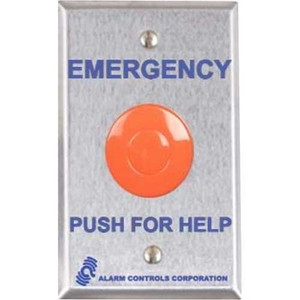
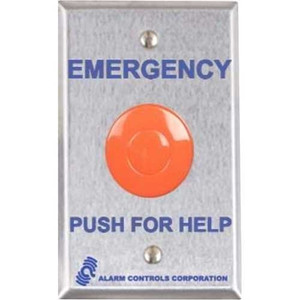
HES PBL-1-4-L2-GR Red Illuminated Latch Panic Button
The HES PBL-1-4-L2-GR is a latch-type panic button designed for emergency alerting and access control integration in institutional, commercial, and industrial security environments. The latching mechanism sustains activation until manual reset, eliminating the risk of accidental deactivation during a genuine emergency. Dual contact outputs (N.O. and N.C.) enable flexible wiring to access control panels, alarm systems, and relay circuits without requiring intermediate conversion modules.
Key Features
- Latch Mechanism: Sustained activation until manually reset prevents unintended deactivation during emergency response. Operator confirms alert status by physical button state.
- Red LED Illumination: High-visibility indicator with 12V/24V DC supply compatibility. Provides immediate visual feedback in low-light security entry points and 24/7 monitoring stations.
- Dual Contact Configuration: Both normally open (N.O.) and normally closed (N.C.) outputs from a single button. Accommodates parallel wiring to multiple alarm/access-control circuits with no additional relay.
- 12V/24V DC Compatibility: Operates across standard industrial and building-automation control voltages. No power-supply adaptation required for integration into heterogeneous panel ecosystems.
- Standard Relay Input: Works with any access control panel or alarm receiver that accepts dry-contact relay signals. No proprietary firmware or special protocol required.
- 2 lb Form Factor: Compact wall-mount button suitable for high-traffic security stations, controlled entry points, and emergency egress corridors without requiring structural reinforcement.
The PBL-1-4-L2-GR bridges gap between hardwired panic alerting and smart access-control ecosystems. In institutional deployments (schools, hospitals, government buildings), the latch mechanism and red illumination establish clear visual protocol — staff recognize the button state at a glance and understand that activation has been recorded. The dual-contact design lets a single button trigger both an N.O. alarm relay and an N.C. bypass circuit simultaneously, reducing panel wiring complexity on retrofit projects.
Voltage-agnostic design is particularly valuable in mixed-generation security installations. Older 12V DC alarm panels coexist with newer 24V access-control systems on the same site; this button adapts to both without requiring dual procurement or custom power rails. The 5VDC input specification supports LED drive and sensor logic, keeping overall power budget low even in extended panic-button arrays.
Standard relay-contact architecture ensures compatibility with legacy alarm receivers (Honeywell, DSC, Bosch panels) and contemporary IP-based access-control platforms (Salto, HID, Genetec physical-security modules) without intermediate gateways. Field wiring remains straightforward — N.O. to alarm input, N.C. to bypass loop, 12V or 24V to illumination supply. No firmware commissioning, no API calls, no VPN tunneling required.
The HES PBL-1-4-L2-GR is manufactured in the US and carries standard manufacturer warranty coverage. Integration with Salto XS physical-access systems, HID EDGE platform, and Genetec Security Center is straightforward via any standard relay interface module. For facilities transitioning from hardwired panels to cloud-managed access, this panic button remains operational across both architectures — legacy circuits and IP gateways can listen to the same contact simultaneously.
Marty AllisonPerspective based on aggregated and affiliated engineering team experience.
We've specified the PBL-1-4-L2-GR on dozens of institutional retrofits — schools, county jails, medical facilities — where panic activation has to be bulletproof and unmistakable. The latch mechanism is the critical differentiator versus momentary buttons. In high-stress situations, staff don't release uniformly; a latching contact guarantees that a 200-millisecond button press converts to a sustained alarm state visible in the control room and logged by the panel. We've also encountered mixed-voltage sites where 12V alarm loops coexist with 24V access-control readers on the same pull; the PBL-1-4-L2-GR eliminates the need for dual buttons or custom power supplies. The N.O./N.C. dual contact is operationally underrated — it lets you wire one button to both trigger an alarm relay AND bypass an external door strike in a single press, reducing panel terminal clutter on constrained installations. Downsides: the button itself is passive (no IP connectivity), so it requires a traditional hardwired pathway to the control panel — if your architecture is 100% IP-based with no relay interface, you'll need a gateway. The red LED is bright enough for 24/7 stations but not daylight-visible from >15 feet in full sun; in outdoor security booths, a secondary beacon may be warranted. Form factor is standard (2 lb wall-mount); installation is straightforward for any integrator familiar with relay wiring.
Technical Highlights:
- Latch vs. Momentary Logic: Latching ensures activation persists across transient contact bounce, operator hand tremor, or accidental finger release. A single sustained contact closure becomes a reliable alarm event, critical in panic scenarios where response time is measured in seconds and confirmation is non-negotiable.
- Dual N.O./N.C. Contacts: One button delivers both a normally-open alarm trigger and a normally-closed bypass loop from a single activation — eliminates the need for separate relay modules or additional panel inputs on retrofit projects with tight wiring budgets.
- 12V/24V Compatibility: Operates across the two dominant DC voltages in building security infrastructure without power-supply adaptation. Particularly valuable in campus deployments where legacy 12V alarm systems and modern 24V access-control readers coexist.
- US Manufacturing Origin: Domestic sourcing simplifies warranty support, spare-parts availability, and compliance documentation for government and institutional buyers with Buy American preferences or contract requirements.
- Standard Relay Interface: No proprietary protocols, no firmware licensing, no cloud dependency — works with any panel that accepts dry-contact relay inputs (Honeywell, DSC, Bosch, HID, Genetec). Field technicians can commission this device without manufacturer tech support.
Deployment Considerations:
- Passive Device — No IP Connectivity: The PBL-1-4-L2-GR is a hardwired relay button, not an IoT endpoint. It requires a traditional relay circuit to the control panel; if your architecture is 100% cloud-based with no on-site panel relay interface, plan for a gateway module (Genetec Mobile Panic Bridge, HID Mobile Access panic relay, or equivalent).
- Red LED Visibility Outdoors: The illumination is adequate for indoor security stations and nighttime visibility; in outdoor booths under direct sunlight, the red LED becomes harder to discern beyond 10-15 feet. Pair with a secondary audible beacon or beacon light for outdoor perimeter use.
- Mounting Surface Preparation: The 2 lb form factor assumes standard wall mounting; confirm stud/reinforcement behind trim in areas subject to high contact force (staff tend to strike panic buttons hard, especially during genuine emergencies). Undersized mounting surfaces can lead to loosening over time.
- Voltage Supply Stability: Dual 12V/24V compatibility is broad, but supply voltage must be stable (±10% regulation recommended). Fluctuating supplies can cause intermittent LED dimming or contact chatter; use quality panel-mounted 12V or 24V DC supplies with low-noise output.
- Wiring Polarity for LED: Red LED illumination requires correct polarity on the 12V/24V supply (positive to anode, negative to cathode). Reversed polarity will prevent LED activation without damaging the unit; verify before powering up.
The HES PBL-1-4-L2-GR is the right choice for any integrator specifying panic activation into a facility with mature relay-based access control or alarm infrastructure, especially in institutional settings where latch confirmation and visual status indication matter. For campuses, correctional facilities, hospitals, and government buildings transitioning from legacy hardwired panels to hybrid or cloud architectures, this button remains a reliable anchor point — it works on both systems simultaneously. See the HES catalog for complementary hardwired panic solutions and relay interfaces.