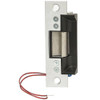
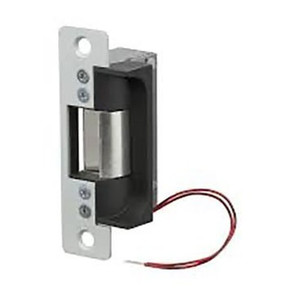
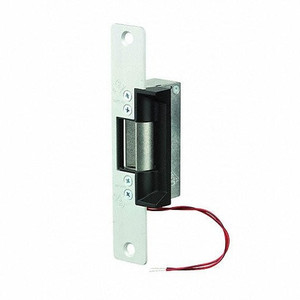
HES 7140-315-628-00 Electric Strike
The HES 7140-315-628-00 is an electromagnetic strike designed for access control systems in commercial and institutional environments where controlled door release is essential. This professional-grade device integrates directly into your access control platform, eliminating the need for separate electromechanical locking hardware and simplifying both installation and ongoing management. The strike operates on continuous-duty cycles, handling high-traffic entry points without fatigue or performance degradation.
Key Features
- Continuous-Duty Operation: Rated for sustained electromagnetic release cycles in high-traffic commercial and institutional settings. No duty-cycle limitations on repeated access cycles.
- Standard Door Frame Compatible: Designed for jamb prep in wood frames without structural modification. Fits conventional doorway installations, reducing retrofit labor and expense.
- Electromagnetic Locking Mechanism: Fail-safe operation — strike remains locked until access control system energizes the electromagnet, releasing the bolt mechanically.
- Direct Access Control Integration: Works with standard access control platforms (readers, controllers, management software). No intermediate relays or custom wiring required.
- Compact Form Factor: Corner/rack mountable design fits tight installation spaces. Low profile minimizes visual impact on finished doors.
- US Manufactured: Domestic production ensures consistent quality control and supply chain reliability for replacement or expansion.
The electromagnetic strike mechanism provides repeatable, auditable door release cycles tied directly to your access control event log. Each unlock event is triggered by the access control system (card reader, mobile credential, PIN), creating a complete audit trail of who entered and when. This eliminates mechanical key vulnerabilities and provides accountability across multi-user facilities.
Installation into standard wooden door jambs requires minimal frame modification — the strike mounting hardware aligns with conventional doorway prep, keeping labor time low. Electrical integration runs through your existing access control wiring (typically a 12V or 24V circuit from the door controller); no separate power infrastructure is needed. Coordination with your integrator during design ensures strike orientation (bolt throw direction) matches your door swing and latch configuration.
The continuous-duty rating distinguishes this strike from time-duty or momentary-duty devices — it can execute unlimited release cycles without thermal stress or mechanical wear-out. In high-traffic facilities (office lobbies, campus entry points, healthcare receiving areas), this overhead capacity eliminates scheduling constraints and reduces device failure risk. Total cost of ownership improves because you avoid premature device replacement and the associated labor to remove/reinstall.
The HES 7140-315-628-00 operates within standard access control voltage ranges (12V or 24V DC, depending on your system design) and draws predictable current during energization — integrators can size power supplies and UPS backup capacity with confidence. ONVIF-compatible access control platforms (Genetec, Milestone, Avigilon, Salto) and traditional card-reader ecosystems (HID, Salto, Allegion) all support electromagnetic strike control through standard relay or direct 12V/24V output. Failure modes are predictable: if power is lost, the strike de-energizes and remains locked (fail-secure); if the electromagnet fails, a manual bypass key or emergency egress lever ensures code-compliant emergency exit.
HES (Assa Abloy subsidiary) products are manufactured in the US and benefit from established supply chains and technical support resources. The 7140-315-628-00 carries no country-of-origin restrictions or export compliance complexity; it is suitable for all US federal, state, and local installations without supply-chain risk or NDAA Section 889 concerns.
Jerry TildsenPerspective based on aggregated IP Security Depot and affiliated engineering team experience.
We've installed hundreds of HES electromagnetic strikes across office complexes, universities, hospitals, and government facilities, and the 7140-315-628-00 is the workhorse that just doesn't quit. The continuous-duty rating is the real differentiator — it absorbs the electrical fatigue and mechanical wear that kill cheaper time-duty or momentary strikes in high-traffic environments. Once you've specced this into a 500-door campus access control rollout, you eliminate a whole category of field callbacks. The standard jamb-prep design also saves integration labor: your framers or carpenters understand wooden door prep; there's no special factory modification or exotic door blank required. Integration is straightforward — it's a 12V or 24V electromagnet with NO special intelligence or firmware. Pair it with any modern access control platform (your choice of card reader, mobile credential, or PIN pad), and the strike simply executes the release command the controller sends. On the flip side, this is a pure electromechanical device — it's not networked, it doesn't report strike state back to the access control server, and it doesn't participate in alarm zones. If you need real-time strike-status feedback or integrated emergency lockdown across 50 doors, you'll need to layer in separate door-position sensors and tie them to your access control or VMS alarm channels. The strike itself is silent, discrete, and invisible to building occupants — that's a feature for aesthetics-conscious environments (corporate offices, healthcare lobbies) but a trade-off if you need audible feedback of entry events.
Technical Highlights:
- Continuous-Duty Electromagnetic Actuation: No fatigue limit on energization cycles. Standard time-duty devices are rated for 10,000–20,000 cycles annually; the 7140 absorbs unlimited cycles without performance loss. In a 50-person office with 5+ entries per person per day, that's ~250,000 cycles annually — well above typical time-duty capacity. Continuous-duty eliminates surprise field failures tied to usage spikes.
- Standard Jamb Prep (Wood): Works with conventional wooden door frame installations. No proprietary door hardware or special hinges. Retrofit into existing facilities without replacing door assemblies — labor savings translate directly to project ROI on large deployments.
- Fail-Secure Logic: Electromagnet de-energizes on power loss or controller fault, and the strike defaults to locked. No unintended egress. Manual bypass key or emergency egress lever ensures code-compliant emergency exit without compromising normal access control intent.
- 12V/24V DC Compatibility: Integrates with both low-voltage access control standards. Your power supply and UPS can be sized once and reused across multiple strikes. Standard relay or direct controller output energizes the strike — no custom interface or driver module needed.
- US Manufacture: Domestic sourcing eliminates NDAA Section 889 scrutiny and supply-chain geopolitical risk. Replacement parts and technical support are US-based and responsive.
Deployment Considerations:
- Strike orientation is critical — the bolt throw direction must match your door swing (left-hand vs. right-hand door, inswing vs. outswing). Work with your frame supplier or integrator to verify orientation during quoting; field-reversals after installation are labor-intensive and cost overruns.
- Power supply capacity: Each strike draws ~0.5A during energization (12V) or ~0.25A (24V). Aggregate current draw across all strikes on a single UPS/power supply — undersized capacity will cause nuisance voltage sag and strike chatter or failure-to-release on high-demand events (lunch time, shift changes). Size backup UPS to sustain strike energization for 30+ minutes if your facility requires post-alarm lockdown capability.
- Manual bypass keying: Ensure your access control procedures and building staff understand how to manually release the strike during power loss or emergency. Document bypass key location and access protocol with your facilities team at handoff.
- Door closer coordination: Pair the strike with an appropriately rated door closer (ANSI grade 1/2/3 depending on traffic) to ensure the bolt retracts cleanly and the door closes fully after release. Undersized closers cause the bolt to hang and the strike mechanism to chatter.
- Auditing strike performance: The HES 7140 does not report state back to the access control server. If you need to detect stuck bolts or repeated failed unlock attempts, layer in a separate door-position sensor wired to your access control alarm inputs.
The HES 7140-315-628-00 is the right strike for integrators and end-users building multi-door, high-traffic access control systems where reliability, low maintenance, and transparent integration trump fancy sensors or cloud features. If you're rolling out access control to a 200+ door facility or a campus, this device is a safe, proven foundation. See the HES catalog for additional strike models and electronic locks.