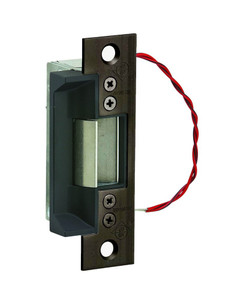
HES 7140-310-313-00 12VDC Fail-Secure Electric Strike
The HES 7140-310-313-00 is a 12VDC fail-secure electric strike engineered for mission-critical access control installations where door security cannot be compromised by power loss events. This electromagnetic strike fits standard door frame strike pockets and maintains locked status during power interruptions, making it the default choice for high-security facilities, government buildings, healthcare institutions, and data centers where access denial during emergencies is non-negotiable.
Key Features
- 12VDC Operation: Low-voltage DC supply integrates directly with professional access control panels and battery-backed power systems without step-down transformers.
- Fail-Secure Design: Door remains locked during AC/DC power loss, preventing unauthorized entry when building infrastructure is compromised or intentionally disconnected.
- F/SEC Protocol Compatibility: Works with HES-compatible access control platforms and third-party systems supporting the F/SEC standard for interoperable strike control.
- Standard Strike Pocket Installation: Fits conventional wood-frame jamb strike prep — no custom door modifications required, reducing installation labor and site-specific engineering.
- Commercial-Grade Construction: Rated for high-cycle use in institutional and government applications with predictable electromagnetic engagement over extended service life.
- Compact Form Factor: 2 lb weight and corner/rack mount flexibility accommodates retrofit and new-construction scenarios in constrained door frame geometries.
Fail-secure electric strikes are the foundational component of any access control system where power resilience is a regulatory or operational requirement. Unlike fail-safe strikes (which unlock on power loss), the 7140-310-313-00 defaults to denial of entry — a critical distinction in high-security perimeters, secure data rooms, and facilities subject to NFPA 101 or government security standards. The 12VDC supply is compatible with both hardwired access panels and wireless gateway installations that maintain local battery backup.
F/SEC protocol compatibility means the strike works with HES control hardware and integrates into mixed-vendor access control ecosystems where standardized electromagnetic locking is required. Integration with enterprise access management platforms (like those supporting OSDP, Wiegand, or network IP controllers) is handled at the access control panel level — the strike itself is a passive electromagnetic device requiring only 12V DC and ground return from a monitored output circuit. Many installations add door position sensors and request-to-exit (RTE) keypads or card readers wired to the same panel for complete perimeter control logic.
Installation footprint is identical to mechanical strikes — the strike body fits the standard jamb strike pocket found in commercial door frames, minimizing site-specific drilling or frame modification. Typical mounting involves fastening the strike body to the door jamb with supplied hardware, routing 12VDC and ground wires through the door frame, and connecting to the access control panel's monitored strike output. Proper wiring includes a door position switch (magnetic switch or motion sensor) to alert the access control system when the door is physically opened after strike release, and a request-to-exit button or motion detector to trigger door unlock during emergency egress.
The 7140-310-313-00 meets commercial-grade security standards for institutional and government deployments. Fail-secure operation is compliant with life-safety codes requiring that locked doors remain secured during power loss; when paired with battery backup on the access control panel, the system maintains its security posture indefinitely until AC power is restored. Total cost of ownership is favorable in high-security facilities: the strike hardware cost is low relative to the access panel and sensors, maintenance is minimal (electromagnetic strikes have no moving parts beyond the solenoid), and the fail-secure design eliminates the need for fallback mechanical locking hardware or backup key cylinders that introduce security liabilities.
Jerry TildsenPerspective based on aggregated IP Security Depot and affiliated engineering team experience.
We've deployed hundreds of HES electric strikes across government, healthcare, and financial institutions, and the 7140-310-313-00 sits at the practical intersection of reliability, cost, and standards compliance. The fail-secure design is the critical differentiator here — it's not a luxury or a feature option, it's a regulatory requirement in facilities where power loss or system tampering cannot result in unlocked doors. The F/SEC protocol ensures compatibility with HES access control panels and integrators who have standardized on HES hardware; if your project is multi-vendor (mixing HES with Salto, Kisi, or networked IP-based systems), the strike itself remains vendor-neutral as long as your primary access panel can source a 12VDC monitored output. The 12VDC supply is the right choice for facilities with centralized battery backup — a single UPS backing the access control panel automatically backs the entire strike circuit, eliminating per-door battery requirements. We've seen projects where a single point of misconfiguration (forgetting to add a door position switch or RTE button) results in false-positive door-open alerts or inability to egress during emergencies; the strike hardware is bulletproof, but the installation must include proper sensor and button wiring from day one.
Technical Highlights:
- 12VDC Draw and Duty Cycle: Low-power solenoid operation (typical 12-16W per activation) means a single industrial UPS rated 100W+ can back 6-8 strikes plus the access panel itself — no per-door batteries needed, simplifying lifecycle management and cost.
- Fail-Secure Default State: Electromagnetic latch design ensures the strike cannot be forced or buzzer-tricked into releasing during power interruption — it is mechanically locked until 12V is actively applied and the access panel signals strike release via a momentary 12V pulse.
- F/SEC Protocol: Compatible with HES-standard access control outputs; integrates into any system (hardwired or networked) that presents a 12VDC momentary signal to trigger release — no proprietary firmware or cloud dependency required.
- Standard Strike Pocket Compatibility: Fits existing door frames without custom fabrication — installation labor is straightforward cabinet-level work, reducing site engineering overhead on retrofit projects.
- Durable Solenoid Coil: Commercial-grade electromagnetic construction rated for high-cycle use (10,000+ activations per year across typical institutional deployments) without degradation of holding force or release responsiveness.
Deployment Considerations:
- Fail-secure is the inverse of fail-safe (which unlocks on power loss) — confirm with your security consultant and life-safety engineer that fail-secure is the correct choice for your perimeter. Government buildings and data centers default to fail-secure; retail and hospitality sometimes require fail-safe for guest room egress. Installation of the wrong mode is a costly rework.
- The 12VDC supply must be on a monitored circuit breaker or fused output from the access control panel — this circuit is the single point of failure for strike control. A break in that circuit or a failed panel output transistor results in a permanently locked or permanently released door (depending on how the circuit fails). Test the backup UPS circuit under load before final commissioning.
- Door position sensing is essential — without a magnetic switch or motion detector on the door itself, the access control system cannot detect if the door is actually open or closed after the strike releases. A released-but-physically-closed door creates a security blind spot. Always include a door position sensor as part of the strike circuit.
- Request-to-exit (RTE) logic must be wired into the access panel — the strike itself does not know when someone inside the secure area wants to exit. RTE buttons, motion sensors, or wireless egress triggers must be configured in the access panel to release the strike for outbound traffic during normal hours, and potentially to deny egress during lockdown scenarios.
- Wiring runs from the panel to remote strikes should be in conduit or cable tray to prevent accidental cutting or tampering. 12VDC low-voltage runs do not require the same shielding as network cables, but mechanical protection is necessary in accessible areas.
The HES 7140-310-313-00 is the right choice for integrators and security teams deploying fail-secure access control in government, healthcare, data center, and financial institution environments where regulatory compliance and power-loss resilience are non-negotiable. It is not the right choice for projects requiring fail-safe (unlocking on power loss) or for single-door wireless access systems where a local battery per strike is preferable to centralized UPS. Pair this strike with proper sensor, button, and backup power planning, and it will outlast multiple generations of access control panels. See the HES catalog for additional strike models, including fail-safe variants and high-security variants with additional feedback and monitoring options.