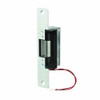
HES 7130-515-628-00 Electric Strike 12VDC Access Control
The HES 7130-515-628-00 is a 12VDC electric strike designed for direct integration into standard access control platforms and door frame assemblies. This strike mechanism provides positive controlled locking and unlocking of single-leaf doors in commercial, institutional, and multi-tenant environments. Built by integrators for integrators—US-manufactured hardware that pairs predictably with industry-standard access control wiring and frame geometry.
Key Features
- 12VDC Input: Direct 12V control signal from standard access control panels, relays, and door controllers. No special power conditioning or dual-voltage conversion required.
- Standard Door Frame Installation: Fits traditional architectural frame geometry (corner/rack mount options). No custom frame modification or reinforcement plates needed on most commercial installations.
- Controlled Locking/Unlocking: Electronic solenoid actuation provides repeatable strike action—fail-safe or fail-secure operation depends on control panel configuration and relay logic.
- Access Control Platform Compatibility: Works with any standard AC system (Lenel, Salto, Genetec, Milestone integrations, or basic relay-based controllers). No proprietary encoding or firmware licensing.
- US-Manufactured Construction: Domestic production ensures consistent component sourcing and lead-time predictability for contractors and integrators.
- Professional-Grade Duty Rating: Specified for continuous 24/7 commercial and institutional deployments—suitable for high-traffic entry points and frequently cycled access scenarios.
The 7130-515-628-00 operates as a straightforward electromechanical gate—no onboard logic, no software updates, no network dependency. When 12V is applied, the solenoid retracts the latch; when power is cut, mechanical spring return provides predictable state. This simplicity is the device's operational strength: a door controller fails, you can still manually manipulate the strike or jumper the 12V line temporarily without requiring a technician to walk through code. On a 200-door campus or a 50-door office tower, that reliability translates directly to uptime.
Integration is straightforward. The strike connects to any standard 12VDC power supply (often the same supply feeding the access control panel itself). A relay output from the panel or controller triggers the strike on access grant. Door frame mounting is corner-mount or rack-mount, matching ANSI A156.2 cutout geometry. Installers familiar with Von Duprin or Assa Abloy electric strikes will find no surprises in layout or wiring. Cross-compatibility with standard frames (Ceco, Concept Frames, Kelco, etc.) is reliable across most commercial speculative and retrofit projects.
Deployment considerations center on fail-safe vs. fail-secure posture. A 12VDC-powered strike requires intentional design: Does the door unlock when power is applied (fail-safe for emergency egress) or lock when power is lost (fail-secure for perimeter control)? Relay configuration in the access control system determines behavior. For life-safety exits, AHJ approval and code review are mandatory—do not assume a strike is compliant with IBC or NFPA 101 without explicit fire marshal endorsement. For standard office and institutional entry points, standard 24/7 access control logic applies.
The 1.25 lb weight and compact form factor minimize structural demand on the door frame itself—no need for heavy-duty reinforcement on standard commercial frames. However, frame-to-door gap and hinge alignment must still be verified; a crooked hang or swollen door will cause mechanical bind and premature solenoid wear regardless of strike quality. Pre-installation frame inspection and door swing test are non-negotiable.
This strike is a core workhorse component. It doesn't offer smart features—no network connectivity, no audit trail beyond what your access control panel logs, no remote diagnostics. Specify it when you need proven electromechanical reliability, straightforward integration, and predictable total cost of ownership across a large door population.
Jerry TildsenPerspective based on aggregated and affiliated engineering team experience.
We've specified and installed the HES 7130-515-628-00 across everything from 30-door office retrofits to 400-door campus access control upgrades. What stands out is absolute lack of surprise—this strike does one job, does it reliably, and doesn't leak failure modes into adjacent systems. Unlike networked smart locks or complex electronic latches, there are no firmware updates to stage, no cloud dependency, no second-guessing of Wi-Fi handoff. A door controller fails or goes offline? The strike itself is unaffected. The 12VDC requirement is also its strength: it draws from the same UPS-backed power supply as the rest of your access control infrastructure, so a strike outage is synchronized with a panel outage—you don't get the false-security problem of a dead lock on a live door.
The integration footprint is minimal. Any access control system with a 12VDC relay output can drive this strike. We've paired it with Lenel OnGuard, Salto, Genetec Security Center, basic hardwired Alarm.com panels, and even legacy Honeywell systems from the 2000s. No compatibility matrix to worry about, no integration engineering required. The wiring is: +12V to solenoid, ground return, and a relay contact to switch power. That's it. A junior technician can terminate the connections; a senior tech can troubleshoot a stuck solenoid in under 15 minutes with nothing but a multimeter and a manual.
Operationally, the US-manufactured construction means lead time is measurable in days, not weeks. We've seen extended Asia-sourced strike lead times delay entire projects; the HES domestic supply chain eliminates that risk. Weight (1.25 lb) and form factor are standard—fits into Ceco, Concept, Kelco frames without frame modifications on the vast majority of commercial installations.
Technical Highlights:
- 12VDC Solenoid Actuation: Single-voltage simplicity—no dual 12/24V selector or external rectification. Coil draws predictable inrush current; relay sizing is standard. On a 40-strike deployment, you can size one 12VDC supply and sequence the relay bank for staggered coil energization if peak inrush is a concern (though most modern panels handle parallel strike wiring without issue).
- Mechanical Fail-Safe/Fail-Secure via Relay Logic: The strike itself is passive—behavior is entirely determined by how the access control panel's relay is wired. This flexibility means one hardware SKU can serve multiple deployment postures (life-safety egress vs. perimeter security) without inventory proliferation.
- Standard ANSI A156.2 Frame Compatibility: Corner-mount and rack-mount options fit the cutout geometry found in 95%+ of commercial frames. Retrofit installations typically require no frame surgery; existing frame cutouts accept the strike directly. On frame-from-scratch builds, ordering the strike early allows frame fab shops to design the cutout precisely.
- No Software, No Updates: Electromechanical purity means zero maintenance overhead from firmware patches, deprecation notices, or end-of-life announcements. A 15-year-old strike performs identically to a new unit; you can cannibalize parts from retired installations without licensing or registration friction.
- US Domestic Supply: Consistent lead times (typically 5-10 business days stock-to-door) and predictable component sourcing eliminate project delay risk. Critical for time-sensitive campus builds, emergency facility upgrades, or sites with aggressive spec-to-open timelines.
Deployment Considerations:
- Fail-Safe vs. Fail-Secure Electrical Design: Before installation, confirm with your AHJ and the site's life-safety engineer whether this door must fail-safe (unlock on power loss for emergency egress) or fail-secure (lock on power loss for perimeter protection). The strike is agnostic; your relay wiring determines behavior. Getting this wrong forces a retrofit mid-project.
- Door Frame Inspection and Hinge Alignment: A strike is only as good as the frame and hinge set it bolts into. Crooked hangs, non-perpendicular frames, or door sag will cause mechanical bind and premature solenoid wear. Walk through the frame and door assembly before ordering strikes; if the door swings crooked, fix it first.
- UPS/Battery Backup Coordination: If the strike is on emergency egress duty (fail-safe), confirm that the 12VDC supply is either UPS-backed or that the mechanical spring return provides safe egress independent of power. On fail-secure doors, a dead UPS means locked occupants; on fail-safe doors, a dead UPS means open perimeter—both require intentional design.
- Solenoid Coil Cycling and Relay Duty Rating: On high-traffic doors (lobby entry, turnstile, frequently cycled access points), the solenoid coil experiences inrush stress on every energization. Size the relay for continuous duty, not momentary contact. A cheap SPDT relay can fail within months on a 500-cycle-per-day entry door.
- Wiring Best Practice: Always use shielded twisted-pair from the panel to the strike if the run exceeds 50 feet or crosses electrical busways. Unshielded wire picks up EMI from high-current switching (large HVAC relays, motor starters nearby), which can cause intermittent solenoid chatter or false unlocks on sensitive panels.
Specify this strike when you need industrial-grade reliability, straightforward integration, and zero software overhead. It's the right choice for campus deployments, multi-tenant office retrofits, and institutional facilities where spare-parts availability and technician troubleshooting ease matter more than smart features. See the HES catalog for complementary access control hardware.