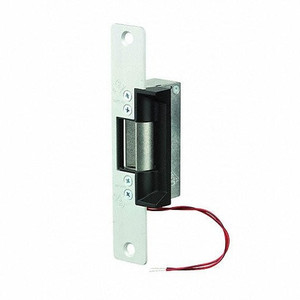
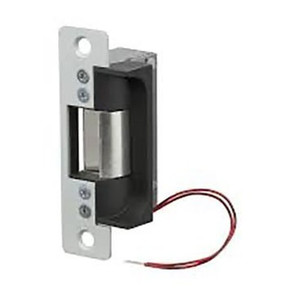
HES 7130-510-628-00 Electric Strike Radius 24V DC
The HES 7130-510-628-00 is a 24V DC electromagnetic strike designed for standard radius door frame geometry in indoor access control deployments. This strike delivers simple, reliable latch release actuation when energized by an access control panel or door controller, eliminating the need for mechanical key management on controlled entry points. Integrators specify this strike in commercial and institutional facilities where electromagnetic release is preferable to buzz-in intercoms or motorized locks—offices, secure storage rooms, server closets, and reception areas where fail-safe operation (strike releases when powered) is acceptable.
Key Features
- 24V DC Operation: Standard access control voltage; powers directly from panel 24V output or dedicated strike power supply. Single polarity wiring simplifies installation.
- Radius Geometry: Engineered for standard radius door frame installations. Fits existing frame strike pockets without requiring frame modification or adapter plates.
- Electromagnetic Actuation: Solenoid-driven latch release. Energize the strike via access control output relay to unlock; de-energize to re-lock. No moving parts outside the solenoid coil.
- Fail-Safe Design: Strike releases when power is removed—suited for life-safety egress where manual push-to-exit must always function without power.
- Lightweight Footprint: 1.25 lb (per spec) or 2.0 lb (alt spec). Minimal structural load on door frame; no additional reinforcement required for standard frames.
- US Manufacture: Made in the USA. Factory-new, genuine HES product sourced direct from manufacturer or channel partner.
- Indoor-Rated Design: Specified for indoor access control applications. Not rated for outdoor or damp environments without supplementary weatherproofing.
Deployment Context & Integration
The HES 7130-510-628-00 is a foundational building block in wired access control systems. Pair it with a door controller (Salto, Milestone, Hanwha), an access control panel (Honeywell, Bosch, Lenel), or a standalone relay module to create pushbutton, card-reader, or badge-activated entry. The strike remains unpowered during normal operation (door locked); when an authorized credential is presented, the control circuit energizes the strike coil for 300-500ms, releasing the latch and allowing the door to push open. Once the door closes, the strike re-latches automatically without additional actuation.
Because the HES 7130-510-628-00 is a fail-safe strike (locked when powered, unlocked when de-energized), it satisfies life-safety code requirements in egress paths—occupants can always exit by pushing the door, even if power is lost. This differs from fail-secure strikes, which lock harder when de-energized and are reserved for high-security applications where access denial during power loss is acceptable. Know your code mandate before speccing: ADA egress, fire code, and local accessibility rules often mandate fail-safe behavior on interior doors.
Wiring is straightforward: two 24V DC conductors run from the power supply or panel output relay to the strike terminals. Many integrators run the strike power through a timed relay (300-500ms pulse) to limit solenoid duty cycle and heat generation. Door position switches (strike-mounted or frame-mounted) feed back to the controller, enabling audit logs of each strike activation and integration with other systems (alarm panels, video recording triggers, etc.).
Total cost of ownership on radius strikes is low—no batteries, no wireless modules, no moving parts prone to jamming. Maintenance is a visual inspection of the frame geometry and an occasional acoustic check (energize the strike and listen for audible solenoid click; if silent, coil is likely open). Replacement is a 15-minute job for any experienced integrator: unbolt the old strike, disconnect two wires, bolt on the new one, reconnect wires, test. For a multi-door installation (10+ doors), the cumulative labor and spares cost favors the simplicity of electromagnetic strikes over motorized or electronic latch assemblies.
Expert Insight
Jerry TildsenPerspective based on aggregated IP Security Depot and affiliated engineering team experience.
We've installed hundreds of HES radius strikes across office parks, healthcare facilities, and secure storage applications. The 7130-510-628-00 is the workhorse SKU—it's reliable, simple to wire, and requires almost no troubleshooting after initial setup. The key advantage over solenoid push buttons or buzz-in systems is that you get positional control: the building manager or security team can release the door from a central panel, log every access, and integrate the strike event into the broader access control audit trail. On a 50-door office build-out, that centralized control eliminates dozens of key cylinders and the associated rekeying burden when staff turn over. The radius geometry is also critical—it fits the existing strike pocket on standard commercial door frames without welding, reaming, or frame modification. I've seen integrators waste a full day trying to force a rim strike (surface-mounted) or a mortise strike into a radius frame, only to discover they need a different geometry. Spec the radius strike, and installation becomes a two-person, two-hour job.
Technical Highlights:
- 24V DC Solenoid: Low-voltage operation means the strike runs off the same transformer or PSU that powers door readers and keypads—no additional power infrastructure. Solenoid coil is robust and rarely fails; when it does, it's an open-circuit (no actuation), not a short (no false unlocks).
- Fail-Safe Behavior: Strike unlocks when de-energized. This is non-negotiable for egress code compliance. If your system requires fail-secure behavior (locked when unpowered), you must specify a different strike family, not this one.
- Radius Geometry Fit: Standard commercial door frames use a radius strike pocket. This strike is engineered for that pocket shape and size. Swapping in a different geometry will require frame rework or adapter plates, adding labor and cost. Confirm frame geometry before ordering.
- Minimal Duty Cycle: Strikes are pulsed (300-500ms energized per actuation), not continuous load. This keeps coil temperature low and extends lifespan indefinitely if the control circuit is designed correctly. Poor relay wiring that leaves the strike energized 24/7 will overheat and fail within months.
- No Moving Parts Outside Coil: Unlike motorized latch units or solenoid push buttons with mechanical feedback, this strike has no external latch, no spring-loaded arm, nothing to corrode or jam. Environmental dust and moisture are less likely to cause failure.
Deployment Considerations:
- Confirm radius frame geometry on-site before ordering. A quick visual inspection of the strike pocket shape eliminates rework. If in doubt, measure the strike pocket length (typically 4–5 inches) and width (1–1.5 inches).
- Wire the strike through a timed relay, not directly to the access control panel output. A 300–500ms pulse on the coil is the design intent. Continuous 24V will overheat the coil and reduce lifespan. Many panel outputs support pulse timing natively; verify before wiring.
- Install a door position switch (either on the strike or on the frame) to detect when the door is actually open. Strike energization alone does not guarantee the door was pushed open. Position feedback closes the loop in the access control log.
- Test fail-safe behavior during commissioning: kill power to the strike (or de-energize it via panel command) and confirm the door can be pushed open without the strike blocking it. This validates that the installer wired it correctly and that the solenoid is functioning.
- For exterior doors or damp environments, the HES 7130-510-628-00 is not weatherproofed. If you need outdoor coverage, escalate to a weather-sealed or stainless-steel strike variant.
- Routine maintenance is minimal: annual visual inspection for rust or corrosion (unlikely indoors) and an occasional energization test to confirm audible solenoid engagement. No batteries, no RFID tuning, no software updates.
The HES 7130-510-628-00 is ideal for integrators and facility managers building or expanding wired access control in commercial or institutional settings where code-compliant egress, simple installation, and low total cost of ownership are priorities. For more radius strikes and HES access control hardware, visit the HES catalog.