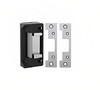
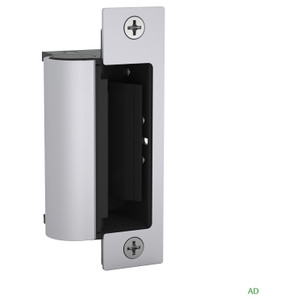
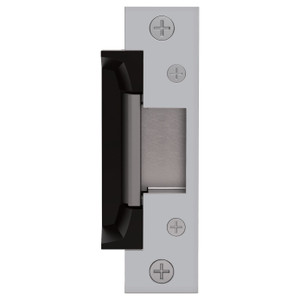
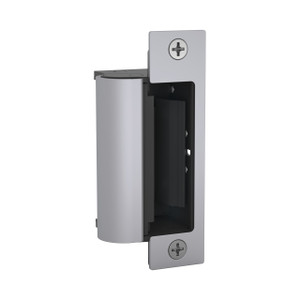
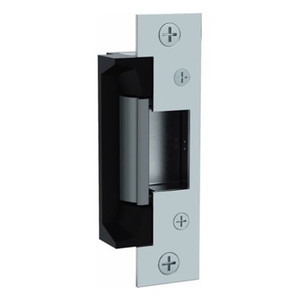
HES 5200C-LBSM Electric Latchbolt Strike
Overview
The HES 5200C-LBSM is a fail-safe electric latchbolt strike engineered to integrate into modern networked access control systems. Unlike passive mechanical strikes, this unit provides electromagnetic retention under fail-safe logic — meaning the latch unlocks only when the access control system sends a de-energize signal. This is critical in high-security environments where you need positive confirmation that a door cannot be forced open without system authorization.
Key Features
- Fail-safe electromagnetic locking: The 5200C-LBSM holds the latchbolt in the locked position via electromagnetic force. When power is removed or the system is offline, the strike defaults to locked — no battery backup required to maintain security. This is essential for facilities where network outages or power loss must not compromise door security.
- Standard latchbolt form factor: Designed to work with conventional door latch mechanisms without modification. You install it in place of a mechanical strike; no specialized door prep or custom fabrication is needed. Reduces installation time and keeps retrofit costs predictable.
- Compatible with standard control circuits: Operates across typical access control circuit voltages used by mainstream panels and controllers. This means the 5200C-LBSM will integrate into existing infrastructure without requiring a dedicated power supply or custom wiring topology — a real advantage when retrofitting older buildings.
- Suitable for both new construction and retrofit: Standard door frame preparations accommodate the 5200C-LBSM without custom modifications. Whether you're upgrading a legacy facility or building from the ground up, installation labor is straightforward.
- Consistent electromagnetic retention: The strike maintains predictable locking behavior across standard control circuit voltages. This consistency means you won't encounter timing surprises or inconsistent lock/unlock behavior in multi-door deployments — critical when auditing access patterns.
- Integrates with common access control platforms: Works with standard electric strike control circuits found in mainstream access control systems. No proprietary interfaces or closed ecosystems.
Deployment Context
The 5200C-LBSM is deployed in environments where controlled egress and entry authorization are non-negotiable. Commercial office buildings, educational campuses, healthcare facilities, and government buildings rely on strikes like this one to enforce access policy at the hardware level. In retrofit scenarios, the standard form factor eliminates the need to modify existing door frames — a significant labor and cost saving compared to electronic mortise locks or custom strike solutions.
Integration & Compatibility
The 5200C-LBSM integrates with access control systems that output standard electric strike control signals. Its electromagnetic design ensures compatibility with mainstream panel architectures, including those from suppliers using conventional 12VDC or 24VDC strike control logic. Installation requires no middleware or custom integration logic — the strike responds directly to the access control system's door unlock command.
When to Choose a Different Model
If your facility requires automatic closing force beyond simple locking (e.g., forced closure against fire-rated door closers), or if you need integrated push-to-exit buttons on the strike itself, investigate alternative HES strike models in the same family. The 5200C-LBSM is optimized for fail-safe locking alone; it does not include mechanical return springs or closure assist. For applications requiring both locking and active door closure, a mortise-style electric lock may better match your requirements.
Frequently Asked Questions
Q: What happens to the 5200C-LBSM if the access control system loses power?
A: As a fail-safe device, the strike defaults to locked when de-energized. The latchbolt remains held by the electromagnetic mechanism. No battery backup is needed to maintain security during a power loss.
Q: Can the 5200C-LBSM be retrofit into an existing door frame?
A: Yes. The 5200C-LBSM is engineered for standard door frame preparations. Retrofit installation requires no custom modifications to the frame or latch mechanism.
Q: What control circuits are compatible with the 5200C-LBSM?
A: The strike operates with standard electric strike control outputs found on mainstream access control panels. Verify your panel's strike output voltage and circuit logic against the product documentation to confirm compatibility.
Q: Does the 5200C-LBSM include push-to-exit functionality?
A: The 5200C-LBSM is a locking strike only. It does not include integrated exit buttons or mechanical release mechanisms. Emergency egress typically relies on separate panic hardware or the access control system's unlock command during emergency conditions.
Q: Is the 5200C-LBSM suitable for high-traffic doors?
A: Yes, but bear in mind that the strike provides locking control, not mechanical closure or traffic management. Doors still require standard closers to ensure they shut between users. The strike's role is to prevent unauthorized entry by holding the latch.
Q: What warranty does the 5200C-LBSM carry?
A: Refer to the manufacturer's documentation or your specialty retailer for warranty terms and coverage details.
Ted PerryPerspective based on aggregated IP Security Depot and affiliated engineering team experience.
The 5200C-LBSM (often searched as 5200C LBSM) is a straightforward fail-safe strike that does one thing well: it holds a latchbolt locked until the access control system tells it to release. No batteries, no complex logic — the electromagnetic mechanism defaults to locked when unpowered. That simplicity is exactly what makes it reliable in retrofit work and why it's common in older commercial buildings upgrading to modern access control.
Technical Highlights:
- Fail-safe design: Defaults to locked under power loss. If your facility loses network connectivity or AC power, every door controlled by a 5200C-LBSM strike remains locked until power and the access control system are restored. No emergency unlock signal is sent; no separate battery is required.
- Standard form factor: Fits conventional door strike preparations. You're not modifying frames or latch mechanisms — the strike replaces the mechanical one in place. On retrofit projects, that translates to 30–45 minutes per door instead of 2–3 hours.
- Voltage independence within range: Works across standard control circuit voltages (typically 12VDC or 24VDC). This means fewer custom power supplies and simpler wiring — your panel's strike output directly drives the 5200C-LBSM.
Deployment Considerations:
- No mechanical closure: The strike only locks; it doesn't close the door or force it shut. You still need a standard door closer. Don't deploy a 5200C-LBSM on a heavy fire-rated door expecting it to manage closure — that's a different product category.
- Access control panel compatibility: Verify your panel's strike output logic and voltage before ordering. If your panel uses unusual strike signaling (e.g., momentary pulse vs. continuous de-energize), confirm the 5200C-LBSM matches that behavior. Standard panels work without issue; legacy systems may need verification.
The 5200C-LBSM is the right choice for facilities upgrading from mechanical locks to networked access control without wholesale door frame replacement. It's equally effective on new construction where simplicity and cost predictability matter. Install it on perimeter security doors in office parks, campus buildings, and government facilities where fail-safe behavior and straightforward integration are the priority.