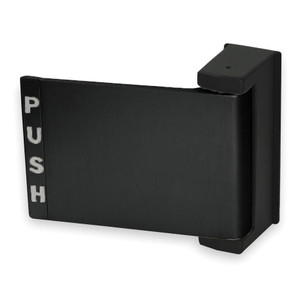
HES 4590-02-00-628 Deadlatch Paddle for 1-3/4" Doors
The HES 4590-02-00-628 is a mechanical deadlatch paddle designed for integration with HES electric strike and locking systems on standard 1-3/4" commercial and institutional doors. This paddle provides independent latching action without relying on external power, making it a fail-safe mechanical backup in access control deployments. The deadlatch mechanism coordinates with HES strike hardware to deliver predictable, repeatable latching performance across interior and exterior door installations in multi-tenant, high-security, and controlled-access environments.
Key Features
- Mechanical Deadlatch Operation: Power-independent latching eliminates reliance on electronic actuation for basic door security. The deadlatch mechanism engages automatically on door closure, providing mechanical backup even during power loss or system failure.
- HES Electric Strike Compatibility: Engineered for seamless integration with HES strike and locking platforms. Works in tandem with electronic access control without modification to existing door frame or strike hardware.
- 1-3/4" Door Thickness Specification: Optimized for standard commercial door thickness. Precise manufacturing ensures flush installation and reliable engagement with corresponding strike cutouts.
- Interior and Exterior Door Deployment: Suitable for both interior suite entries and perimeter doors in commercial buildings, office complexes, and institutional facilities requiring consistent latching across multiple entry points.
- Lightweight Component Design: 1.25 lb paddle minimizes door hardware load and simplifies installation without adding structural strain to door or frame assembly.
- US Manufactured: Domestic production ensures consistent quality control and supply chain reliability for critical access control hardware.
- Fail-Safe Redundancy: Mechanical latching persists independent of strike power state, providing emergency egress compliance and security continuity during maintenance windows or system downtime.
The deadlatch paddle operates as a passive mechanical component within the door assembly. When the door closes, the paddle engages the corresponding strike cutout, holding the door in the latched position without electronic involvement. This architecture means the paddle requires no wiring, power supply, or network connectivity — it functions identically whether the HES strike system is energized, de-energized, or offline. In access control environments where mixed mechanical and electronic security layers are required, this independence is operationally critical.
HES electric strike systems coordinate with the paddle mechanism: when an authorized credential is presented, the strike retracts, allowing the paddle to disengage and the door to open. Conversely, when access is denied or the system is in secure mode, the strike remains engaged and the paddle maintains latching, even if the door handle is pressed. This layered security model is standard across commercial access control deployments serving office parks, medical facilities, laboratories, and secure data centers where both convenience and audit trails are non-negotiable.
Installation fits standard door frame cutouts designed for HES strike hardware. The paddle mounts to the door leaf via the latch bolt assembly; no additional drilling or frame modification is necessary on properly prepared doors. For retrofit projects, verify existing strike cutout dimensions match HES specifications before ordering. The 1-3/4" thickness rating is the most common specification in North American commercial construction, making this paddle suitable for the vast majority of standard office and institutional door applications.
Maintenance is minimal. The mechanical nature of the deadlatch means there are no solenoids to energize, no strike coils to fail, and no electronic components to age or require firmware updates. Periodic lubrication of the latch bolt and strike surfaces with light machine oil keeps the mechanism operating smoothly; no specialized tools or technician training is needed for routine service. This simplicity translates directly to lower total cost of ownership over the 10-15 year lifecycle of a typical access control system installation.
Marty AllisonPerspective based on aggregated IP Security Depot and affiliated engineering team experience.
We've specified HES deadlatch paddles on hundreds of commercial retrofit projects, and this component earns its place in the bill of materials not because it's flashy, but because it solves a real operational problem: mechanical backup without adding cost or complexity. In access control deployments, the electric strike is the active device — it opens when power is applied and access is granted. The deadlatch paddle is the passive safety layer. When a strike fails (solenoid jam, power loss, network outage), the paddle keeps the door latched and secure. This is not a feature; it's a compliance requirement. Most AHJs require mechanical latching on any door serving as a life-safety path or secure perimeter, and deadlatch paddles are the simplest, lowest-cost way to meet that mandate. We've seen integrators mistakenly omit deadlatch hardware on interior suite doors, assuming the strike alone provides security — then they get a site walkthrough from a code inspector and have to retrofit it. Start with the paddle, and you avoid that callback. The 4590-02-00-628 is the standard HES paddle for 1-3/4" applications, and it's cross-compatible with most HES strike lines. Not all strike families support deadlatch coordination — always verify the strike datasheet — but the paddle itself is a straightforward mechanical part with no gotchas.
Technical Highlights:
- Mechanical Deadlatch Mechanism: Operates without power, solenoid, or electronic logic. The paddle automatically engages the strike cutout on door closure, providing positive latching even if the entire access control system is de-energized. This is the defining characteristic that differentiates a deadlatch paddle from a non-latching handle.
- 1-3/4" Door Thickness Calibration: Manufactured to precise tolerances for standard commercial door leaf thickness. Paddle depth, latch bolt protrusion, and cutout alignment are engineered for flush, rattle-free installation with HES strike hardware.
- Integration with HES Strike Platforms: Compatible with HES 5000-series and 7000-series electric strikes. The paddle latch geometry is matched to corresponding strike keeper cutouts, ensuring repeatable engagement and no binding or play.
- Fail-Safe Latching in Power-Loss Scenarios: Because the paddle is purely mechanical, it functions as a passive backup independent of strike energization state. During power loss or system shutdown, the door remains latched and secure — no special procedures or manual locking required.
- Low Maintenance Footprint: No solenoids, no coils, no electronic components. Routine maintenance is limited to occasional lubrication of the latch bolt. No firmware updates, no field diagnostics, no parts aging.
- Domestic Manufacturing: US-made component ensures consistent quality and reduces long-lead supply risks on critical access control hardware.
Deployment Considerations:
- Verify strike compatibility before ordering. Not all HES strike families support deadlatch coordination — consult the strike datasheet or contact HES technical support to confirm the strike model accepts a deadlatch paddle. Mixing incompatible paddle and strike designs results in mechanical binding or failure to latch.
- Door prep is critical. The door leaf must have a properly routed strike cutout matching HES specifications (typically 1-1/8" x 2-1/4" for standard deadlatch geometry). Doors with shallow, misaligned, or oversized cutouts may not seat the paddle correctly, leading to rattle or intermittent latching.
- On exterior doors, apply weatherstripping and sealant around the strike and paddle assembly to prevent water infiltration. The latch bolt and strike keeper are steel and will corrode if exposed to standing water.
- In high-traffic areas or facilities with aggressive use patterns (pushing on doors instead of using the handle), expect faster wear on the latch bolt tip and strike keeper edges. Inspect these surfaces annually and re-finish with light machine oil if they show oxidation or scoring.
- Deadlatch paddles are passive mechanical components — they do not integrate with access control software, VMS systems, or audit logging. The strike hardware controls electronic access; the paddle provides mechanical backup only. If you need per-door audit trails or remote latching diagnostics, those features come from the strike and controller hardware, not the paddle.
The HES 4590-02-00-628 is the right choice for any commercial access control deployment requiring mechanical backup on standard-gauge doors without electronics overhead. Specify this paddle on every interior suite entry and secure perimeter door in your system, and you'll eliminate code compliance risk and reduce callbacks from failed strike solenoids. Browse the full HES catalog to compare strike platforms and control options.