Marty AllisonPerspective based on aggregated IP Security Depot and affiliated engineering team experience.
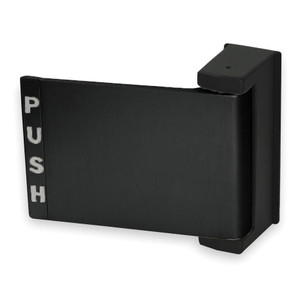
In our experience, paddle assemblies for electric strikes occupy a specific and often overlooked niche in access control specification. We've deployed dozens of HES electric strike systems across office campuses and retail chains, and the paddle assembly question comes up in nearly every project that requires both secure ingress and reliable emergency egress. The 4590-02-00-313 is a workhorse component — it's not glamorous, and the spec sheet is minimal, but it's the interface point where occupant behavior meets access control policy. What differentiates this assembly from generic lever hardware is its engineered integration with HES strike logic. The mechanical path is tuned to actuate the strike's release mechanism at the correct force threshold — push too soft, nothing happens; push normally, the strike releases cleanly. Cheap paddle replacements or mismatched hardware introduce binding, sluggish response, or false releases. We've seen buildings where facilities tried to save a few dollars by substituting a standard panic bar; within months, occupants were complaining about doors that stick on exit or stick open, and the strike itself was taking premature wear. The 4590-02-00-313 avoids that trap entirely — it's a matched pair with HES strikes, which means you're not troubleshooting hardware incompatibility during commissioning.
The architecture is genuinely important from a safety standpoint. Because the paddle-to-strike mechanical bond is purely mechanical — no electronics, no solenoid, no networked control in the paddle itself — a power loss or network outage does not trap occupants. The strike may be locked, but if someone pushes the paddle hard, the mechanical linkage still engages the release mechanism in the strike body. On strikes with deadbolt-style solenoids, that mechanical backup is the difference between emergency egress and a locked room. We recommend this assembly specifically for spaces where egress assurance is regulatory (hospital patient rooms, institutional dormitories, retail stockrooms) or where network outages are a concern (facilities with unstable power or network infrastructure).
Technical Highlights:
- Mechanical Actuation Path: Purely mechanical linkage from paddle to strike release — no electronics in the assembly itself. Means egress is guaranteed even if the strike loses power or network connectivity. On retrofit projects, this eliminates the need for mechanical override buttons or backup manual locks.
- US Manufacturing: Built to HES specification in the US. Quality control is consistent, and spare parts are readily available through HES and authorized distributors. We've seen supply-chain delays on imported components; domestic manufacture reduces lead time risk.
- Standard Fastening: Uses conventional door hardware mounting plate and fastener patterns. No proprietary tools, no special door frame modifications. A locksmith familiar with commercial exit devices can install this in under an hour on a standard door.
- Deadbolt Strike Compatibility: Specified as compatible with HES deadbolt-style electric strikes. Verify the strike model before purchasing — HES also makes rim strikes, maglock, and pushbar-integrated units that may not accept paddle assemblies.
- Weight & Form Factor: At 2.3 lb, the assembly is light enough for single-hand installation and retrofit work. The compact footprint fits within standard commercial door hardware envelopes without requiring reinforcement or frame cutouts.
Deployment Considerations:
- Verify strike compatibility before ordering — not all HES electric strikes are designed to accept paddle assemblies. Cross-reference the strike model number against HES documentation or call the manufacturer directly. We've had integrators order the wrong strike variant and discover incompatibility during on-site assembly.
- Plan for mechanical linkage routing through the door frame — the paddle must connect to the strike via a mechanical rod or cable path through the door edge or frame header. On solid-core or fire-rated doors, this routing can be constrained; pre-installation coordination with the door supplier is smart.
- Pair with push-to-exit buttons or electronic release signals, not manual override keys — the paddle is the mechanical exit mechanism, but the access control decision (whether to permit exit) remains with the strike control system. On high-security installations, do not install manual override keys that bypass the strike; they defeat the audit trail.
- Test the paddle-to-strike actuation force during commissioning — the mechanical linkage should engage cleanly with moderate palm pressure (ADA push-force limits are typically 5 lbf or less). Binding or excessive resistance indicates misalignment and should be corrected before the system goes live.
- Document the strike model and control system integration in the project record — if a replacement paddle is needed in 3 years, you need to know which strike variant this door has. We recommend labeling the door hardware with the strike model and paddle assembly P/N for future maintenance teams.
The HES 4590-02-00-313 paddle assembly is the right choice for commercial facilities that need reliable egress control without complex electronics or network dependencies at the door hardware level. It's commonly specified in office buildings with departmental access control, retail stockrooms with employee exit policies, and institutional settings where emergency egress assurance is paramount. If you're building an access control strategy for a multi-tenant building or campus where individual doors need independent egress policies, this assembly integrates cleanly with HES electric strikes and standard VMS-controlled access platforms. For more information on HES strike systems and compatible paddle variants, visit the HES catalog.