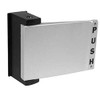
HES 4590-01-00-628 Deadlatch Paddle Clear
The HES 4590-01-00-628 is a clear deadlatch paddle designed for HES 4300, 4500, and 4900 series electric locks in commercial and institutional access control deployments. This drop-in replacement component simplifies hardware standardization across multiple doors and zones—eliminating the need to stock different paddle styles or colors when expanding or retrofitting access control infrastructure. The clear finish integrates cleanly into modern building aesthetics while the deadlatch material ensures the door remains mechanically secured during controlled unlock/lock cycles.
Key Features
- Clear Finish: Transparent acrylic or polycarbonate design fits contemporary commercial and educational interiors without aesthetic compromise.
- Deadlatch Material: Mechanical deadlatch holds the door securely in the locked position, providing tactile feedback and fail-safe operation independent of power state.
- Paddle Form Factor: Ergonomic shape complies with ADA accessibility standards—operatable with a closed fist, forearm, or knee for hands-free exit in emergency conditions.
- Drop-in Replacement Compatibility: Works directly with HES 4300, 4500, and 4900 series electric locks without modification or re-keying.
- US Manufactured: Domestic production with no offshore dependencies, supporting supply-chain resilience in sensitive facilities.
- Lightweight Construction: 1.25 lb weight—minimal mechanical load on the electric locking mechanism, reducing wear and extending solenoid/motor lifespan.
The 4590-01-00-628 addresses a common integration pain point: when facility managers inherit multiple HES lock series across campus buildings or multi-tenant properties, maintaining consistent paddle hardware becomes a procurement and spare-parts burden. This unit fits three major HES generations, collapsing your inventory SKU count and simplifying replacement cycles. On a 100-door campus with mixed 4300 and 4900 series locks, standardizing on this single paddle part reduces logistics overhead and training complexity for maintenance teams.
Deadlatch mechanics matter in failsafe vs. failsecure system design. Unlike a motorized deadbolt that relies on solenoid engagement, a true deadlatch (mechanically depressed by the paddle) remains engaged even during a power loss or system fault—the door cannot drift unlocked. For institutional settings (hospitals, schools, laboratories) where unintended unlocking creates liability, this mechanical redundancy is non-negotiable. The paddle's clear material also aids visual inspection: facility staff can quickly confirm latch position from a distance without disassembly.
Installation is straightforward—no specialized tools or rekeying required. Verify your existing lock series (4300, 4500, or 4900) before ordering; cross-series compatibility is documented in the HES system reference. Once installed, the paddle operates identically to OEM hardware, with no configuration changes to the lock electronics or access control software. Typical deployment scenarios include campus-wide refresh projects, multi-building standardization initiatives, and high-turnover facilities (hospitality, government offices) where hardware consistency reduces end-user confusion and support calls.
HES electric locking systems are widely integrated with standard access control platforms (Salto, Allegion, dormakaba, etc.) via wired or wireless interfaces. Paddle hardware selection does not affect those integrations—the 4590-01-00-628 is purely mechanical and transparent to the control layer. For more information on HES lock specifications and system architecture, consult the product datasheet or contact your HES distributor. Explore the full HES catalog for compatible lock bodies and accessories.
Marty AllisonPerspective based on aggregated IP Security Depot and affiliated engineering team experience.
We've deployed HES electric locking hardware across education, healthcare, and government campuses, and the 4590-01-00-628 paddle solves a surprisingly common problem: paddle proliferation. Facilities inherit a mixture of HES lock generations—some from 2005, some from 2020—and end up stocking six different paddle variants because procurement teams didn't realize compatibility existed. The 4590-01-00-628 collapse that into one SKU across three lock series, which cuts maintenance labor and spare-parts inventory cost. The clear finish is no gimmick either. In modern healthcare and university buildings, transparent hardware signals accessibility and design intent; opaque or metallic paddles can feel institutional or dated by comparison. We've seen this paddle chosen specifically because architects or end-users wanted a cleaner visual match to glass doors and contemporary lever hardware in the same spaces.
The deadlatch mechanism itself deserves emphasis. Unlike a purely motorized deadbolt system, a deadlatch remains mechanically engaged through its own spring tension—the paddle's depression is what retracts it during the unlock cycle. This matters profoundly in failsafe facility design. If your access control network goes down or a lock loses power, a motorized deadbolt can hang in an unpredictable state; a deadlatch locks to its mechanical default (locked) and stays there. For sensitive zones—server rooms, medical records, cash handling—that passive safety is often a compliance or insurance requirement. The 4590-01-00-628's straightforward mechanical design makes it auditable and maintainable by non-specialized staff.
Technical Highlights:
- Deadlatch Spring Mechanics: The paddle depresses a weighted deadlatch cam that retracts during unlock, then returns to locked position under spring force. No solenoid engagement required. Ensures the door cannot drift unlocked during network faults or power loss—critical in failsafe system architecture.
- Drop-in Form Factor: Screws directly to the lock faceplate of any HES 4300, 4500, or 4900 series mechanism. No boring, rekeying, or lock body replacement needed. A facilities team can swap paddles in under 2 minutes per door.
- Clear Polycarbonate/Acrylic Finish: Transparent material allows visual inspection of latch position and allows light to pass through—useful in institutional settings where visual confirmation of lock state aids egress safety audits and accessibility compliance verification.
- 1.25 lb Lightweight Design: Minimal mechanical load on solenoid or motorized actuator. Extended service life vs. heavier lever hardware, reducing preventive maintenance cycles on the electric lock mechanism itself.
- ADA Paddle Geometry: Designed to operatable with a closed fist, wrist strike, or knee—meets accessibility standards and emergency egress requirements without needing secondary lever conversions or assistive devices.
Deployment Considerations:
- Verify your existing HES lock series before ordering. Confirm lock model is 4300, 4500, or 4900 range. Cross-series incompatibilities are rare with this paddle, but mismatches do occur with vintage or special-order locks. Request the lock manual or photos if unsure.
- Clear material can accumulate fingerprints and dust in high-traffic zones. Specify cleaning protocols (dry cloth, mild soap) during facility handover training to maintain appearance and visibility. Some integrators apply protective film to high-touch paddles in healthcare or food-service facilities to reduce wear marks.
- Deadlatch operation assumes proper lock calibration. If the lock mechanism is worn or has drift in solenoid timing, the paddle may feel sticky or require forceful depression to fully retract the latch. Integrate paddle replacement with a full lock mechanism health check—wear patterns on the paddle itself (scuff marks, compression damage) often indicate underlying lock solenoid issues.
- In failsafe deployments (doors that must lock on power loss), confirm the lock body is configured for failsafe mode. The paddle itself is passive mechanical, but the lock electronics must be set to lock (not unlock) when power is lost. Review access control software settings during system commissioning.
- Temperature cycling in unheated or outdoor-exposed lock enclosures can cause clear plastic to become brittle over 3-5 years in harsh climates. If the lock is mounted in a vestibule or exterior door frame, consider UV-stabilized material or polycarbonate variants (if available from HES). Standard acrylic may discolor or crack in direct sunlight.
The HES 4590-01-00-628 is the right choice for multi-building campuses, healthcare systems, and educational institutions running mixed generations of HES locks and seeking hardware standardization without rekeying every door. For facilities with a single dominant lock model (e.g., all 4900 series), this paddle is equally solid but won't yield the same SKU reduction benefit. Integrators looking to reduce spare-parts counts and simplify maintenance training should prioritize this unit for campus-wide deployments. Learn more about the full HES product line and lock body options in the HES catalog.