
PoE Systems and Midspans: Buyer's Guide
PoE infrastructure is the unsung backbone of every IP camera, intercom, access point, and VoIP phone system. This guide covers the PoE standards, when to use a midspan vs. PoE switch, budget math, and how to spec PoE extenders for runs beyond 100 meters.
Key takeaways
- PoE+ (30W) is the new minimum for cameras; PoE++ (60-90W) is required for PTZ, multi-sensor, and large displays
- Midspans inject PoE into an existing non-PoE switch — used for retrofits or where switch budget is constrained
- Cable runs over 100m / 328ft need a PoE extender, not a longer cable
- Always size PoE budget for sustained worst-case load, not the published max
PoE standards reference
PoE standards reference:
| Standard | Power per port | Common use |
|---|---|---|
| 802.3af (PoE) | 15.4W (12.95W usable) | Older IP cameras, basic VoIP phones |
| 802.3at (PoE+) | 30W (25.5W usable) | Standard IP cameras, modern phones, APs |
| 802.3bt Type 3 (PoE++) | 60W (51W usable) | PTZ cameras, multi-sensor cameras, video phones |
| 802.3bt Type 4 (PoE++) | 90W (71W usable) | Large displays, PoE laptops, high-power PTZ |
| UPoE (Cisco) | 60W per port | Cisco-only ecosystems, predates 802.3bt |
| Passive 24V / 48V PoE | Varies | Ubiquiti, some MikroTik — not standards-compliant |
PoE switches
Midspans and injectors
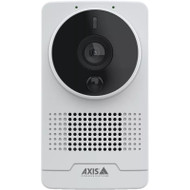
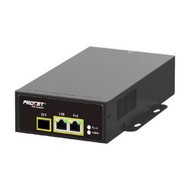
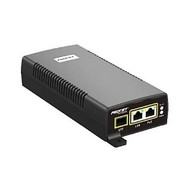
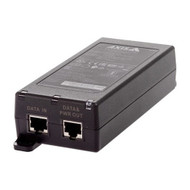
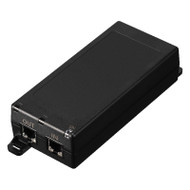
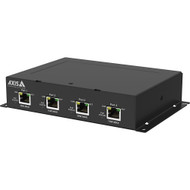
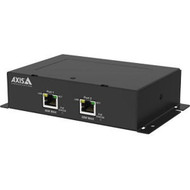
PoE midspans / injectors for adding PoE to existing non-PoE switches:
Extenders for long runs
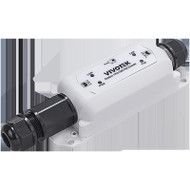
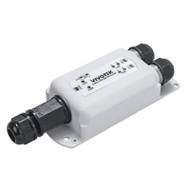
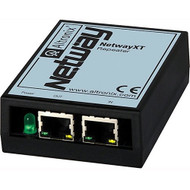
PoE extenders for cable runs over 100m:
PoE budget math
PoE budget math
PoE budget sizing — three rules of thumb:
- Add up sustained loads, not max. A switch rated 720W total budget across 24 ports can in practice only sustain about 600W (83%) before tripping or downgrading port power.
- Plan for IR + heater spike. Outdoor cameras with IR illuminators and heaters can spike from 8W idle to 25W at night with both on. Size for the spike.
- Add 25% headroom for future additions. Replacing a 720W switch in 18 months because you added 4 PTZ cameras is wasted CapEx.
Midspan vs. PoE switch
Midspan vs. PoE switch
When to choose a midspan vs. a PoE switch:
- Use a midspan when:
- You have an existing non-PoE switch that's working fine; you need to add PoE to one or a few devices; you're in a budget-constrained retrofit; the existing switch has the right uplink and management profile.
- Use a PoE switch when:
- Greenfield install; you need PoE on more than 4-8 ports; you want central management; you want to manage power monitoring and per-port telemetry; you're sizing for future expansion.
Extending beyond 100m
Extending PoE beyond 100m
The standard Cat6 max distance is 100 meters (328 feet) for both data and PoE. Beyond that, the options are:
- PoE extender. A small box that regenerates the signal and re-injects power. Each extender adds another 100m. Up to 5 cascaded extenders for 500m total runs are common with PoE+.
- Fiber media converter + PoE injector at far end. The right choice for runs over 200m or where electrical isolation is needed. Multi-mode fiber for runs under 1km, single-mode for runs up to 10km+.
- Long-reach PoE (802.3bu). Specialty switches that push PoE over single-pair Ethernet for up to 1km. Used in transit, mining, and industrial automation.
Frequently asked questions
- Can I run two cameras off one PoE port?
- Not with a splitter — the PoE protocol only negotiates with one device per port. If you need two cameras at one location, use a PoE-pass-through camera (some cameras have a second PoE-out port) or a small PoE-powered switch at the camera location.
- How do I know if my switch has enough PoE budget?
- Check the switch spec sheet for total PoE budget (watts) and per-port maximum. Add up your devices' sustained worst-case power needs and verify total is under 80-85% of the switch's total PoE budget. Many managed switches let you monitor live PoE consumption — confirm before adding new devices.
- Does PoE work over copper Cat5e or do I need Cat6?
- Cat5e works for PoE+ (30W) at 100m. Cat6 is preferred for PoE++ (60-90W) because the larger conductor handles higher current with less heat buildup. For new installs, Cat6 is the standard; for retrofits using existing Cat5e, PoE+ is the safe ceiling.
- Can I run PoE on the same cable as my data network?
- Yes — PoE rides on the same Cat5e/Cat6 cable as the Ethernet data. Standards-compliant PoE doesn't interfere with data signals or other PoE on the same cable bundle. The only concern is cable bundle heat at very high port densities (24+ PoE++ ports on closely-bundled cables in a hot environment) — separate bundles by cable manufacturer guidance.
- What happens if I plug a non-PoE device into a PoE port?
- Standards-compliant PoE switches and midspans do PoE detection — they only power devices that respond correctly to the PoE negotiation handshake. Non-PoE devices are left unpowered. The data still works normally. Passive PoE (non-standard) can damage non-PoE devices, which is why standards-compliant gear is preferred.
Quote a PoE infrastructure build
Sizing PoE for a new site or refresh? Our Senior Specialists can spec switches, midspans, extenders, and fiber media converters — and quote at channel-direct pricing.
Get a PoE quote Browse PoE products