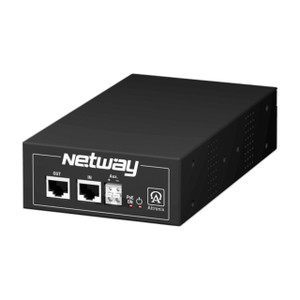
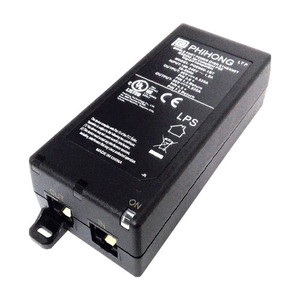
i-PRO WJ-PU201 60W Single Port PoE Injector
The i-PRO WJ-PU201 is a 60W PoE injector engineered to deliver power and Gigabit data through a single Ethernet cable to high-demand networked devices. If you're deploying power-hungry IP cameras, wireless access points, VoIP phones, or access control systems that exceed standard PoE budgets, the WJ-PU201 (often searched as WJ PU201) bridges the gap between your switch and those devices without requiring separate power runs.
Key Features
- 60W PoE Power Budget: Delivers substantially more power than standard 802.3af (15W) or 802.3at (30W) injectors — enough for dual 4K cameras, industrial-grade access control readers, or enterprise-class wireless APs that demand 50–60W. If your device's power consumption hits 40W or higher, standard PoE won't work; this injector closes that gap.
- IEEE 802.3bt Compliance: Meets the latest PoE standard, ensuring compatibility with modern high-power networked devices and future-proofing your infrastructure against mid-cycle device upgrades.
- Gigabit Ethernet Port: Operates at full 1Gbps data rates, so power delivery doesn't compromise network throughput — critical when running surveillance streams, access logs, and device management traffic over the same cable.
- 4-Pair Power Current Sharing: Distributes 60W power load across all four wire pairs in the Ethernet cable rather than concentrating it on two pairs. This reduces heat stress on individual conductors and improves safety margins on longer cable runs — practical benefit when runs exceed 100 meters.
- Phihong Proprietary 12.5K Detection: Validates connected devices before energizing them. Prevents accidental power delivery to incompatible equipment and reduces troubleshooting time when swapping devices or testing new hardware on the line.
- Broken Wire Detection: Monitors cable integrity and cuts power if the connection is compromised, protecting downstream equipment and reducing fire risk in cable runs through walls or conduit.
- Over Voltage Protection (OVP) and Over Current Protection (OCP): Safeguards the injector and connected devices from electrical surges or short circuits. In mission-critical surveillance or access control deployments, this prevents cascading equipment failures when power anomalies occur.
- Non-Vented Case Design: Sealed enclosure keeps dust, moisture, and environmental contaminants out — suitable for network closets, server rooms, and warehouse network cabinets where HVAC is limited or air quality fluctuates.
- Compact Single-Port Form Factor: Occupies minimal shelf or rack space, allowing dense deployment of multiple injectors in a single cabinet without thermal or mechanical conflicts.
Integration & Deployment Context
The WJ-PU201 is ideal for mixed environments where not every device on your network requires 60W but some do. Place it at the edge of your network (between your PoE switch and a single high-power device) or in a patch-panel configuration. For large-scale multi-camera surveillance systems, pair multiple WJ-PU201 units with a standard PoE switch to selectively power devices that exceed switch capacity. When planning PoE power distribution, account for cable run length: longer runs experience voltage drop, so the injector's current-sharing architecture helps maintain stable voltage at the far end.
Common deployment scenarios include enterprise security installations (multiple 4K turrets or panoramic sensors), outdoor wireless mesh networks (802.11ac access points with integrated PoE backhaul), and access control systems (magnetic locks, multi-reader setups, or credential verifiers consuming 40–50W combined). The broken-wire detection is especially valuable in these applications because lost power to a lock or reader creates both a security event and an alarm condition.
Frequently Asked Questions
Q: Can I daisy-chain multiple WJ-PU201 units on the same cable?
A: No. Each WJ-PU201 serves a single device or cable run. If you need to power multiple devices, deploy one injector per device or use a managed PoE switch with multiple high-power ports.
Q: Will the WJ-PU201 work with my existing 802.3af PoE switch?
A: Yes, but only for the 60W delivery: the injector connects between your switch and the powered device, so the switch only delivers standard PoE power to the injector itself; the injector then supplies the full 60W to the endpoint. Your switch must support at least 15W per port.
Q: What happens if I connect a device that doesn't support 60W power input?
A: The Phihong Proprietary 12.5K Detection mechanism validates the device before delivering power. If the device signature doesn't match a known compatible device, the injector prevents power delivery, reducing risk of damage to consumer-grade equipment.
Q: Is the WJ-PU201 suitable for outdoor installations?
A: The injector itself is rated for indoor network closets and controlled environments (non-vented case). For outdoor PoE distribution, mount the injector indoors and run the powered Ethernet cable to outdoor cameras or access points.
Q: How long can the Ethernet cable be between the WJ-PU201 and the powered device?
A: Standard Ethernet cable distance limits (100 meters / 328 feet) apply. Longer runs experience voltage drop; the 4-pair current sharing helps, but for runs approaching 100 meters on high-power devices, verify the device's minimum input voltage specification against your cable gauge and expected drop.
Q: What certifications or standards does the WJ-PU201 carry?
A: The unit is IEEE 802.3bt compliant and features integrated electrical safety protections (OVP, OCP, broken-wire detection). Consult the manufacturer datasheet or contact your supplier for regional certifications (UL, CE, FCC) applicable to your deployment region.
Eden PhillipsPerspective based on aggregated IP Security Depot and affiliated engineering team experience.
The i-PRO WJ-PU201 is a straightforward workhorse in environments where your PoE switch can't deliver the 60W that modern high-power devices demand. I've deployed these in access control installations and multi-sensor camera sites where equipment budgets force you to use a standard switch but devices are pulling 45–55W. The WJ-PU201 slots in cleanly between switch and device without requiring separate power infrastructure.
Technical Highlights:
- 60W Power Budget: Roughly double the capacity of 802.3at (30W) injectors, and four times 802.3af — a hard requirement when you're powering dual 4K cameras, 802.11ac APs with backhaul, or multi-reader access control systems that can't split across multiple injectors.
- 4-Pair Current Sharing: Spreads the electrical load across all eight wires instead of just two. Practical benefit: cable runs over 80 meters stay cooler, voltage drop is predictable, and you avoid the single-pair hotspot that can degrade cable insulation over time.
- Phihong 12.5K Device Detection: A gating mechanism, not a convenience. It prevents the injector from powering equipment that doesn't negotiate properly, which is crucial when you're swapping devices in the field or testing firmware variants that might have mismatched power signatures.
Deployment Considerations:
- Plan cable runs carefully: 100 meters is the absolute limit for any PoE delivery. At 60W over distance, voltage drop becomes a real concern — a device expecting 48V may see 44–45V at the far end on longer runs. Verify your endpoint's tolerance before specifying this injector for a 90+ meter run.
- The non-vented case is a feature, not a limitation, for network closets — but don't install this in direct sun or uncontrolled outdoor temperature zones. Thermal margins are tighter with 60W dissipation than with lower-power units.
- Broken-wire detection is valuable in security deployments: a severed cable to a door lock or reader not only loses power but triggers an alarm. This is especially useful for external cable runs in warehouses or shipping areas.
Position the WJ-PU201 where you have a handful of high-power devices (2–5 per site) mixed with standard PoE gear. It eliminates the false choice between upgrading your entire switch or running separate 12VDC lines. For sites with dozens of high-power endpoints, upgrade to a managed PoE+ or PoE++ switch instead — more economical and cleaner architecture than injector farms.