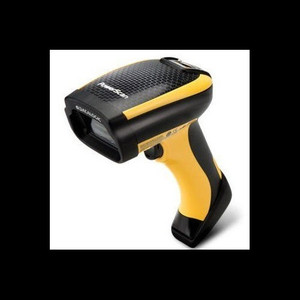
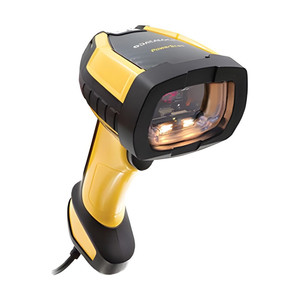
Datalogic PD9630-HPK2 Industrial 2D Area Imager Barcode Scanner
The Datalogic PD9630-HPK2 is a rugged handheld 2D area imager designed for high-volume scanning environments where equipment durability directly impacts operational cost. This scanner combines industrial-grade construction with multi-protocol connectivity, making it a practical choice for organizations standardizing barcode capture across manufacturing floors, warehouses, and healthcare supply chains.
Key Features
- 2D Area Imager Technology: Captures 1D and 2D barcodes, including high-density and damaged codes. Area imagers outperform laser scanners when barcode quality is inconsistent—critical in manufacturing environments where labels degrade on production lines.
- IP65 Environmental Rating: Dust and water sealed, meaning the scanner tolerates spray wash-down and ambient dust without performance loss. Skip this if you need full submersion protection (that requires IP67); for most warehouse and production floor work, IP65 is sufficient.
- 2.5 m (8.2 ft) Drop Resistance: Rated for repeated drops from operator shoulder height onto concrete. This specification matters: scanners that fail drop tests become inventory liability in high-velocity picking operations where devices get bumped daily.
- 10 Million Trigger Press Durability: Mechanical durability at this level signals component quality confidence. For high-volume scanning sites processing 500+ items per shift per scanner, this translates to 5–7 years of typical field life before wear-out.
- Bluetooth 5.0 Wireless with Wired Fallback: Bluetooth mobility reduces operator cable tethering; USB and RS-232 interfaces support both legacy fixed-station integration and real-time backhaul. Optional STAR radio (433/910 MHz) handles RF-congested facilities where standard WiFi sees interference.
- Lightweight at 440 g (0.97 lb): Extended hand scanning sessions—picking, receiving—become less fatiguing. In warehouse environments where operators hold scanners 6–8 hours daily, weight matters for injury prevention.
- Compact Form Factor (71 x 203 x 107 mm): Fits jacket pockets and work vests without bulk. Relevant for last-mile and field logistics where handheld ergonomics impact adoption rates.
- Datalogic Green Spot Good-Read Feedback: Visual confirmation on successful scan eliminates guesswork—operator doesn't need to wait for system confirmation or assume capture happened.
- Industrial Operating Temperature Range: Deployed in unheated warehouses, refrigerated zones, and manufacturing environments without performance degradation. Exact range not specified in evidence; confirm with manufacturer if sub-freezing tolerance is required.
- 1-Year Limited Warranty: Standard coverage; extended plans typically available through authorized channels for high-volume fleets.
Deployment Context
The PD9630-HPK2 sits in the middle of the barcode scanner market—not entry-level, not ultra-specialized. Its multi-connectivity architecture reduces SKU sprawl if you're managing both wireless mobility and fixed-station scanning within the same site. Manufacturing quality control, warehouse receiving, and healthcare patient ID workflows all fit this profile. Retail backroom inventory and last-mile logistics also deploy successfully, provided barcode label quality is moderate to good. If your barcodes are severely damaged or printed on curved surfaces, consult the imager specifications with the manufacturer—area imagers perform well on standard planar labels but have practical limits on severely degraded codes.
Connectivity flexibility deserves emphasis: many organizations default to a single wireless protocol and later regret being locked out of legacy systems or RF-constrained areas. The PD9630-HPK2's multi-interface design avoids that trap. This is especially relevant for enterprises running multiple facilities with different infrastructure maturity levels.
When to Choose a Different Model
If your primary use case is fixed-position scanning (checkout lines, pack stations with stationary mounting), consider a wired-only variant in the PowerScan family—wireless capability adds cost and complexity you won't use. If you operate exclusively in clean, climate-controlled environments and budget is tight, entry-level imagers may suffice. Conversely, if you need IP67 full-submersion rating or operate in classified hazardous areas, escalate to a higher protection-class device. For applications requiring advanced decode capability on ultra-high-density 2D codes (QR, Datamatrix at small print sizes), request decode performance benchmarking from the manufacturer against your specific label library.
Frequently Asked Questions
Q: What barcode symbologies does the PD9630-HPK2 read?
A: The 2D area imager architecture supports all standard 1D symbologies (Code 128, UPC, EAN, ITF) and 2D codes (QR, Data Matrix, PDF417). Specific decode performance on damaged or low-contrast codes should be verified with Datalogic technical documentation for your label quality baseline.
Q: Can I use the PD9630-HPK2 outdoors or in direct sunlight?
A: IP65 protects against weather; however, area imagers (unlike laser scanners) are sensitive to bright ambient light. Outdoor deployment is possible in shaded areas or dock overhangs; direct full-sun reading performance may degrade. Test in your actual environment before rollout.
Q: What's the effective range for Bluetooth connectivity?
A: Bluetooth 5.0 range is typically 50–100 meters line-of-sight in open space; warehouse concrete and metal reduce this significantly. STAR radio options (433/910 MHz) provide longer range through obstacles if Bluetooth range proves insufficient.
Q: Does the PD9630-HPK2 integrate with major WMS or inventory platforms?
A: The scanner outputs standard barcode data via USB HID (Human Interface Device), RS-232, or wireless; it is compatible with any WMS or mobile application that accepts keyboard input or serial data. Integration depends on your software stack, not the scanner model.
Q: What maintenance does the PD9630-HPK2 require?
A: IP65 sealing eliminates need for protective boots on connectors. Periodic lens cleaning (dry cloth) keeps imager performance stable. No battery replacement required if deployed wired; Bluetooth variant requires charging management per the device manual.
Q: How long does a typical unit survive in high-volume environments?
A: The 10 million trigger press rating and 2.5 m drop durability suggest 5–7 years of typical field service in warehouses or production with proper care. Actual lifespan depends on drop frequency, trigger usage intensity, and environmental contamination (water ingress despite IP65 can shorten life).
Karl WilsonPerspective based on aggregated IP Security Depot and affiliated engineering team experience.
The Datalogic PD9630-HPK2 represents a practical platform for organizations seeking industrial-grade 2D barcode capture without over-engineering for environments that don't require specialized features. The combination of IP65 environmental sealing, 2.5 m drop rating, and 10 million trigger press durability demonstrates vendor confidence in component reliability—a meaningful signal when evaluating scanner fleets where replacement frequency becomes a line-item operational cost. The PD9630-HPK2 is not the lightest, fastest, or most feature-rich scanner on the market; it's a balanced choice for multi-facility deployments where standardization and durability matter more than edge-case performance.
Technical Highlights:
- 10 Million Trigger Presses: At 500–1000 scans per operator per shift, this durability specification translates to 5–7 years of field life. Mechanical reliability reduces replacement cycles and associated inventory churn in large fleets.
- 2.5 m Drop Rating: Concrete floors and shoulder-height drops are routine in warehousing. This specification addresses real-world failure modes; devices that fail drop tests become unplanned capex quickly.
- Multi-Connectivity (Bluetooth 5.0 + USB + RS-232 + optional STAR radio): Eliminates the trap of standardizing on a single protocol. Legacy systems, RF-congested facilities, and new wireless infrastructure can all be served by the same hardware family, reducing SKU complexity across enterprise deployments.
Deployment Considerations:
- Area imagers perform well on standard planar labels but degrade in bright ambient light and on severely curved surfaces. Warehouse and production floor environments are ideal; outdoor direct-sun scanning requires shading or alternative technology.
- The 440 g weight is a genuine advantage for hand scanning operations spanning 6+ hours per shift, reducing operator fatigue and supporting sustained scanning velocity. Don't overlook ergonomic factors in high-volume environments.
- Bluetooth wireless capability enables flexibility but adds battery management overhead. For fixed-position or dock-based scanning, the wired-only variant reduces maintenance burden.
The PD9630-HPK2 fits well in standardized warehouse networks, manufacturing quality control workflows, and healthcare supply chain operations where barcode consistency is reasonable and durability expectations are real. It's a sensible choice for IT architects managing multi-facility scanner fleets—not the flashiest tool, but a solid, predictable workhorse.