
Zebra DS8178-SRSF007ZZWW vs Honeywell 520-36/48-H3: Specification Comparison
Both the Zebra DS8178-SRSF007ZZWW and the Honeywell 520-36/48-H3 (Xenon XP 1952g) are cordless 2D barcode scanners aimed at retail and warehouse environments. This comparison examines how they stack up across wireless connectivity, durability, and symbology coverage — the three axes that most directly affect deployment fit, total cost of ownership, and day-to-day operator productivity in scan-intensive B2B settings.
In This Guide
- How do the wireless connectivity and operating specifications differ between the two scanners?
- Which scanner offers stronger durability and environmental protection for warehouse or field use?
- How do the two scanners compare in terms of supported barcode symbologies and scan capability?
- Which should you choose: the DS8178-SRSF007ZZWW or the 520-36/48-H3?
- Side-by-Side Specs
- FAQ
How do the wireless connectivity and operating specifications differ between the two scanners?
The Zebra DS8178-SRSF007ZZWW is specified as cordless/wireless but the protocol is not identified in the provided specifications — only that it requires a wireless docking and charging cradle for operation. The Honeywell 520-36/48-H3 specifies Bluetooth 4.2 as its wireless protocol, supplemented by USB connectivity. Bluetooth 4.2 is a well-understood, IT-manageable standard that pairs directly with access points or hosts without a proprietary cradle mandate.
The Honeywell unit also provides a documented working range of 2.5 to 50.8 cm (1 to 20 in), which defines the effective scan distance from target to window. No equivalent working range figure is present in the Zebra DS8178-SRSF007ZZWW specifications. Buyers deploying in environments where protocol interoperability or a specific scan distance envelope matters should note these gaps before selecting.
Which scanner offers stronger durability and environmental protection for warehouse or field use?
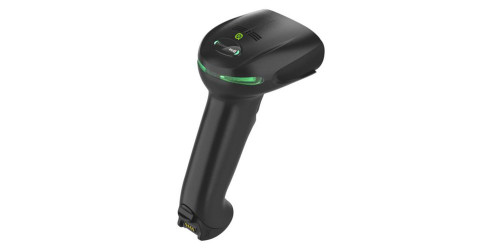
The Honeywell 520-36/48-H3 carries an IP65 ingress protection rating, confirming full dust exclusion and protection against low-pressure water jets — a meaningful spec for washdown-adjacent areas or dusty distribution floors. It also carries a 2.0 m (6.5 ft) drop rating, quantifying its ability to survive falls from operator height onto hard surfaces.
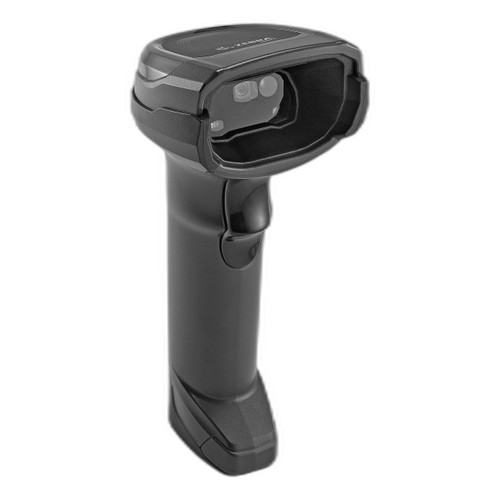
The Zebra DS8178-SRSF007ZZWW specs describe a black durable thermoplastic housing designed for intensive retail and warehouse scanning environments, but no IP rating or drop rating is listed in the provided specifications. Buyers requiring a documented, certifiable durability baseline for compliance or insurance purposes should note that only the Honeywell unit provides those figures here.
How do the two scanners compare in terms of supported barcode symbologies and scan capability?
The Zebra DS8178-SRSF007ZZWW lists the broader explicit symbology set in its specifications: QR Code, Data Matrix, PDF417 (2D), plus Code 128, Code 39, UPC, and EAN (1D) — seven named symbologies including PDF417, which is commonly used in driver's licenses, shipping labels, and healthcare documents.
The Honeywell 520-36/48-H3 specifications enumerate EAN, UPC, Code 128, QR Code, and Data Matrix — five symbologies, with PDF417 not listed in the provided data. Both units are classified as area imager / 2D imaging engines capable of reading both 1D and 2D codes. The Zebra's single-pass scan mode is explicitly called out; the Honeywell specifications do not specify a scan mode. For operations requiring PDF417 reads — logistics, government ID, or healthcare — the Zebra's spec list is the only one that explicitly covers it.
Which should you choose: the DS8178-SRSF007ZZWW or the 520-36/48-H3?
Our take: The DS8178-SRSF007ZZWW is the stronger choice when PDF417 symbology coverage and a broader documented symbology list are the primary requirements. However, the 520-36/48-H3 holds clear advantages on three measurable dimensions: it specifies Bluetooth 4.2 (the DS8178 lists no wireless protocol), carries an IP65 rating and a 2.0 m drop rating (neither figure appears in the DS8178 specs), and ships with a 3-year warranty versus the DS8178's 1-year term. For deployments in physically demanding environments — dusty floors, wet areas, or high-drop-risk roles — the Honeywell's certified durability specs and longer warranty represent lower lifecycle risk. For retail or warehousing workflows that require PDF417 decoding and where the wireless infrastructure is already cradle-based, the Zebra remains a valid candidate, provided buyers verify the wireless protocol separately.
Side-by-Side Comparison
Spec-for-spec, from manufacturer data.
| Specification | Zebra DS8178-SRSF007ZZWW | Honeywell 520-36/48-H3 |
|---|---|---|
| Product Series | DS8178 | Xenon XP 1952g |
| Product Type | Handheld Barcode Scanner | Handheld Barcode Scanner |
| Scan Engine | 2D Imaging (1D + 2D) | Area Imager (1D + 2D) |
| Scan Mode | Single-pass | — |
| Wireless Protocol | — | Bluetooth 4.2 |
| Additional Connectivity | — | USB |
| Working Range | — | 2.5–50.8 cm (1–20 in) |
| IP Rating | — | IP65 |
| Drop Rating | — | 2.0 m (6.5 ft) |
| Housing | Black durable thermoplastic | — |
| Symbologies — 1D | Code 128, Code 39, UPC, EAN | Code 128, UPC, EAN |
| Symbologies — 2D | QR Code, Data Matrix, PDF417 | QR Code, Data Matrix |
| PDF417 Support | Yes | Not listed in specs |
| Application | Retail, Warehouse | General Purpose |
| Warranty | 1-year | 3-year |
| Form Factor | Handheld | Handheld |
Frequently Asked Questions
Which should you choose: the DS8178-SRSF007ZZWW or the 520-36/48-H3?
The DS8178-SRSF007ZZWW is the stronger choice when PDF417 symbology coverage and a broader documented symbology list are the primary requirements. However, the 520-36/48-H3 holds clear advantages on three measurable dimensions: it specifies Bluetooth 4.2 (the DS8178 lists no wireless protocol), carries an IP65 rating and a 2.0 m drop rating (neither figure appears in the DS8178 specs), and ships with a 3-year warranty versus the DS8178's 1-year term. For deployments in physically demanding environments — dusty floors, wet areas, or high-drop-risk roles — the Honeywell's certified durability specs and longer warranty represent lower lifecycle risk. For retail or warehousing workflows that require PDF417 decoding and where the wireless infrastructure is already cradle-based, the Zebra remains a valid candidate, provided buyers verify the wireless protocol separately.
Is the DS8178-SRSF007ZZWW or the 520-36/48-H3 better for harsh warehouse environments?
Based on the provided specifications, the Honeywell 520-36/48-H3 has the documented edge: it carries an IP65 rating (full dust exclusion, low-pressure water resistance) and a 2.0 m drop rating. The Zebra DS8178-SRSF007ZZWW describes durable thermoplastic housing but lists no IP or drop rating in its specifications, so a like-for-like durability comparison cannot be made from the data provided.
Which scanner has better wireless compatibility with standard IT infrastructure?
The Honeywell 520-36/48-H3 specifies Bluetooth 4.2, a widely supported and IT-manageable protocol. The Zebra DS8178-SRSF007ZZWW's wireless protocol is not identified in the provided specifications — only that it operates cordlessly and requires a docking cradle. Buyers integrating into existing Bluetooth infrastructure should confirm the Zebra's protocol separately before purchasing.
Does either scanner support PDF417, and why does that matter?
PDF417 is explicitly listed among the Zebra DS8178-SRSF007ZZWW's supported symbologies. It does not appear in the Honeywell 520-36/48-H3's provided specification list. PDF417 is required for scanning driver's licenses, certain shipping labels, and healthcare documents. If PDF417 is a workflow requirement, the Zebra's spec sheet covers it; buyers should verify with Honeywell whether the 520-36/48-H3 supports it before ruling it out.
More Barcode Scanner Comparisons
- Zebra DS3678 vs Honeywell 520-36/48-H3
- Zebra DS3678 vs CipherLab A2564S2BS0001
- Zebra DS3678 vs Honeywell 1962H-WC-CUP
- Zebra DS3678 vs Socket Mobile CX4238-3326
- Zebra DS3678 vs Zebra DS3678
- Zebra DS3678 vs Zebra DS8178-SRSF007ZZWW
Barcode Scanner Buying Guides
Get a Second Opinion on Your Camera Choice
Share your site layout, coverage goals, and budget. Our team will validate the camera selection, flag anything we would change, and recommend products that match the use case.