
Zebra DS3678-XR3RF50AS1W vs Socket Mobile CX4238-3326: Specification Comparison
Both the Zebra DS3678-XR3RF50AS1W and the Socket Mobile CX4238-3326 are cordless handheld 2D barcode scanners targeting mobile workforce environments such as warehousing, retail, and field operations. The Zebra unit uses Wi-Fi (802.11) as its wireless medium, while the Socket Mobile unit relies on Bluetooth. Both decode 2D symbologies and carry a 1-year warranty. This comparison examines their wireless architecture and range model, environmental durability, and symbology and platform compatibility to help buyers choose the right scanner for their deployment context.
In This Guide
- How do the wireless connectivity models and data transmission methods differ between these two scanners?
- Which scanner offers stronger environmental protection for harsh or variable operating conditions?
- How do the two scanners compare on supported barcode symbologies, security features, and host platform compatibility?
- Which should you choose: the DS3678-XR3RF50AS1W or the CX4238-3326?
- Side-by-Side Specs
- FAQ
How do the wireless connectivity models and data transmission methods differ between these two scanners?
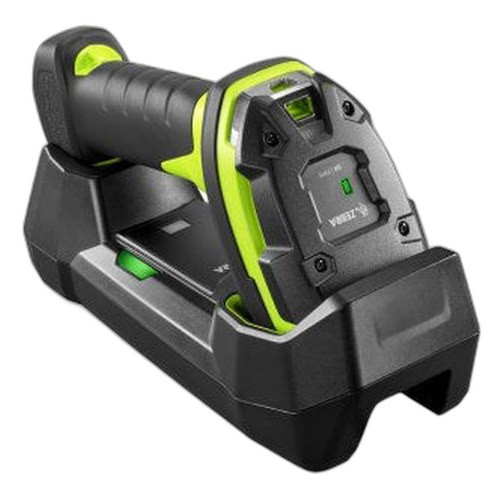
The DS3678-XR3RF50AS1W connects via Wi-Fi (802.11), enabling real-time keyboard input directly to WMS and POS systems over standard enterprise wireless networks. This architecture eliminates the need for a paired host device — the scanner joins the network infrastructure directly and transmits data as keyboard input to any networked endpoint. Additionally, the spec sheet notes Bluetooth 4.0 capability, though the primary connectivity model for this SKU is Wi-Fi.
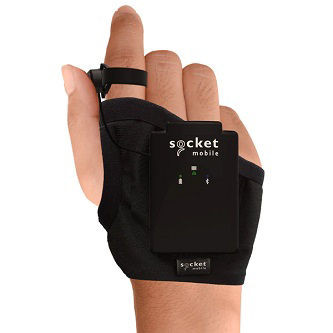
The CX4238-3326 connects via Bluetooth with a specified range of 50 feet. It supports both HID and SPP Bluetooth profiles, meaning it pairs directly to iOS, Android, or Windows host devices without custom drivers. This model is host-device-centric: the scanner pairs to a tablet, smartphone, or PC, and data flows through that paired device. No Wi-Fi infrastructure is required, which lowers deployment complexity in environments without managed wireless networks.
Buyers with existing Wi-Fi infrastructure and WMS/POS systems expecting keyboard wedge input will favor the Zebra. Buyers deploying paired mobile devices — tablets or smartphones running iOS, Android, or Windows — will find the Socket Mobile's Bluetooth HID/SPP model more appropriate.
Which scanner offers stronger environmental protection for harsh or variable operating conditions?
The DS3678-XR3RF50AS1W carries an IP65 environmental rating, meaning it is tested to resist water spray from any direction and is fully dust-tight. IP65 is a recognized IEC standard suitable for loading docks, outdoor receiving areas, food processing environments with spray-down cleaning, and other demanding industrial settings.
The CX4238-3326 specs provide an operating temperature range of 0°C to 45°C (32°F to 113°F) but do not include any stated IP ingress protection rating. The absence of an IP rating in the provided specifications means no dust or liquid resistance claims can be confirmed for this model based on available data.
For deployments in warehouses, loading docks, outdoor areas, or any environment involving water exposure or heavy dust, the DS3678-XR3RF50AS1W's IP65 rating represents a concrete, verifiable durability advantage. The CX4238-3326's operating temperature range is relevant for environments with moderate thermal variation, but no equivalent ingress protection data is available to make an environmental parity comparison.
How do the two scanners compare on supported barcode symbologies, security features, and host platform compatibility?
The DS3678-XR3RF50AS1W uses a 1D/2D imaging scan engine described as capturing linear and 2D symbologies in a single pass. Specific supported symbology names are not enumerated in the provided specifications beyond '1D/2D.' The scanner transmits data as real-time keyboard input, making it host-agnostic at the application layer, though platform compatibility details beyond WMS/POS keyboard wedge are not stated in the specs.
The CX4238-3326 explicitly lists supported symbologies: QR Code, Data Matrix, PDF417 (2D), and Code 128 and Code 39 (1D). Platform compatibility is explicitly stated as iOS, Android, and Windows via Bluetooth HID and SPP — no custom drivers required. A notable differentiator is the Integrated Secure Pad, which enables on-device PIN entry and cryptographic transaction signing, supporting transaction authentication use cases such as age verification, secure payment workflows, or access-controlled data capture.
The CX4238-3326 provides greater specification transparency on symbologies and explicit platform support. Its Secure Pad feature addresses a distinct use case — authenticated transactions — not covered by any stated DS3678-XR3RF50AS1W specification.
Which should you choose: the DS3678-XR3RF50AS1W or the CX4238-3326?
Our take: The DS3678-XR3RF50AS1W is the stronger choice when the deployment environment demands industrial durability and direct integration into Wi-Fi-networked WMS or POS systems. Its IP65 rating — confirmed dust-tight and water-spray resistant — is a concrete advantage the CX4238-3326 cannot match based on available specifications, which state no ingress protection rating. The Zebra's Wi-Fi (802.11) architecture transmits data in real time to existing network endpoints without requiring a paired host device, which suits high-volume warehouse and dock operations. Conversely, the CX4238-3326 is the stronger choice for mobile-device-centric deployments on iOS, Android, or Windows: its Bluetooth HID/SPP model requires no drivers, its 50-foot range is explicitly specified, and its Integrated Secure Pad adds on-device PIN entry and cryptographic transaction signing not present in the Zebra's stated specs. Choose the Zebra for rugged, infrastructure-connected warehouse use; choose the Socket Mobile for paired-device mobile retail, field ops, or authenticated-transaction workflows.
Side-by-Side Comparison
Spec-for-spec, from manufacturer data.
| Specification | Zebra DS3678-XR3RF50AS1W | Socket Mobile CX4238-3326 |
|---|---|---|
| Product Class | Cordless 1D/2D Wi-Fi Scanner | Cordless 2D Bluetooth Scanner |
| Primary Connectivity | Wi-Fi (802.11) | Bluetooth |
| Bluetooth | 4.0 (noted in specs) | Bluetooth (version not specified) |
| Wireless Range | — | 50 feet (Bluetooth) |
| Scan Engine | 1D/2D Imaging | 2D Area Imager |
| Symbologies — 2D | 2D (names not enumerated in specs) | QR Code, Data Matrix, PDF417 |
| Symbologies — 1D | 1D linear (names not enumerated in specs) | Code 128, Code 39 |
| IP / Ingress Protection | IP65 (dust-tight, water-spray resistant) | — |
| Operating Temperature | — | 0°C to 45°C (32°F to 113°F) |
| Host Platform Compatibility | WMS/POS via keyboard wedge input | iOS, Android, Windows (no custom drivers) |
| Security Feature | — | Integrated Secure Pad (PIN entry, cryptographic signing) |
| Data Transmission Mode | Real-time keyboard input to WMS/POS | Bluetooth HID and SPP profiles |
| Form Factor | Handheld Trigger-Grip | Handheld |
| Scan Pattern | Single-pass | — |
| Warranty | 1 year | 1 year |
| SKU | DS3678-XR3RF50AS1W | CX4238-3326 |
Frequently Asked Questions
Which should you choose: the DS3678-XR3RF50AS1W or the CX4238-3326?
The DS3678-XR3RF50AS1W is the stronger choice when the deployment environment demands industrial durability and direct integration into Wi-Fi-networked WMS or POS systems. Its IP65 rating — confirmed dust-tight and water-spray resistant — is a concrete advantage the CX4238-3326 cannot match based on available specifications, which state no ingress protection rating. The Zebra's Wi-Fi (802.11) architecture transmits data in real time to existing network endpoints without requiring a paired host device, which suits high-volume warehouse and dock operations. Conversely, the CX4238-3326 is the stronger choice for mobile-device-centric deployments on iOS, Android, or Windows: its Bluetooth HID/SPP model requires no drivers, its 50-foot range is explicitly specified, and its Integrated Secure Pad adds on-device PIN entry and cryptographic transaction signing not present in the Zebra's stated specs. Choose the Zebra for rugged, infrastructure-connected warehouse use; choose the Socket Mobile for paired-device mobile retail, field ops, or authenticated-transaction workflows.
Is the DS3678-XR3RF50AS1W or CX4238-3326 better for a warehouse with an existing Wi-Fi network and a WMS?
The DS3678-XR3RF50AS1W is better suited for that environment. It connects directly via Wi-Fi (802.11) and transmits data as real-time keyboard input to WMS and POS systems over your existing network infrastructure, with no paired host device required. It also carries an IP65 rating for dust and water-spray resistance common in warehouse and dock settings. The CX4238-3326 uses Bluetooth and pairs to a host device — it is not designed for direct Wi-Fi network integration.
Can the CX4238-3326 work with an iPhone or iPad without extra software?
Yes, based on the stated specifications. The CX4238-3326 supports Bluetooth HID and SPP profiles and is explicitly listed as compatible with iOS, Android, and Windows with no custom drivers required. It will appear as a Bluetooth keyboard (HID) to an iPhone or iPad, making it usable with standard iOS apps that accept keyboard input.
Which scanner is better for environments where liquids or dust are a concern?
The DS3678-XR3RF50AS1W is the documented choice for such environments. It carries an IP65 rating, which certifies full dust ingress protection and resistance to water spray from any direction under IEC standards. The CX4238-3326 specifications do not include any stated IP ingress protection rating, so no equivalent claim can be confirmed for that model based on available data.
More Barcode Scanner Comparisons
- Zebra DS3678 vs Honeywell 520-36/48-H3
- Zebra DS3678 vs CipherLab A2564S2BS0001
- Zebra DS3678 vs Honeywell 1962H-WC-CUP
- Zebra DS3678 vs Socket Mobile CX4238-3326
- Zebra DS3678 vs Zebra DS3678
- Zebra DS3678 vs Zebra DS8178-SRSF007ZZWW
Barcode Scanner Buying Guides
Get a Second Opinion on Your Camera Choice
Share your site layout, coverage goals, and budget. Our team will validate the camera selection, flag anything we would change, and recommend products that match the use case.