
Zebra DS3678-XR3RF50AS1W vs Honeywell 1962H-WC-CUP: Specification Comparison
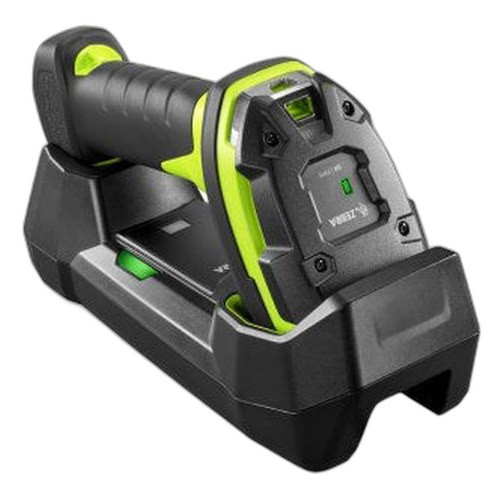
Both the Zebra DS3678-XR3RF50AS1W and the Honeywell 1962H-WC-CUP (Xenon XP 1952g) are cordless handheld 1D/2D barcode scanners rated IP65, targeting warehouse, dock, and general-purpose mobile data-capture applications. The Zebra connects via Wi-Fi 802.11 with Bluetooth 4.0, while the Honeywell uses Bluetooth 4.2 with USB fallback. This comparison evaluates the two on wireless architecture and data transmission, environmental and physical durability, and scan capability and symbology support — the axes that drive purchasing decisions in this product class.

In This Guide
- How does each scanner connect to the network and transmit data in real time?
- Which scanner is better equipped to survive drops, moisture, and harsh physical environments?
- What barcode types can each scanner read, and how are they captured?
- Which should you choose: the DS3678-XR3RF50AS1W or the 1962H-WC-CUP?
- Side-by-Side Specs
- FAQ
How does each scanner connect to the network and transmit data in real time?
The Zebra DS3678-XR3RF50AS1W uses Wi-Fi (802.11) as its primary wireless link, enabling direct real-time keyboard input to WMS and POS systems over standard enterprise Wi-Fi infrastructure. It also carries Bluetooth 4.0, per the listed specification. This architecture suits environments where Wi-Fi access points are already deployed and IT teams want the scanner to behave as a direct network node without an intermediate base station.
The Honeywell 1962H-WC-CUP transmits via Bluetooth 4.2 and includes USB as a wired fallback. Bluetooth 4.2 offers a later-generation radio than the Zebra's Bluetooth 4.0, with defined improvements in data transfer speed and privacy at the protocol level. However, Bluetooth-primary scanners typically pair through a base station or USB dongle rather than connecting directly to a Wi-Fi network segment, which affects infrastructure planning. The USB fallback provides a tethered option not present in the Zebra's listed specifications.
Which scanner is better equipped to survive drops, moisture, and harsh physical environments?
Both scanners share an IP65 environmental rating, meaning both are tested to withstand dust ingress (fully dust-tight) and water projected from a nozzle from any direction. Neither specification claims a higher IP water-resistance tier, so on that axis they are equivalent.
The Honeywell 1962H-WC-CUP adds a 2.0 m (6.5 ft) drop rating, a concrete mechanical durability figure that indicates the unit has been tested to survive falls to hard surfaces from that height. The Zebra DS3678-XR3RF50AS1W's provided specifications do not include a drop rating figure. Buyers operating in high-drop-risk environments — pick faces, conveyor edges, loading docks — have a validated drop tolerance figure only for the Honeywell.
What barcode types can each scanner read, and how are they captured?
Both units use 1D/2D imaging engines capable of reading linear and two-dimensional codes in a single pass. The Zebra DS3678-XR3RF50AS1W is described as a single-pass 1D/2D imager; no explicit symbology list is provided in the available specifications.
The Honeywell 1962H-WC-CUP is identified as an area imager with an explicit symbology list: UPC, Code 128, Code 39, QR Code, Data Matrix, PDF417, and Aztec. It also specifies a working range of 2.5 to 50.8 cm (1 to 20 inches). The Zebra's specifications do not enumerate a working range or a named symbology list, so direct comparison on those sub-dimensions cannot be made from the available data.
Which should you choose: the DS3678-XR3RF50AS1W or the 1962H-WC-CUP?
Our take: The 1962H-WC-CUP is the stronger choice when drop durability and a verified symbology list are the primary selection criteria. The Honeywell carries a documented 2.0 m drop rating absent from the Zebra's specifications, covers a confirmed set of seven symbologies including PDF417 and Aztec, and uses Bluetooth 4.2 — a newer radio generation than the Zebra's Bluetooth 4.0 — with USB as a wired fallback. It also ships with a 3-year warranty versus the Zebra's 1-year warranty, a meaningful total-cost-of-ownership difference in fleet deployments. The Zebra DS3678-XR3RF50AS1W is preferable when the site already runs dense Wi-Fi infrastructure and requires the scanner to act as a direct Wi-Fi network node for real-time WMS or POS input without a Bluetooth base station intermediary. Platform commitment — Zebra MDM ecosystem versus Honeywell's — should also factor into multi-unit purchasing decisions.
Side-by-Side Comparison
Spec-for-spec, from manufacturer data.
| Specification | Zebra DS3678-XR3RF50AS1W | Honeywell 1962H-WC-CUP |
|---|---|---|
| Product Type | Handheld Scanner | Handheld Scanner |
| Series / Family | DS3678-XR | Xenon XP 1952g |
| Scan Engine | 1D/2D Imaging | Area Imager (1D/2D) |
| Scan Pattern | Single-pass | — |
| Primary Connectivity | Wi-Fi (802.11) | Bluetooth 4.2 |
| Secondary Connectivity | Bluetooth 4.0 | USB |
| IP Rating | IP65 | IP65 |
| Drop Rating | — | 2.0 m (6.5 ft) |
| Working Range | — | 2.5 to 50.8 cm (1 to 20 in) |
| Symbologies Listed | — | UPC, Code 128, Code 39, QR, Data Matrix, PDF417, Aztec |
| Form Factor | Handheld Trigger-Grip | Handheld |
| Application | Warehouse / WMS / POS | General Purpose |
| Warranty | 1 year | 3 years |
| PoE Class | — | 2 |
Frequently Asked Questions
Which should you choose: the DS3678-XR3RF50AS1W or the 1962H-WC-CUP?
The 1962H-WC-CUP is the stronger choice when drop durability and a verified symbology list are the primary selection criteria. The Honeywell carries a documented 2.0 m drop rating absent from the Zebra's specifications, covers a confirmed set of seven symbologies including PDF417 and Aztec, and uses Bluetooth 4.2 — a newer radio generation than the Zebra's Bluetooth 4.0 — with USB as a wired fallback. It also ships with a 3-year warranty versus the Zebra's 1-year warranty, a meaningful total-cost-of-ownership difference in fleet deployments. The Zebra DS3678-XR3RF50AS1W is preferable when the site already runs dense Wi-Fi infrastructure and requires the scanner to act as a direct Wi-Fi network node for real-time WMS or POS input without a Bluetooth base station intermediary. Platform commitment — Zebra MDM ecosystem versus Honeywell's — should also factor into multi-unit purchasing decisions.
Is the DS3678-XR3RF50AS1W or the 1962H-WC-CUP better for larger warehouse deployments already running enterprise Wi-Fi?
The Zebra DS3678-XR3RF50AS1W is specified with Wi-Fi (802.11) as its primary link, allowing it to connect directly to existing enterprise Wi-Fi access points and transmit data in real time to WMS or POS systems. The Honeywell 1962H-WC-CUP uses Bluetooth 4.2 as its primary wireless method, which typically requires a paired base station or USB dongle rather than a direct Wi-Fi network connection. If your infrastructure is Wi-Fi-centric and you want to avoid base-station management overhead, the Zebra's architecture is a better fit based on the provided specifications.
Which scanner has the better warranty, and does it matter for a fleet purchase?
The Honeywell 1962H-WC-CUP carries a 3-year warranty per its specification, while the Zebra DS3678-XR3RF50AS1W is listed with a 1-year warranty. For fleet purchases where repair and replacement costs scale with unit count, the extra two years of covered service on the Honeywell can represent a material cost difference over the ownership period.
Do both scanners handle the same barcodes, including 2D codes like QR and Data Matrix?
Both units are specified as 1D/2D imaging scanners capable of reading linear and two-dimensional codes in a single pass. However, only the Honeywell 1962H-WC-CUP provides an explicit symbology list in the available specifications: UPC, Code 128, Code 39, QR Code, Data Matrix, PDF417, and Aztec. The Zebra DS3678-XR3RF50AS1W's specification sheet does not enumerate specific symbologies, so buyers needing to verify support for a particular code type — such as PDF417 or Aztec — can confirm it only for the Honeywell from the data provided.
More Barcode Scanner Comparisons
- Zebra DS3678 vs Honeywell 520-36/48-H3
- Zebra DS3678 vs CipherLab A2564S2BS0001
- Zebra DS3678 vs Honeywell 1962H-WC-CUP
- Zebra DS3678 vs Socket Mobile CX4238-3326
- Zebra DS3678 vs Zebra DS3678
- Zebra DS3678 vs Zebra DS8178-SRSF007ZZWW
Barcode Scanner Buying Guides
Get a Second Opinion on Your Camera Choice
Share your site layout, coverage goals, and budget. Our team will validate the camera selection, flag anything we would change, and recommend products that match the use case.