
Vivotek ND9426P vs Hanwha XRN-1620B2: Specification Comparison
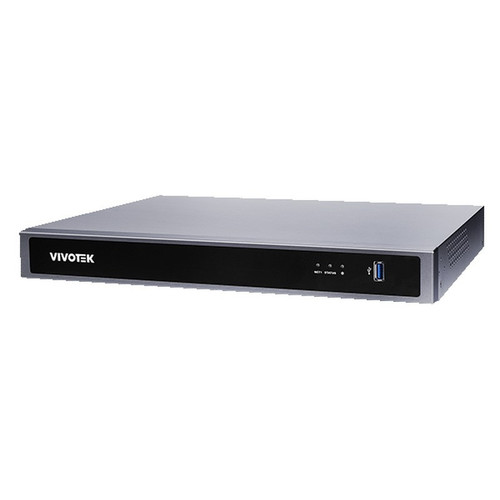
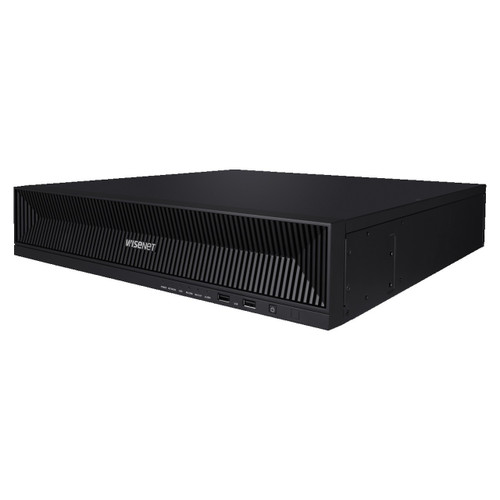
Both the Vivotek ND9426P and the Hanwha XRN-1620B2 are 16-channel 4K NVRs targeting professional IP surveillance deployments. The ND9426P is a 1U PoE-integrated unit with built-in 16-port PoE+ switching, while the XRN-1620B2 is a non-PoE rackmount NVR with eight SATA bays and enterprise redundancy features. Buyers choosing between them are typically weighing simplified PoE-inclusive deployment against higher storage density, greater redundancy, and broader camera input resolution support.
In This Guide
- Which NVR delivers more recording bandwidth, storage capacity, and channel throughput?
- How do the two units compare on power consumption, physical form factor, and operating environment?
- Which unit offers stronger integration ecosystem, redundancy, and remote management capabilities?
- Which should you choose: the ND9426P or the XRN-1620B2?
- Side-by-Side Specs
- FAQ
Which NVR delivers more recording bandwidth, storage capacity, and channel throughput?
The ND9426P records at a maximum of 192 Mbps aggregate throughput, with hardware H.265/H.264 decoding capable of handling 3840×2160 at 120 fps or 1920×1080 at 480 fps. Its decoding resolution ceiling is listed at 7680×2560. Storage is limited to two internal 3.5-inch SATA bays with RAID 0 or RAID 1 support; no per-drive or total capacity ceiling is stated in the supplied specs. USB 3.0 is available on both front and rear for external storage and clip export, and schedule backup to FTP is supported.
The XRN-1620B2 records at a maximum of 140 Mbps aggregate throughput and supports playback bandwidth up to 32 Mbps. It accepts camera inputs up to 32MP resolution (versus the ND9426P's 8MP maximum input). Storage is substantially larger: eight SATA bays accommodating up to 10TB per drive for a maximum of 80TB raw capacity. No RAID mode is specified in the supplied specs. Backup formats include BU/Exe/AVI via GUI and JPG/AVI via network, with multi-channel playback of up to 16 channels. The ND9426P holds a 52 Mbps throughput advantage; the XRN-1620B2 holds a decisive storage and maximum input-resolution advantage.
How do the two units compare on power consumption, physical form factor, and operating environment?
The ND9426P measures 365 × 315 × 44 mm (W×D×H) and weighs 2.78 kg, drawing up to 270 W maximum — the bulk of that budget consumed by its integrated 16-port PoE+ switch powering attached cameras. Input voltage is 100–240 V AC, 50/60 Hz. It operates from −10°C to 55°C and tolerates 0–95% relative humidity (non-condensing not specified). Safety certifications listed include CE, FCC, VCCI, C-Tick, UL, CB, BSMI, and BIS.
The XRN-1620B2 measures 440 × 428.4 × 89.8 mm (W×D×H) and weighs 5.71 kg, reflecting its eight-bay chassis. Maximum power draw is 130 W — 140 W less than the ND9426P — because it carries no onboard PoE circuitry. Input voltage is likewise 100–240 VAC ±10%, 50/60 Hz. Operating temperature is narrower: 0°C to 40°C, with 20–85% RH. No safety certifications are listed in the supplied specs. The ND9426P's wider thermal range (−10°C to 55°C vs. 0°C to 40°C) is meaningful for installations in uncontrolled or semi-conditioned spaces.
Which unit offers stronger integration ecosystem, redundancy, and remote management capabilities?
The ND9426P integrates via ONVIF Profile S and supports VCA analytics natively: object search (people, vehicle), scene search (line crossing, intrusion, loitering), and attribute search (gender, age, clothing color, vehicle type and color). It includes Trend Micro IoT Security and Cybersecurity Management. Software ecosystem spans Shepherd, VAST Security Station (VSS), and mobile apps iViewer, VIVOCloud, and VORTEX (iOS and Android). PTZ supports direction control, home, iris, preset, and patrol. User levels are administrator and regular user. Web browser support is limited to Chrome per the supplied specs. Log capacity is not specified.
The XRN-1620B2 supports SUNAPI and ONVIF (Profile-S), integrates with WAVE, SSM, Smart Viewer, Webviewer, and Wisenet Mobile, and exposes CGI (SUNAPI) for third-party VMS integration. It supports N+1 failover and Automatic Redundancy Backup (ARB) — enterprise redundancy features absent from the ND9426P's spec sheet. Remote user limits are defined explicitly: 3 search, 10 live unicast, 20 multicast. PTZ supports 300 presets. Security features include IP address filtering, 802.1x, device certificates (Hanwha Techwin Root CA), and signed firmware. Log capacity is up to 100,000 entries per log type (system and event). AI attribute search is flagged as compatible with Wisenet AI cameras specifically. Web browser support covers Chrome, Edge, and Safari.
Which should you choose: the ND9426P or the XRN-1620B2?
Our take: The ND9426P is the stronger choice when the installation requires integrated PoE+ camera power, a wider operating temperature range, and on-box VCA analytics with attribute search. Its 192 Mbps recording throughput exceeds the XRN-1620B2's 140 Mbps by 52 Mbps, its thermal tolerance extends to −10°C versus the Hanwha's 0°C floor, and its VCA suite (people/vehicle attribute search, line crossing, loitering) runs locally without requiring a Wisenet AI camera. The XRN-1620B2 is the stronger choice when storage density, high-resolution camera input, or enterprise redundancy are the priority: eight SATA bays supporting up to 80TB dwarf the Vivotek's dual-bay design, 32MP input resolution doubles the ND9426P's 8MP ceiling, and N+1 failover plus ARB have no equivalent in the ND9426P spec sheet. Platform lock-in matters: the Vivotek fits a Vivotek/ONVIF camera mix on a VAST Station-managed site; the Hanwha suits a Wisenet-centric or multi-VMS enterprise environment.
Side-by-Side Comparison
Spec-for-spec, from manufacturer data.
| Specification | Vivotek ND9426P | Hanwha XRN-1620B2 |
|---|---|---|
| Channel Count | 16 | 16 |
| Max Camera Input Resolution | 8MP | 32MP |
| Recording Throughput | 192 Mbps | 140 Mbps |
| Playback Bandwidth | Not specified | 32 Mbps (max) |
| Video Compression | H.265, H.264, MJPEG | H.265, H.264, MJPEG |
| Integrated PoE+ | Yes — 16-port PoE+ (802.3at) | No |
| Internal HDD Bays | 2 × 3.5-inch SATA | 8 × SATA |
| Max Raw Storage | Not specified | 80TB (10TB/drive max) |
| RAID Support | RAID 0, 1 | Not specified |
| Video Outputs | HDMI (4K) × 1, VGA × 1 | HDMI (4K) × 1, VGA (FHD) × 1 |
| Alarm Inputs / Outputs | 4 in / 1 out | 4 in / 2 out |
| N+1 Failover / ARB | Not specified | Yes — N+1 failover + ARB |
| Operating Temperature | −10°C to 55°C | 0°C to 40°C |
| Max Power Draw | 270 W | 130 W |
| Dimensions (W×D×H mm) | 365 × 315 × 44 | 440 × 428.4 × 89.8 |
| Weight | 2.78 kg | 5.71 kg |
Frequently Asked Questions
Which should you choose: the ND9426P or the XRN-1620B2?
The ND9426P is the stronger choice when the installation requires integrated PoE+ camera power, a wider operating temperature range, and on-box VCA analytics with attribute search. Its 192 Mbps recording throughput exceeds the XRN-1620B2's 140 Mbps by 52 Mbps, its thermal tolerance extends to −10°C versus the Hanwha's 0°C floor, and its VCA suite (people/vehicle attribute search, line crossing, loitering) runs locally without requiring a Wisenet AI camera. The XRN-1620B2 is the stronger choice when storage density, high-resolution camera input, or enterprise redundancy are the priority: eight SATA bays supporting up to 80TB dwarf the Vivotek's dual-bay design, 32MP input resolution doubles the ND9426P's 8MP ceiling, and N+1 failover plus ARB have no equivalent in the ND9426P spec sheet. Platform lock-in matters: the Vivotek fits a Vivotek/ONVIF camera mix on a VAST Station-managed site; the Hanwha suits a Wisenet-centric or multi-VMS enterprise environment.
Is the ND9426P or XRN-1620B2 better for larger deployments needing high storage capacity?
The XRN-1620B2 is substantially better for high-capacity deployments. Its eight SATA bays support up to 80TB of raw storage (up to 10TB per drive), while the ND9426P provides only two internal 3.5-inch bays with no per-drive or total capacity ceiling stated in its specifications. If a site needs weeks of continuous 4K retention across all 16 channels, the XRN-1620B2's storage headroom is the decisive factor.
Does the ND9426P or XRN-1620B2 include built-in PoE to power cameras?
Only the ND9426P includes integrated PoE+. Its spec sheet confirms 16-channel PoE+ (802.3at) with PoE management, allowing cameras to draw power directly from the NVR over a single Ethernet cable per camera. The XRN-1620B2 has no PoE capability listed in its supplied specifications; cameras connected to it require a separate PoE switch or midspan injectors, which adds infrastructure cost and complexity.
Which NVR has better enterprise redundancy and failover support?
The XRN-1620B2 specifies N+1 failover and Automatic Redundancy Backup (ARB), which are purpose-built enterprise continuity features. The ND9426P's supplied specifications list no equivalent failover or redundancy mode. For mission-critical installations where NVR downtime is unacceptable, the XRN-1620B2 is the appropriate choice on this dimension.
Get a Second Opinion on Your Camera Choice
Share your site layout, coverage goals, and budget. Our team will validate the camera selection, flag anything we would change, and recommend products that match the use case.