
Ubiquiti UAP-AC-PRO-5-US vs Ubiquiti UAP-AC-M-5-US: Specification Comparison
Both the UAP-AC-PRO-5-US and UAP-AC-M-5-US are Ubiquiti UniFi Wi-Fi 5 (802.11ac) dual-band access point 5-packs, managed through the UniFi Controller platform and sold for multi-AP deployments. The PRO variant targets higher-density indoor and sheltered outdoor environments, while the AC-M (Mesh) variant targets outdoor and distributed mesh scenarios. Buyers choosing between them face trade-offs in PoE input type, port count, environmental tolerance, and client-density capacity—all of which have direct bearing on cabling infrastructure, switch compatibility, and deployment scope.
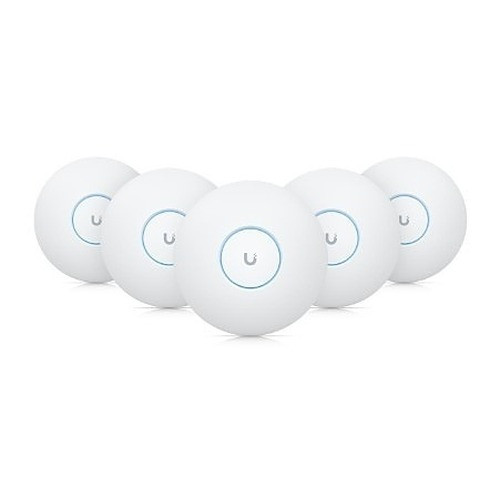
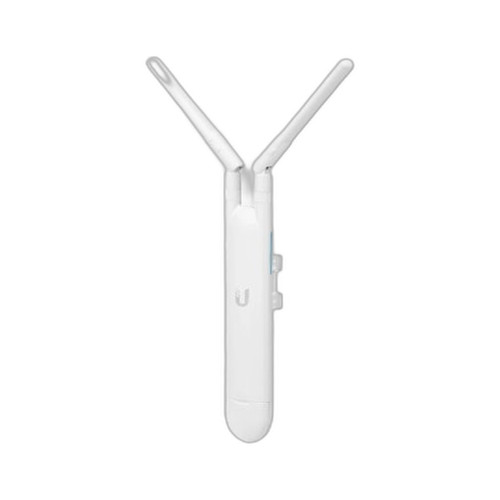
In This Guide
- How do the radio performance and per-AP throughput compare between the UAP-AC-PRO-5-US and UAP-AC-M-5-US?
- What are the PoE power requirements and environmental ratings for each model, and how do those affect infrastructure planning?
- How do the port count, mounting options, and management platform differ between the two models?
- Which should you choose: the UAP-AC-PRO-5-US or the UAP-AC-M-5-US?
- Side-by-Side Specs
- FAQ
How do the radio performance and per-AP throughput compare between the UAP-AC-PRO-5-US and UAP-AC-M-5-US?
The UAP-AC-PRO-5-US specifies its combined throughput as 1750 Mbps, broken out explicitly as 450 Mbps on 2.4 GHz and 1300 Mbps on 5 GHz. The UAP-AC-M-5-US lists 1750 Mbps combined throughput but does not break out per-band speeds in the provided specs, making a direct band-level comparison impossible from the available data.
The PRO model supports 50–300 concurrent clients per AP according to its spec bullets. The AC-M is rated for 20–50 concurrent clients per AP. For high-density venues—conference rooms, classrooms, or warehouses with many devices—the PRO's higher client ceiling is a meaningful differentiator. Both operate simultaneously on 2.4 GHz and 5 GHz dual-band.
What are the PoE power requirements and environmental ratings for each model, and how do those affect infrastructure planning?
The UAP-AC-PRO-5-US requires 802.3at PoE+ (approximately 13 W max) and accepts input from a standard 802.3at-capable switch port or the included PoE adapter. This is the dominant standard on managed enterprise switches, meaning no special injectors are typically needed in a modern wired plant.
The UAP-AC-M-5-US uses 24V Passive PoE (pins 4,5+; 7,8 return) delivered by the included 24V 0.5A Gigabit PoE adapter. Passive PoE is not IEEE 802.3af/at compliant, so standard 802.3af/at switch ports will not power it without the supplied adapter or a Ubiquiti 24V passive injector. This adds a per-AP injector requirement if the site uses standard PoE switches.
On environmental tolerance, the AC-M has a significant advantage: its rated operating range is −30 to 70 °C (−22 to 158 °F), suitable for exposed outdoor installations in cold climates. The PRO is rated −10 to 50 °C (14 to 122 °F), which covers most temperate outdoor or indoor conditions but excludes hard-freeze environments. The AC-M also specifies a maximum range figure of 1750 m, which is consistent with its mesh/outdoor design intent; no equivalent range figure is provided for the PRO.
How do the port count, mounting options, and management platform differ between the two models?
The UAP-AC-PRO-5-US provides 2× RJ-45 Gigabit Ethernet ports per unit, enabling daisy-chain or wired uplink redundancy configurations. The UAP-AC-M-5-US provides 1× 10/100/1000 Ethernet port per unit, limiting wired connectivity to a single uplink.
Mounting options also differ. The PRO supports wall, ceiling, and rack mounting. The AC-M supports wall and pole mounting, reflecting its outdoor and mesh deployment profile where pole attachment is common.
Both models are managed through the UniFi Controller platform (cloud or on-premises), providing a unified interface for firmware updates, roaming policies, guest networks, and RF management across the 5-pack. No proprietary differences in management capability between the two are indicated by the provided specs.
Which should you choose: the UAP-AC-PRO-5-US or the UAP-AC-M-5-US?
Our take: The UAP-AC-PRO-5-US is the stronger choice when deploying in higher-density indoor or sheltered outdoor environments where standard 802.3at PoE infrastructure is already in place. It supports 50–300 concurrent clients per AP versus 20–50 for the AC-M, includes 2× Gigabit ports per unit enabling daisy-chain topologies versus the AC-M's single port, and accepts industry-standard 802.3at PoE—eliminating per-AP passive injectors. The UAP-AC-M-5-US is the appropriate choice for exposed outdoor or cold-climate deployments: its −30 to 70 °C rating extends 40 °C below the PRO's floor, it specifies a 1750 m range figure suited to distributed mesh coverage, and its pole-mount option fits outdoor infrastructure. However, its 24V Passive PoE requirement means buyers must budget for per-unit injectors if using standard managed switches. Both packs share the UniFi Controller platform, so management complexity is equal.
Side-by-Side Comparison
Spec-for-spec, from manufacturer data.
| Specification | Ubiquiti UAP-AC-PRO-5-US | Ubiquiti UAP-AC-M-5-US |
|---|---|---|
| Wi-Fi Standard | 802.11ac (Wi-Fi 5) | 802.11ac (Wi-Fi 5) |
| Frequency Bands | 2.4 GHz + 5 GHz (dual-band) | 2.4 GHz + 5 GHz (dual-band) |
| Combined Throughput | 1750 Mbps | 1750 Mbps |
| 2.4 GHz Speed | 450 Mbps | — |
| 5 GHz Speed | 1300 Mbps | — |
| Concurrent Clients (per AP) | 50–300 | 20–50 |
| Ethernet Ports (per AP) | 2× RJ-45 Gigabit | 1× 10/100/1000 |
| PoE Input Type | 802.3at PoE+ (~13 W max) | 24V Passive PoE (non-802.3af/at) |
| PoE Adapter Included | Yes | Yes (24V, 0.5A) |
| Operating Temperature | −10 to 50 °C (14 to 122 °F) | −30 to 70 °C (−22 to 158 °F) |
| Environment Rating | Indoor/Outdoor | Indoor/Outdoor (Outdoor-focused) |
| Mount Types | Wall; Ceiling; Rack | Wall; Pole |
| Max Range | — | 1750 m |
| Management Platform | UniFi Controller (cloud or on-prem) | UniFi Network Controller |
| Certifications | CE, FCC, IC | CE, FCC, IC |
| Country of Origin | CN | CN |
Frequently Asked Questions
Which should you choose: the UAP-AC-PRO-5-US or the UAP-AC-M-5-US?
The UAP-AC-PRO-5-US is the stronger choice when deploying in higher-density indoor or sheltered outdoor environments where standard 802.3at PoE infrastructure is already in place. It supports 50–300 concurrent clients per AP versus 20–50 for the AC-M, includes 2× Gigabit ports per unit enabling daisy-chain topologies versus the AC-M's single port, and accepts industry-standard 802.3at PoE—eliminating per-AP passive injectors. The UAP-AC-M-5-US is the appropriate choice for exposed outdoor or cold-climate deployments: its −30 to 70 °C rating extends 40 °C below the PRO's floor, it specifies a 1750 m range figure suited to distributed mesh coverage, and its pole-mount option fits outdoor infrastructure. However, its 24V Passive PoE requirement means buyers must budget for per-unit injectors if using standard managed switches. Both packs share the UniFi Controller platform, so management complexity is equal.
Is the UAP-AC-PRO-5-US or UAP-AC-M-5-US better for larger deployments with many concurrent users?
The UAP-AC-PRO-5-US is rated for 50–300 concurrent clients per AP, compared to 20–50 per AP for the UAP-AC-M-5-US. For high-density environments such as open offices, schools, or event spaces, the PRO's higher client ceiling makes it the more appropriate choice based on the provided specs.
Can I power the UAP-AC-M-5-US from my existing 802.3af/at PoE switch?
No. The UAP-AC-M-5-US requires 24V Passive PoE, which is not IEEE 802.3af/at compliant. It ships with a 24V 0.5A Gigabit PoE adapter, but if you need to connect it directly to a managed switch port, you will need a Ubiquiti 24V passive PoE injector per unit. The UAP-AC-PRO-5-US accepts standard 802.3at PoE+ and will work directly off a compliant managed switch port.
Which model is better suited for outdoor installations in cold climates?
The UAP-AC-M-5-US is rated for −30 to 70 °C operation, covering hard-freeze outdoor environments. The UAP-AC-PRO-5-US is rated for −10 to 50 °C, which excludes sub-freezing conditions. For exposed outdoor sites in cold climates, the AC-M's wider thermal range and pole-mount option make it the more suitable choice based on the provided specifications.
More Wireless Access Point Comparisons
Get a Second Opinion on Your Camera Choice
Share your site layout, coverage goals, and budget. Our team will validate the camera selection, flag anything we would change, and recommend products that match the use case.