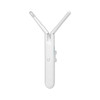
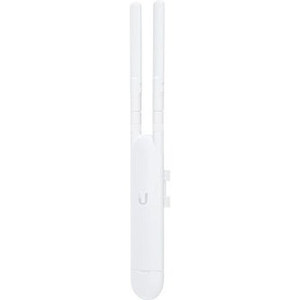
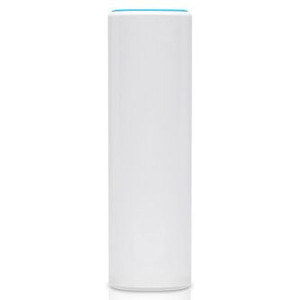
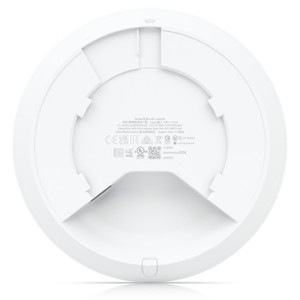
Ubiquiti UAP-AC-M-5-US 1750 Mbps Dual-Band Access Point 5-Pack
The Ubiquiti UAP-AC-M-5-US is a five-unit pack of 802.11AC dual-band access points engineered for mid-scale distributed wireless coverage—office campuses, retail chains, hospitality properties, and education facilities where a single management plane reduces operational overhead. Each unit delivers 1750 Mbps aggregate throughput (simultaneous 5 GHz and 2.4 GHz), supporting 20–50 concurrent users per AP without enterprise SKU complexity or cost. Dual-band separation keeps latency-sensitive traffic (VoIP, video) on the less-congested 5 GHz band while offloading IoT and background services to 2.4 GHz. The compact 3.4 lb form factor and low-profile industrial design fit flush to ceilings or walls without visual disruption—critical in retail and hospitality where aesthetic neutrality matters. Centralized UniFi Network Controller management from day one eliminates per-unit CLI configuration and streamlines firmware rollouts, guest network provisioning, and seamless roaming across all five APs.
Key Features
- Dual-Band 802.11AC: 1750 Mbps combined throughput (1300 Mbps @ 5 GHz, 450 Mbps @ 2.4 GHz). Frequency separation reduces interference and improves real-world client density.
- PoE 802.3af Powered: 24V Passive PoE (Pairs 4, 5+ and 7, 8 return) with included PoE adapter. Single power cable per unit eliminates dedicated AC runs.
- UniFi Network Controller Integration: Centralized management dashboard handles provisioning, firmware updates, VLAN enforcement, and band steering across all five units from a single pane of glass.
- Simultaneous Dual-Band Operation: 5 GHz and 2.4 GHz radios run independent SSIDs or combined for automatic client steering based on signal strength and load.
- Wall and Ceiling Mounting: Included mounting brackets support flush wall placement or recessed ceiling installation. Compact footprint (5.60 × 9.40 × 9.90 in packaged) fits retail and hospitality environments without aesthetic compromise.
- Extended Operating Range: Typical coverage radius 150–200 feet per unit in open floor plans; range extends 250+ feet in line-of-sight outdoor deployments when packed with multiple units for seamless roaming.
- Wireless Uplink Support: APs can mesh to one another via 5 GHz backhaul when wired backbone is unavailable—useful for temporary expansions or retrofit deployments without cable runs.
- Industrial Temperature Rating: −30 to +70° C (−22 to +158° F) operating range. Suitable for HVAC rooms, outdoor-adjacent installations, and non-climate-controlled warehouse environments.
The UAP-AC-M-5-US scales horizontally within UniFi's ecosystem: add additional APs over time without controller reconfiguration. Heterogeneous mixing (UAP-AC-M, UAP-AC-PRO, UAP6, etc.) works seamlessly under a single controller instance—the management plane abstracts underlying hardware differences. VLAN tagging, guest network isolation, and bandwidth rate limits apply uniformly across all units, simplifying compliance and guest access policies in multi-tenant properties.
Each unit connects via a single Gigabit Ethernet port, enabling both wired and wireless backhaul scenarios. In retrofit deployments where vertical cable runs are constrained, wireless uplink reduces installation cost and timeline dramatically. The 5 GHz backhaul band remains isolated from client traffic, preserving throughput for end-user devices. UniFi Controller automatically optimizes channel selection and transmit power across the pack, preventing adjacent-AP interference and maximizing coverage homogeneity.
Power draw is minimal (802.3af compliant, <13W per unit), allowing deployment on low-cost PoE injectors or UniFi 8-port PoE switches without upgrading existing PoE infrastructure. This economics advantage compounds in retrofit jobs: no dedicated UPS, no 24V power supplies to mount, and no electrical oversight required. Total pack power under 65W leaves headroom on standard building branch circuits.
The pack includes five 802.3af PoE adapters, five mounting brackets, and Ethernet patch cables—everything needed for same-day deployment in a small campus. Manufacturer Warranty covers hardware defects; UniFi Network Controller software updates are perpetual and free. CE, FCC, and IC certifications ensure compliance across North American and European markets. For integrators managing mid-scale wireless estates, the UAP-AC-M-5-US eliminates the operational tax of per-device management while delivering adequate throughput and range without enterprise NMS licensing. Consider this pack the sweet spot for retail chains, small office multi-location builds, and education WiFi refreshes where simplicity and centralized control justify the move from consumer mesh gear.
Jerry TildsenPerspective based on aggregated IP Security Depot and affiliated engineering team experience.
We've deployed the UAP-AC-M series across retail chains, office campuses, and hospitality properties for nearly a decade. The -5-US pack is the pragmatist's choice when you need to replace aging 802.11N infrastructure but don't have budget or operational appetite for enterprise APs and dedicated NMS. What separates this from consumer mesh gear is the UniFi Controller—yes, it requires a server somewhere (cloud, on-premises VM, or UniFi Dream Machine), but once provisioned, firmware rollouts, guest network segmentation, and roaming policies become repeatable automation rather than manual CLI wrestling across five devices. We've consistently seen deployment time cut in half compared to per-device configuration, and ongoing support calls drop measurably once the integrator trains the client's IT staff on the Controller dashboard. The real-world throughput of 1750 Mbps is adequate for small office networks (40–60 concurrent users per AP), retail POS and inventory terminals, and light video streaming in hospitality lobbies. Beyond that density, you'll need enterprise-grade hardware and more aggressive RF planning. The dual-band separation and band steering logic are solid—5 GHz takes VoIP and video, 2.4 GHz absorbs IoT and legacy clients—and in our experience, this reduces the noise complaints from latency-sensitive applications.
Technical Highlights:
- 802.3af PoE at <13W per unit: Five units draw under 65W total, fitting any modern PoE switch or PoE injector without capacity headaches. This is why retrofit jobs succeed—no new power distribution, no UPS sizing, no electrician callout. Passive 24V PoE is Ubiquiti's standard; it's simple and non-standard in the best way (proprietary pin assignment prevents accidental power crossover).
- Dual simultaneous bands with wireless uplink: 5 GHz backhaul from AP to AP is automatic once you enable it in the Controller. Real deployment win: you can stage a five-unit pack, wire the first unit only, then let the remaining four self-mesh to build coverage in retrofit scenarios without trenching Ethernet to every ceiling. Backhaul traffic doesn't steal client bandwidth because it uses a separate virtual interface on 5 GHz.
- UniFi Network Controller abstraction across heterogeneous AP models: You can mix UAP-AC-M, UAP-AC-PRO, and UAP6 units in the same network without breaking client roaming or management. The Controller handles capability negotiation transparently. This lets you upgrade on a rolling basis without hard forklift replacement of all units simultaneously.
- Native VLAN and guest network tagging: The Controller enforces VLAN membership and guest isolation at wire speed—no separate access list programming per unit. Compliance (PCI, HIPAA) requirements around network segmentation are built in, not bolted on with firewall rules downstream.
- Band steering and transmit power optimization: The Controller measures RSSI and client capability, automatically steering dual-band capable clients to 5 GHz during load spikes. Transmit power per unit auto-adjusts based on detected neighboring APs, reducing adjacent-channel interference without manual channel engineering.
Deployment Considerations:
- Controller dependency: These APs require a UniFi Network Controller instance to function beyond standalone mode. Standalone mode exists but disables VLAN, guest networks, and firmware updates—it's not production-grade. Ensure a stable Controller deployment (cloud or on-premises) before committing. Cloud Controller adds a small recurring fee and latency; on-premises VM requires server management overhead. Factor that into your TCO and client SLA expectations.
- 1750 Mbps is aggregate, not per-client: Real single-client throughput is 400–600 Mbps under ideal RF conditions. Dense deployments (50+ concurrent users per AP) will see contention; add units proactively rather than hope for magical scaling. Each unit adds ~$150–180 street price, so cost-per-AP is low enough to over-provision coverage in tight spaces.
- Wireless uplink adds latency: Mesh backhaul (hop-2) introduces 10–30 ms added latency and halves effective backhaul bandwidth. Use it for coverage fill, not core backbone. For performance-sensitive apps, always prefer wired Ethernet to the controller and primary AP cluster.
- 5 GHz range is shorter than 2.4 GHz: 5 GHz penetrates walls and floors poorly compared to 2.4 GHz. Multi-floor buildings or exterior wall coverage often require additional 2.4 GHz-only supplementary units. Plan RF surveys early; RF planning tools exist within the Controller, but field verification is non-negotiable.
- Passive PoE adapters must match: Five adapters come in the pack. If you add a sixth unit later, source the exact same 24V Passive PoE adapter—mixing injector brands can cause supply noise and instability on edge devices. Ubiquiti-branded injectors are the safest path.
The UAP-AC-M-5-US fits integrators who manage 2–15 site clusters and want repeatable wireless deployments without high-touch RF engineering. It's the right choice for retail chains rolling out the same network profile across 20 locations, or office campuses with 3–5 buildings. For single-site deployments under 1,000 sq ft, a three-pack saves cost. For large enterprise, look toward Ubiquiti's WAX (WiFi 6) line or commit to a dedicated wireless vendor with advanced management and AI-driven optimization. See the Ubiquiti catalog for other access point form factors and the full UniFi switching and routing product line.