
Ubiquiti UAP-AC-M-5-US vs TP-Link EAP211-BRIDGE: Specification Comparison
Both the Ubiquiti UAP-AC-M-5-US and the TP-Link EAP211-BRIDGE KIT operate on Wi-Fi 5 (802.11ac) and share outdoor-capable, PoE-powered form factors — making them surface-level cross-shop candidates. However, they serve meaningfully different roles: the UAP-AC-M-5-US is a dual-band multi-client access point sold as a 5-pack for distributed deployments, while the EAP211-BRIDGE KIT is a single-band (5 GHz only) point-to-point or mesh wireless bridge. Buyers choosing between them are typically deciding between a managed multi-AP client network and a dedicated wireless backhaul or bridge link.
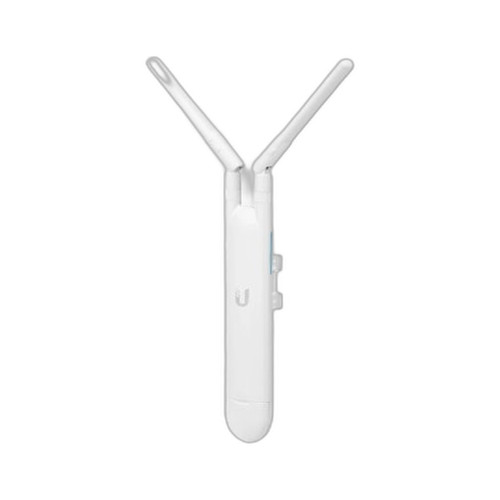

In This Guide
Which unit delivers more radio capacity and throughput for your deployment?
The UAP-AC-M-5-US is dual-band (2.4 GHz and 5 GHz simultaneously) with a rated aggregate throughput of 1,750 Mbps across both bands. It is sold as a 5-pack, so the per-unit throughput figure applies to each of the five included APs. The TP-Link EAP211-BRIDGE KIT operates on 5 GHz only with a maximum throughput of 867 Mbps. The Ubiquiti unit therefore offers more than double the throughput per radio and adds a 2.4 GHz band that the EAP211-BRIDGE KIT entirely lacks.
The EAP211-BRIDGE KIT lists MU-MIMO and Beamforming as features, which can improve per-client efficiency on its single 5 GHz band. The UAP-AC-M-5-US specs do not explicitly list MU-MIMO or Beamforming support. The EAP211-BRIDGE KIT also specifies a client capacity of 8, a notably low figure consistent with a bridge-mode device rather than a general-purpose AP. No concurrent client capacity figure is provided in the EAP211-BRIDGE KIT specs for access-point mode.
How do the power input requirements and environmental ratings compare?
Both units support PoE for single-cable installation. The UAP-AC-M-5-US accepts 24V Passive PoE (pairs 4,5+; 7,8 return) and ships with a 24V, 0.5A Gigabit PoE adapter; it also lists 802.3af compatibility. The EAP211-BRIDGE KIT accepts 12V/24V Passive PoE as well as 802.3af (1,2 pins; 3,6 pins), giving it more flexible power input options. The EAP211-BRIDGE KIT also lists a 12V DC power input in its type field.
Operating temperature ranges are similar but the EAP211-BRIDGE KIT has a slight cold-weather edge: -40 °C to 70 °C versus the UAP-AC-M-5-US's -30 °C to 70 °C. Both are rated for outdoor use. The UAP-AC-M-5-US supports wall and pole mounting; the EAP211-BRIDGE KIT adds rack mounting to that list. The EAP211-BRIDGE KIT also carries a RoHS certification not listed for the UAP-AC-M-5-US; both carry CE and FCC.
Which platform fits your management model and intended network role?
The UAP-AC-M-5-US requires the Ubiquiti UniFi Network Controller for configuration and ongoing management. This enables centralized firmware updates, seamless roaming, guest network policies, and unified monitoring across all five units in the pack — a meaningful operational advantage for multi-AP deployments. No standalone management mode is documented in the provided specs.
The EAP211-BRIDGE KIT lists MAC Access as its management method, indicating lightweight or web-based standalone management without a mandatory controller platform. It also lists Wireless Bridge and Mesh as supported features, positioning it explicitly as a backhaul or point-to-point link device rather than a client-serving AP. The EAP211-BRIDGE KIT provides three Gigabit RJ45 ports versus the UAP-AC-M-5-US's single Gigabit port per unit, which is useful for bridging multiple wired endpoints at a remote node. It is also worth noting that the EAP211-BRIDGE KIT carries a hide_reason flag of 'pricing_violation_2026-05-06' in the source data, indicating it was not publicly listed at the time of data capture.
Which should you choose: the UAP-AC-M-5-US or the EAP211-BRIDGE?
Our take: The UAP-AC-M-5-US is the stronger choice when deploying a managed, multi-client Wi-Fi 5 network across an outdoor or mixed indoor/outdoor campus. It delivers 1,750 Mbps dual-band aggregate throughput per unit versus the EAP211-BRIDGE KIT's 867 Mbps single-band, more than doubling usable airtime for concurrent client traffic. The 5-pack format combined with UniFi Controller management enables centralized roaming, firmware governance, and guest-network policy at scale — capabilities absent from the EAP211-BRIDGE KIT's MAC Access model. The EAP211-BRIDGE KIT, by contrast, is purpose-built for wireless bridging or backhaul: its three Gigabit ports, Mesh and Wireless Bridge feature set, and lower client capacity (8 listed) make it a poor substitute for a general-purpose AP but a valid choice for linking a remote wired segment over a 5 GHz point-to-point link. Buyers who need client coverage should choose the Ubiquiti; buyers who need a wireless bridge link with multi-port wired connectivity at the remote end should evaluate the TP-Link.
Side-by-Side Comparison
Spec-for-spec, from manufacturer data.
| Specification | Ubiquiti UAP-AC-M-5-US | TP-Link EAP211-BRIDGE |
|---|---|---|
| Wireless Standard | 802.11ac (Wi-Fi 5), Dual-Band | 802.11ac (Wi-Fi 5), 5 GHz only |
| Frequency Bands | 2.4 GHz and 5 GHz | 5 GHz only |
| Max Aggregate Throughput | 1,750 Mbps | 867 Mbps |
| Client Capacity | — | 8 (listed) |
| PoE Input | 24V Passive PoE; 802.3af | 12V/24V Passive PoE; 802.3af |
| Power Supply Included | 24V, 0.5A Gigabit PoE Adapter | 12V DC (PoE adapter) |
| Ethernet Ports | 1x Gigabit RJ45 per unit | 3x Gigabit RJ45 |
| Mount Types | Wall; Pole | Wall; Pole; Rack |
| Operating Temperature | -30 °C to 70 °C | -40 °C to 70 °C |
| Environment | Indoor/Outdoor | Indoor/Outdoor |
| Management | UniFi Network Controller | MAC Access (standalone) |
| Wireless Modes | Access Point, Wireless Uplink | Access Point, Wireless Bridge, Mesh |
| MU-MIMO | — | Yes |
| Beamforming | — | Yes |
| Certifications | CE, FCC, IC | CE, FCC, RoHS |
| Pack Quantity | 5-Pack | Single unit (Kit) |
Frequently Asked Questions
Which should you choose: the UAP-AC-M-5-US or the EAP211-BRIDGE?
The UAP-AC-M-5-US is the stronger choice when deploying a managed, multi-client Wi-Fi 5 network across an outdoor or mixed indoor/outdoor campus. It delivers 1,750 Mbps dual-band aggregate throughput per unit versus the EAP211-BRIDGE KIT's 867 Mbps single-band, more than doubling usable airtime for concurrent client traffic. The 5-pack format combined with UniFi Controller management enables centralized roaming, firmware governance, and guest-network policy at scale — capabilities absent from the EAP211-BRIDGE KIT's MAC Access model. The EAP211-BRIDGE KIT, by contrast, is purpose-built for wireless bridging or backhaul: its three Gigabit ports, Mesh and Wireless Bridge feature set, and lower client capacity (8 listed) make it a poor substitute for a general-purpose AP but a valid choice for linking a remote wired segment over a 5 GHz point-to-point link. Buyers who need client coverage should choose the Ubiquiti; buyers who need a wireless bridge link with multi-port wired connectivity at the remote end should evaluate the TP-Link.
Is the UAP-AC-M-5-US or the EAP211-BRIDGE KIT better for connecting 30+ Wi-Fi clients outdoors?
The UAP-AC-M-5-US is the more appropriate choice for serving a large number of Wi-Fi clients. It is a dual-band (2.4 GHz and 5 GHz) access point with 1,750 Mbps aggregate throughput and is managed via UniFi Controller, which supports seamless roaming and per-AP client load balancing across all five units in the pack. The EAP211-BRIDGE KIT lists a client capacity of 8 and is designed as a wireless bridge, not a general-purpose client AP.
Can the EAP211-BRIDGE KIT replace one of the UAP-AC-M-5-US units as a backhaul uplink between buildings?
They serve different roles. The UAP-AC-M-5-US is a client-serving AP with a single Gigabit port and wireless uplink capability noted in its specs. The EAP211-BRIDGE KIT is explicitly designed for Wireless Bridge and Mesh use cases, provides three Gigabit ports at the remote end, and operates on 5 GHz only at up to 867 Mbps. For a dedicated point-to-point building link where wired connectivity is needed at the far end, the EAP211-BRIDGE KIT's role is more appropriate, though the two products are not interchangeable.
Which unit is easier to deploy in freezing temperatures?
The EAP211-BRIDGE KIT has a slightly wider cold-side operating range, rated to -40 °C, compared to the UAP-AC-M-5-US which is rated to -30 °C. Both share the same upper limit of 70 °C. For installations in extreme cold environments — such as northern outdoor surveillance runs in winter — the EAP211-BRIDGE KIT's lower floor provides a margin the UAP-AC-M-5-US does not. However, note that the EAP211-BRIDGE KIT was flagged with a pricing violation in source data and may not be currently available.
More Wireless Access Point Comparisons
Get a Second Opinion on Your Camera Choice
Share your site layout, coverage goals, and budget. Our team will validate the camera selection, flag anything we would change, and recommend products that match the use case.