
Ubiquiti UAP-AC-HD-US vs TP-Link EAP225-OUTDOOR: Specification Comparison
Both the Ubiquiti UAP-AC-HD-US and the TP-Link EAP225-OUTDOOR are 802.11ac (Wi-Fi 5) dual-band outdoor wireless access points designed for single-cable PoE deployment. Buyers evaluating outdoor Wi-Fi infrastructure for campuses, warehouses, or high-density outdoor zones will encounter both products. This comparison examines the three dimensions most critical to that decision: wireless throughput and client capacity, power input and environmental durability, and management ecosystem compatibility.

In This Guide
- Which access point delivers more throughput and handles denser client loads?
- How do these two APs differ in power requirements and outdoor environmental protection?
- What management platforms and deployment ecosystems do these access points support?
- Which should you choose: the UAP-AC-HD-US or the EAP225-OUTDOOR?
- Side-by-Side Specs
- FAQ
Which access point delivers more throughput and handles denser client loads?
The UAP-AC-HD-US is specified at 2533 Mbps aggregate dual-band throughput using 802.11ac Wave 2 with MU-MIMO, enabling simultaneous transmissions to multiple clients. The EAP225-OUTDOOR is specified at AC1200, meaning 867 Mbps on 5 GHz and 300 Mbps on 2.4 GHz for a combined 1167 Mbps aggregate. The UAP-AC-HD-US therefore carries more than twice the rated aggregate throughput of the EAP225-OUTDOOR.
The Wave 2 designation on the UAP-AC-HD-US indicates MU-MIMO support, which is relevant in client-dense outdoor settings such as stadium seating areas, outdoor markets, or dense campus deployments. The EAP225-OUTDOOR spec sheet does not specify MU-MIMO capability or Wave 2 designation based on the provided data.
How do these two APs differ in power requirements and outdoor environmental protection?
The UAP-AC-HD-US requires PoE+ (802.3at), drawing up to 90W at maximum, and accepts 44–57 VDC input. This means the supplying switch or injector must support 802.3at; a standard 802.3af port will not power it. Its operating temperature range is –10°C to 70°C (14°F to 158°F), and it is rated for outdoor or covered indoor environments. No IP ingress-protection rating (e.g., IP65 or IP66) is listed in the provided specifications for the UAP-AC-HD-US.
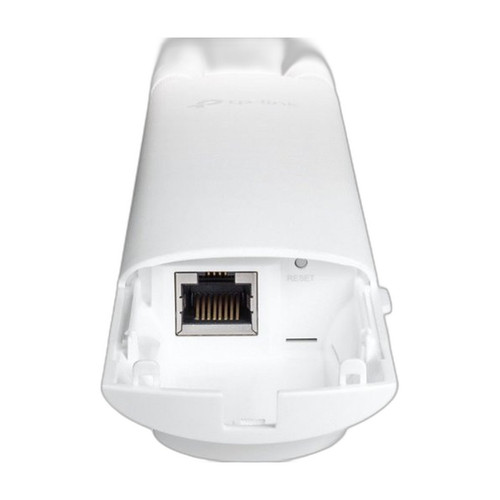
The EAP225-OUTDOOR accepts standard PoE 802.3af input at under 13W, making it compatible with a wider range of existing PoE infrastructure without requiring 802.3at-capable switches. Its operating temperature range is –30°C to 65°C, providing a meaningfully wider cold-side tolerance. The EAP225-OUTDOOR carries an IP65 rating, confirming certified protection against dust ingress and low-pressure water jets from any direction. No IP rating is listed for the UAP-AC-HD-US in the provided specs.
What management platforms and deployment ecosystems do these access points support?
The UAP-AC-HD-US is managed through the Ubiquiti UniFi Controller platform. The provided specifications also note compatibility with third-party ONVIF, though ONVIF is predominantly a physical-security video protocol standard; buyers should verify specific use-case applicability with Ubiquiti documentation. The UAP-AC-HD-US is designed to integrate natively with UniFi switches (listed as the power supply source) and the broader UniFi infrastructure ecosystem.
No management platform is specified in the provided data for the EAP225-OUTDOOR. TP-Link's Omada Controller is the typical management system for EAP-series access points, but this is not stated in the provided specifications and cannot be confirmed from the data supplied. Buyers integrating into an existing TP-Link Omada or UniFi environment should verify controller compatibility with respective vendor documentation before purchasing.
The UAP-AC-HD-US supports wall, ceiling, and rack mounting with kits included per the specifications. Mount options for the EAP225-OUTDOOR are not detailed in the provided data.
Which should you choose: the UAP-AC-HD-US or the EAP225-OUTDOOR?
Our take: The UAP-AC-HD-US is the stronger choice when maximum wireless throughput, MU-MIMO client density, and native UniFi ecosystem integration are the primary requirements. It delivers 2533 Mbps aggregate versus the EAP225-OUTDOOR's 1200 Mbps—a 2.1× throughput advantage—and its Wave 2 MU-MIMO specification is suited to dense outdoor client environments. However, three spec deltas favor the EAP225-OUTDOOR: it requires only 802.3af PoE (under 13W) versus the UAP-AC-HD-US's 802.3at PoE+ (up to 90W), making it compatible with a broader installed base of PoE infrastructure; it carries a documented IP65 weather-resistance rating absent from the UAP-AC-HD-US's provided specs; and its cold-temperature operating floor extends to –30°C versus –10°C. For campus or venue deployments already running UniFi switches with 802.3at output, the UAP-AC-HD-US is the higher-capacity option. For cost-sensitive or infrastructure-constrained sites needing certified IP65 protection and 802.3af compatibility, the EAP225-OUTDOOR is the more pragmatic fit.
Side-by-Side Comparison
Spec-for-spec, from manufacturer data.
| Specification | Ubiquiti UAP-AC-HD-US | TP-Link EAP225-OUTDOOR |
|---|---|---|
| Wi-Fi Standard | 802.11ac Wave 2 | 802.11ac (Wi-Fi 5) |
| Aggregate Throughput | 2533 Mbps | 1200 Mbps (867 + 300) |
| MU-MIMO | Yes (Wave 2) | — |
| PoE Standard Required | 802.3at (PoE+) | 802.3af |
| Max Power Draw | 90W | Under 13W |
| Voltage Input | 44–57 VDC | — |
| IP Ingress Rating | — | IP65 |
| Operating Temp (Min) | –10°C (14°F) | –30°C (–22°F) |
| Operating Temp (Max) | 70°C (158°F) | 65°C (149°F) |
| Uplink Ports | (2) 10/100/1000 Ethernet | Gigabit Ethernet |
| Form Factor / Environment | Outdoor / Covered Indoor | Outdoor |
| Weight | 3.95 lb | — |
| Dimensions | 220 x 220 x 48.1 mm | — |
| Management Platform | Ubiquiti UniFi Controller | — |
| Mounting Options | Wall, Ceiling, Rack (kits included) | — |
| Certifications | CE, FCC, IC | — |
Frequently Asked Questions
Which should you choose: the UAP-AC-HD-US or the EAP225-OUTDOOR?
The UAP-AC-HD-US is the stronger choice when maximum wireless throughput, MU-MIMO client density, and native UniFi ecosystem integration are the primary requirements. It delivers 2533 Mbps aggregate versus the EAP225-OUTDOOR's 1200 Mbps—a 2.1× throughput advantage—and its Wave 2 MU-MIMO specification is suited to dense outdoor client environments. However, three spec deltas favor the EAP225-OUTDOOR: it requires only 802.3af PoE (under 13W) versus the UAP-AC-HD-US's 802.3at PoE+ (up to 90W), making it compatible with a broader installed base of PoE infrastructure; it carries a documented IP65 weather-resistance rating absent from the UAP-AC-HD-US's provided specs; and its cold-temperature operating floor extends to –30°C versus –10°C. For campus or venue deployments already running UniFi switches with 802.3at output, the UAP-AC-HD-US is the higher-capacity option. For cost-sensitive or infrastructure-constrained sites needing certified IP65 protection and 802.3af compatibility, the EAP225-OUTDOOR is the more pragmatic fit.
Can I power the UAP-AC-HD-US from a standard PoE switch?
No. The UAP-AC-HD-US requires PoE+ (802.3at), which supplies more power than the standard 802.3af specification. A switch or injector that outputs only 802.3af (under 15.4W) will not meet the UAP-AC-HD-US's 44–57 VDC / up to 90W requirement. The EAP225-OUTDOOR, by contrast, is specified to operate on standard 802.3af PoE at under 13W.
Is the UAP-AC-HD-US or EAP225-OUTDOOR better rated for harsh outdoor weather?
Based on the provided specifications, only the EAP225-OUTDOOR carries a stated IP65 ingress-protection rating, confirming protection against dust and water jets. No IP rating is listed for the UAP-AC-HD-US in the provided data. Additionally, the EAP225-OUTDOOR's operating temperature range extends to –30°C on the cold side, compared to –10°C for the UAP-AC-HD-US, giving it a wider thermal envelope for cold-climate installations.
Which access point is better suited for a high-density outdoor venue like a stadium or outdoor campus?
The UAP-AC-HD-US is specified for high-density client zones, with 2533 Mbps aggregate throughput and 802.11ac Wave 2 MU-MIMO support, which allows simultaneous data streams to multiple clients. The EAP225-OUTDOOR is specified at AC1200 (1167 Mbps aggregate), and MU-MIMO capability is not stated in the provided specifications. For deployments where many clients must associate simultaneously, the UAP-AC-HD-US's Wave 2 MU-MIMO specification is the more relevant choice based on available data.
More Wireless Access Point Comparisons
Get a Second Opinion on Your Camera Choice
Share your site layout, coverage goals, and budget. Our team will validate the camera selection, flag anything we would change, and recommend products that match the use case.