
Ubiquiti U7-IW-US vs TP-Link EAP775-WALL: Specification Comparison
Both the Ubiquiti U7-IW-US and the TP-Link EAP775-WALL are Wi-Fi 7 (802.11be) wall-plate access points designed for in-wall installation where ceiling mounting is impractical — a form factor common in hospitality corridors, healthcare rooms, and enterprise offices. This comparison examines how they differ across wireless performance and band configuration, power delivery and cabling requirements, and management platform and ecosystem fit — the three axes that most directly drive purchasing decisions for wall-plate Wi-Fi 7 deployments.

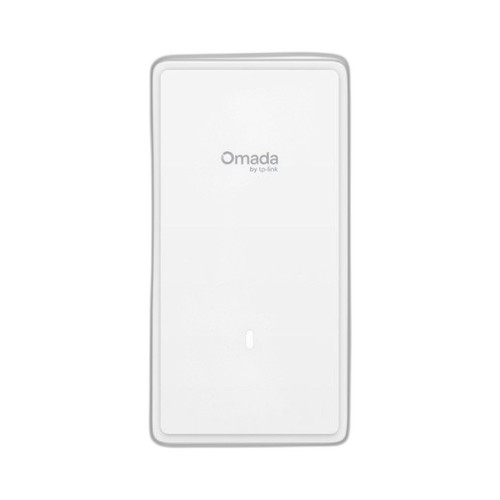
In This Guide
- Which AP delivers higher wireless throughput and how do their band configurations compare?
- What are the PoE power requirements and how do they affect cabling and switch infrastructure?
- Which management platform and ecosystem does each AP require, and does either lock into a proprietary SDN stack?
- Which should you choose: the U7-IW-US or the EAP775-WALL?
- Side-by-Side Specs
- FAQ
Which AP delivers higher wireless throughput and how do their band configurations compare?
The TP-Link EAP775-WALL is specified as a BE11000 tri-band Wi-Fi 7 access point operating at 2.4 GHz and 5 GHz dual-band per its frequency spec, with an aggregate throughput rating of 11 Gbps. The BE11000 designation implies a third 6 GHz band contributes to that aggregate, though the frequency spec as provided lists only 2.4 GHz and 5 GHz explicitly.
The Ubiquiti U7-IW-US is specified as a dual-band Wi-Fi 7 (802.11be) access point with four spatial streams. No aggregate throughput figure (e.g., BE-class designation) is provided in the available specs. Both products share the 802.11be standard and WPA3-class security is confirmed for the EAP775-WALL; the U7-IW-US security spec is not listed in the provided data.
Buyers prioritizing maximum aggregate throughput will find the EAP775-WALL's BE11000 rating — assuming tri-band is operative — a meaningful differentiator. The U7-IW-US four-stream dual-band configuration is suitable for dense client environments per its spec sheet but no comparable aggregate figure is available for direct numerical comparison.
What are the PoE power requirements and how do they affect cabling and switch infrastructure?
The Ubiquiti U7-IW-US requires PoE+ (IEEE 802.3at) at a maximum of 30W and includes an integrated 2.5 GbE PoE switch port. This means a single Cat cable run from a PoE+ switch powers the AP and simultaneously provides a downstream 2.5 GbE PoE-capable port for a connected device such as a VoIP phone or IoT endpoint — eliminating a separate switch at the room drop.
The TP-Link EAP775-WALL is specified as PoE-powered, but the specific PoE standard (802.3af, 802.3at, or 802.3bt) and wattage budget are not listed in the provided specifications. Whether it includes a downstream passthrough port is also not specified in the available data.
For retrofit installations where minimizing cabling runs and switch port count is a priority, the U7-IW-US's documented 2.5 GbE integrated PoE switch is a concrete, spec-confirmed advantage. Installers evaluating the EAP775-WALL should obtain TP-Link's datasheet to confirm PoE input class and downstream port availability before specifying infrastructure.
Which management platform and ecosystem does each AP require, and does either lock into a proprietary SDN stack?
The Ubiquiti U7-IW-US is managed exclusively through the UniFi controller (centralized), which is Ubiquiti's proprietary SDN platform. Sites already running UniFi infrastructure — switches, gateways, cameras — will integrate the U7-IW-US without additional controller licenses. Sites not on UniFi must deploy a UniFi Network application instance (cloud-hosted or on-premises) as a prerequisite.
The TP-Link EAP775-WALL is managed via Omada SDN and also supports mesh operating mode in addition to standard access point mode. Omada is TP-Link's centralized controller platform, available as hardware, software, or cloud. The mesh capability allows flexible topology without a wired backhaul to every AP, which is a deployment option not listed for the U7-IW-US in the provided specs.
Both products are controller-dependent; neither is specified as supporting standalone operation in the provided data. Platform choice is therefore a site-level decision: existing UniFi deployments favor the U7-IW-US, existing Omada deployments favor the EAP775-WALL, and greenfield sites should evaluate total controller cost and feature parity before specifying either.
Which should you choose: the U7-IW-US or the EAP775-WALL?
Our take: The U7-IW-US is the stronger choice when the deployment is already on the UniFi platform and the installer needs a documented, single-cable room drop with a downstream PoE port. Three concrete spec deltas support this: the U7-IW-US ships with a specified 30W PoE+ (802.3at) budget and an integrated 2.5 GbE PoE switch — both confirmed in the specs — while the EAP775-WALL's PoE standard, wattage, and downstream port availability are not listed in the provided data, creating specification risk at the design stage. Conversely, the EAP775-WALL's BE11000 aggregate throughput rating and mesh operating mode are specified advantages the U7-IW-US data does not match or address. Buyers on the Omada platform, requiring tri-band aggregate performance, or needing mesh flexibility should evaluate the EAP775-WALL — subject to confirming its PoE input class from TP-Link's datasheet before finalizing switch infrastructure.
Side-by-Side Comparison
Spec-for-spec, from manufacturer data.
| Specification | Ubiquiti U7-IW-US | TP-Link EAP775-WALL |
|---|---|---|
| Wi-Fi Standard | Wi-Fi 7 (802.11be) | Wi-Fi 7 (802.11be) |
| Band Configuration | Dual-band | Dual-band (2.4 GHz + 5 GHz listed; BE11000 implies tri-band) |
| Aggregate Throughput Rating | — | BE11000 (11 Gbps) |
| Spatial Streams | 4 | — |
| Form Factor | In-wall, standard electrical box footprint | Wall plate |
| PoE Input Standard | PoE+ (IEEE 802.3at) | PoE (standard not specified) |
| Max Power Draw | 30W | — |
| Integrated Downstream Switch | 2.5 GbE PoE switch port | — |
| WAN / Uplink Speed | 2.5 GbE | — |
| Operating Modes | Access Point | Access Point, Mesh |
| Management Platform | UniFi (centralized) | Omada SDN (centralized) |
| Encryption | — | WPA3 |
| Bluetooth / IoT Radio | — | IoT (Bluetooth listed) |
| Max Range (spec) | — | 100 m |
| Country of Origin | CN | — |
| Weight | 1.100 lb | — |
Frequently Asked Questions
Which should you choose: the U7-IW-US or the EAP775-WALL?
The U7-IW-US is the stronger choice when the deployment is already on the UniFi platform and the installer needs a documented, single-cable room drop with a downstream PoE port. Three concrete spec deltas support this: the U7-IW-US ships with a specified 30W PoE+ (802.3at) budget and an integrated 2.5 GbE PoE switch — both confirmed in the specs — while the EAP775-WALL's PoE standard, wattage, and downstream port availability are not listed in the provided data, creating specification risk at the design stage. Conversely, the EAP775-WALL's BE11000 aggregate throughput rating and mesh operating mode are specified advantages the U7-IW-US data does not match or address. Buyers on the Omada platform, requiring tri-band aggregate performance, or needing mesh flexibility should evaluate the EAP775-WALL — subject to confirming its PoE input class from TP-Link's datasheet before finalizing switch infrastructure.
Is the U7-IW-US or EAP775-WALL better for a hotel corridor retrofit where I want one cable per room?
The U7-IW-US is spec-confirmed for this scenario: its integrated 2.5 GbE PoE switch means one PoE+ (802.3at, 30W) cable run powers the AP and serves a downstream device (e.g., room phone or TV). The EAP775-WALL's downstream port and PoE passthrough capability are not listed in the provided specs, so verify with TP-Link before designing the cabling plant.
Can I manage both APs from the same controller, or do they require separate platforms?
No — these APs use incompatible proprietary controllers. The U7-IW-US requires a UniFi Network controller; the EAP775-WALL requires TP-Link Omada. Mixed deployments would require operating both platforms simultaneously, which adds management overhead. Platform standardization is strongly advisable before specifying either unit.
Which AP supports higher aggregate Wi-Fi throughput for dense client environments?
The EAP775-WALL carries a BE11000 aggregate throughput designation per its specs. The U7-IW-US is specified as dual-band Wi-Fi 7 with four spatial streams but no comparable aggregate throughput figure is provided in the available spec data. Based on spec-confirmed data only, the EAP775-WALL's BE11000 rating is the higher published number.
Get a Second Opinion on Your Camera Choice
Share your site layout, coverage goals, and budget. Our team will validate the camera selection, flag anything we would change, and recommend products that match the use case.