
Ubiquiti U6-MESH-US vs Ubiquiti U6-PRO: Specification Comparison
Both the Ubiquiti U6-MESH-US and U6-PRO are Wi-Fi 6 (802.11ax) dual-band access points sharing the same UniFi product family, the same 5.3 Gbps aggregate throughput rating, and the same single GbE RJ45 port. The meaningful split is deployment environment: one is an outdoor-rated mesh node designed for pole or wall mounting in exposed locations, the other is an indoor ceiling or wall unit built for dense client environments. This comparison addresses the three dimensions that determine which unit belongs on a given project: environment and physical installation, radio and client performance, and power and management.
In This Guide
Which unit is rated for the installation environment?
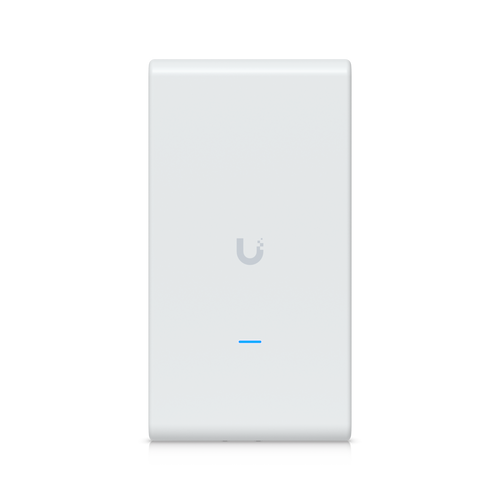
The U6-MESH-US is explicitly rated for outdoor deployment. Its polycarbonate and aluminum enclosure carries an IPX5 water-resistance rating and an operating range of -30 to 60 °C (-22 to 140 °F). It ships with wall and pole mount hardware included and its form factor is described as external/outdoor-rated, measuring Ø48.5 × 159.5 mm (Ø1.9 × 6.3 in) and weighing 2.1 lb.
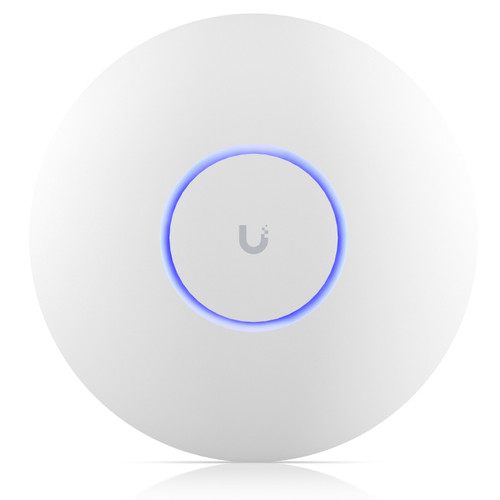
The U6-PRO is rated for indoor use. Its IP54 rating provides protection against dust ingress and water splashing from any direction — suitable for warehouse or manufacturing floor environments per the provided spec — but it is not described as outdoor-rated. Its flat ceiling/wall disk form factor measures Ø197 × 35 mm and weighs 580 g (1.3 lb). The mount hardware included is a stainless steel (SUS304) professional ceiling/wall bracket. Both units share the same -30 to 60 °C operating temperature range.
How do the two APs compare on radio throughput and client density?
Both units are rated at 5.3 Gbps aggregate throughput under Wi-Fi 6 (802.11ax). The U6-PRO spec breaks this down explicitly: 4.8 Gbps on 5 GHz and 573.5 Mbps on 2.4 GHz. The U6-MESH-US spec does not provide a per-band breakdown — the 5.3 Gbps figure is stated only as an aggregate.
The U6-PRO spec states support for 250+ concurrent clients and lists 8 SSIDs per radio, enabling segmentation for guest, IoT, and production traffic on a single AP. The U6-MESH-US spec does not state a concurrent client count or SSID-per-radio figure. Both units share the same channel bandwidth support: HT 20/40, VHT 20/40/80/160, and HE modes. The U6-PRO spec also explicitly calls out HE 20/40/80/160 MHz for the HE mode. Both units cover 140 m² (1,500 ft²) per the provided specs.
The U6-MESH-US antenna gain is specified at 5 dBi on the 5 GHz band; no 2.4 GHz gain figure is provided. The U6-PRO spec does not list antenna gain values.
What are the power requirements and management differences?
Both units draw 13 W maximum and operate on 44–57 V DC. The U6-PRO spec designates PoE+ (802.3at) as its power standard. The U6-MESH-US spec contains a conflict: the structured spec field lists PoE Power as PoE (802.3af), while a tilde-prefixed descriptor field states PoE (802.3at or higher). Buyers should verify the injector or switch port standard against the shipping datasheet at /content/product-datasheets/U6-MESH-US.pdf before purchasing PoE infrastructure.
Management for the U6-MESH-US is explicitly listed as the UniFi Network web application and mobile app. The U6-PRO management field lists only 'Ethernet,' which appears to be a data-entry artifact rather than a complete description; both units are Ubiquiti UniFi-family products and the U6-PRO spec does not independently describe a separate management platform. VLAN support is explicitly confirmed for the U6-PRO; the U6-MESH-US spec does not state VLAN support. Both units are NDAA compliant and carry CE, FCC, IC, SRRC, and Anatel certifications. Enclosures differ: the U6-MESH-US uses polycarbonate and aluminum; the U6-PRO uses polycarbonate only with a stainless steel mount bracket.
Which should you choose: the U6-MESH-US or the U6-PRO?
Our take: The U6-MESH-US is the stronger choice when the installation point is outdoors or in an exposed location requiring pole or wall mounting with water resistance, while the U6-PRO is the stronger choice for indoor high-density environments requiring defined client capacity and traffic segmentation. Three concrete spec deltas drive this: (1) Environment rating — U6-MESH-US is outdoor-rated with IPX5 and an aluminum-reinforced enclosure; U6-PRO is indoor-rated at IP54. (2) Client density — U6-PRO explicitly supports 250+ concurrent clients and 8 SSIDs per radio; neither figure appears in the U6-MESH-US spec. (3) Per-band throughput — U6-PRO publishes 4.8 Gbps / 573.5 Mbps by band; U6-MESH-US provides only a 5.3 Gbps aggregate. Both units are NDAA-compliant UniFi-family APs at 13 W and 44–57 V DC. Installers building outdoor mesh links should specify the U6-MESH-US; those deploying in warehouses, offices, or manufacturing floors with dense device counts should specify the U6-PRO.
Side-by-Side Comparison
Spec-for-spec, from manufacturer data.
| Specification | Ubiquiti U6-MESH-US | Ubiquiti U6-PRO |
|---|---|---|
| WiFi Standard | WiFi 6 (802.11ax) | WiFi 6 (802.11ax) |
| Aggregate Throughput | 5.3 Gbps | 5.3 Gbps |
| 5 GHz Throughput | — | 4.8 Gbps |
| 2.4 GHz Throughput | — | 573.5 Mbps |
| Concurrent Clients | — | 250+ |
| SSIDs per Radio | — | 8 |
| Coverage Area | 140 m² (1,500 ft²) | 140 m² (1,500 ft²) |
| Environment Rating | Outdoor | Indoor |
| IP Rating | IPX5 | IP54 |
| Operating Temperature | -30 to 60 °C (-22 to 140 °F) | -30 to 60 °C (-22 to 140 °F) |
| PoE Standard | 802.3af (spec conflict — verify datasheet) | 802.3at (PoE+) |
| Power Consumption | 13 W | 13 W max |
| Voltage Range | 44–57 V DC | 44–57 V DC |
| Ports | (1) GbE RJ45 | (1) GbE RJ45 |
| Mount Type | Wall, Pole (included) | Wall, Ceiling (included) |
| Dimensions | Ø48.5 × 159.5 mm | Ø197 × 35 mm |
| Weight | 2.1 lb (953 g) | 1.3 lb (580 g) |
| Enclosure | Polycarbonate, aluminum | Polycarbonate |
| VLAN Support | — | Yes |
| NDAA Compliant | Yes | Yes |
| Certifications | CE, FCC, IC, Anatel, SRRC | CE, FCC, IC, SRRC, Anatel |
| Antenna Gain (5 GHz) | 5 dBi | — |
Frequently Asked Questions
Which should you choose: the U6-MESH-US or the U6-PRO?
The U6-MESH-US is the stronger choice when the installation point is outdoors or in an exposed location requiring pole or wall mounting with water resistance, while the U6-PRO is the stronger choice for indoor high-density environments requiring defined client capacity and traffic segmentation. Three concrete spec deltas drive this: (1) Environment rating — U6-MESH-US is outdoor-rated with IPX5 and an aluminum-reinforced enclosure; U6-PRO is indoor-rated at IP54. (2) Client density — U6-PRO explicitly supports 250+ concurrent clients and 8 SSIDs per radio; neither figure appears in the U6-MESH-US spec. (3) Per-band throughput — U6-PRO publishes 4.8 Gbps / 573.5 Mbps by band; U6-MESH-US provides only a 5.3 Gbps aggregate. Both units are NDAA-compliant UniFi-family APs at 13 W and 44–57 V DC. Installers building outdoor mesh links should specify the U6-MESH-US; those deploying in warehouses, offices, or manufacturing floors with dense device counts should specify the U6-PRO.
Can I use the U6-MESH-US indoors and the U6-PRO outdoors?
Based on the provided specs, the U6-MESH-US is rated for outdoor use (IPX5, external form factor) and can be used indoors, but it is physically larger and designed for pole or wall mounting rather than ceiling integration. The U6-PRO carries an IP54 rating and is specified as an indoor unit; it is not described as outdoor-rated in the provided specs, so deploying it in fully exposed outdoor locations is not supported by the available specification data.
Is the U6-MESH-US or U6-PRO better for a deployment with many wireless clients?
The U6-PRO spec explicitly states support for 250+ concurrent clients and lists 8 SSIDs per radio for traffic segmentation. The U6-MESH-US spec does not provide a concurrent client count or SSID-per-radio figure. For high-density indoor environments, the U6-PRO has documented client capacity; the U6-MESH-US capacity for that use case cannot be confirmed from the provided specs alone.
Do both APs use the same PoE standard and can I power them from the same switch port?
Both units operate at 13 W on 44–57 V DC. The U6-PRO spec designates PoE+ (802.3at). The U6-MESH-US spec contains a discrepancy: one field lists PoE (802.3af) and another lists PoE (802.3at or higher). A PoE+ (802.3at) switch port will power either unit, but the U6-MESH-US PoE standard should be confirmed against its datasheet at /content/product-datasheets/U6-MESH-US.pdf before specifying 802.3af-only injectors.
More Wireless Access Point Comparisons
Get a Second Opinion on Your Camera Choice
Share your site layout, coverage goals, and budget. Our team will validate the camera selection, flag anything we would change, and recommend products that match the use case.