
Ubiquiti B-DB-AC-US vs Ubiquiti UAP-AC-M-5-US: Specification Comparison
Both the Ubiquiti B-DB-AC-US and the UAP-AC-M-5-US are Wi-Fi 5 (802.11ac) dual-band outdoor access points from Ubiquiti, powered via PoE, and aimed at distributed wireless deployments. The B-DB-AC-US is a single bullet-form outdoor AP managed via UNMS, while the UAP-AC-M-5-US is a five-pack of UniFi mesh-capable outdoor APs managed via the UniFi Network Controller. This comparison evaluates how each fits different deployment scales, management ecosystems, and environmental requirements.

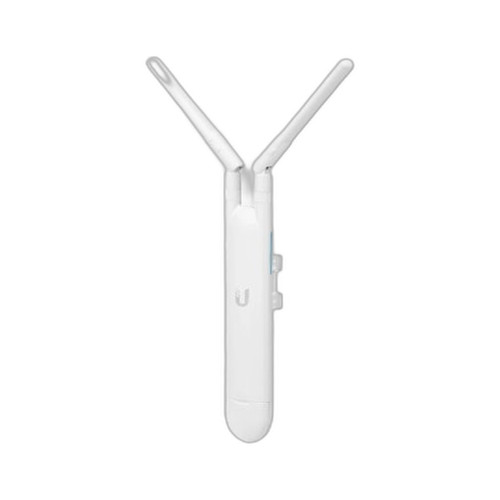
In This Guide
- Which AP delivers higher throughput and what wireless specs are published?
- How do the two APs compare on power input, consumption, and environmental tolerance?
- What management platforms and deployment models do these APs support?
- Which should you choose: the B-DB-AC-US or the UAP-AC-M-5-US?
- Side-by-Side Specs
- FAQ
Which AP delivers higher throughput and what wireless specs are published?
The UAP-AC-M-5-US specifies a combined dual-band throughput of 1,750 Mbps across its 2.4 GHz and 5 GHz radios, operating simultaneously. The B-DB-AC-US lists 802.11ac dual-band (2.4 GHz + 5 GHz) but does not publish a combined throughput figure in the provided specs — only the radio standard and frequency bands are confirmed. Buyers requiring a published Mbps ceiling for capacity planning should note this gap. Both units support simultaneous dual-band operation. The UAP-AC-M-5-US also lists a maximum range figure of 1,750 m, whereas no range figure is provided for the B-DB-AC-US.
How do the two APs compare on power input, consumption, and environmental tolerance?
The B-DB-AC-US draws 8W and is powered by PoE 802.3af, with a minimum power supply of 24 VDC at 0.3 A. It is rated for operation from -40°C to 70°C (-40°F to 158°F) and carries ESD protection of ±24 kV contact/air — a meaningful spec for exposed tower or rooftop installations. The UAP-AC-M-5-US accepts 24V passive PoE (pairs 4, 5+; 7, 8 return) supplied via a bundled 24V 0.5A Gigabit PoE adapter; it does not specify IEEE 802.3af/at standard compliance. Its operating temperature range is -30°C to 70°C (-22°F to 158°F), giving the B-DB-AC-US a 10°C lower-end advantage for extreme cold environments. No ESD protection rating is published for the UAP-AC-M-5-US.
What management platforms and deployment models do these APs support?
The B-DB-AC-US is managed via the UNMS (Ubiquiti Network Management System) application — a separate management ecosystem from UniFi. The UAP-AC-M-5-US is managed via the UniFi Network Controller, which supports centralized firmware management, roaming configuration, and guest network policies across all five units in the pack. Installers already standardized on the UniFi Controller platform gain native multi-AP management out of the box with the UAP-AC-M-5-US. Conversely, deployments using UNMS (now UISP) for mixed Ubiquiti infrastructure would align with the B-DB-AC-US. The UAP-AC-M-5-US also lists wireless uplink capability, relevant for mesh or backhaul scenarios. No mesh or wireless uplink capability is specified for the B-DB-AC-US.
Which should you choose: the B-DB-AC-US or the UAP-AC-M-5-US?
Our take: The UAP-AC-M-5-US is the stronger choice when deploying multiple outdoor access points under centralized UniFi management with a known throughput requirement. It specifies 1,750 Mbps combined dual-band throughput — a figure absent from the B-DB-AC-US specs — supports wireless uplink for mesh topologies, and ships as a five-pack enabling consistent multi-AP rollouts. The B-DB-AC-US holds a measurable edge in two areas: its -40°C lower operating temperature limit versus -30°C for the UAP-AC-M-5-US, and its published ±24 kV ESD protection rating, making it more appropriate for exposed high-altitude or lightning-risk installations. Power input also differs — the B-DB-AC-US uses standard IEEE 802.3af PoE, while the UAP-AC-M-5-US relies on 24V passive PoE via a proprietary adapter, a consideration for switch compatibility. Choose the B-DB-AC-US for harsh single-site outdoor deployments on UNMS/UISP infrastructure; choose the UAP-AC-M-5-US for scalable multi-AP UniFi environments.
Side-by-Side Comparison
Spec-for-spec, from manufacturer data.
| Specification | Ubiquiti B-DB-AC-US | Ubiquiti UAP-AC-M-5-US |
|---|---|---|
| SKU | B-DB-AC-US | UAP-AC-M-5-US |
| Pack Quantity | 1 | 5 |
| Wireless Standard | 802.11ac Dual-Band | 802.11ac Dual-Band |
| Frequency Bands | 2.4 GHz + 5 GHz | 2.4 GHz + 5 GHz |
| Combined Throughput | — | 1,750 Mbps |
| Max Range | — | 1,750 m |
| PoE Input Standard | IEEE 802.3af | 24V Passive PoE (proprietary pairs) |
| Power Consumption | 8W | — |
| Included Power Supply | 24 VDC, 0.3 A (minimum) | 24V, 0.5A Gigabit PoE Adapter |
| Operating Temperature | -40 to 70°C | -30 to 70°C |
| ESD Protection | ±24 kV Contact/Air | — |
| Environment Rating | Outdoor | Outdoor |
| Form Factor | Bullet | — |
| Management Platform | UNMS (UISP) | UniFi Network Controller |
| Wireless Uplink / Mesh | — | Yes (Uplink listed) |
| Certifications | CE, FCC, IC | CE, FCC, IC |
Frequently Asked Questions
Which should you choose: the B-DB-AC-US or the UAP-AC-M-5-US?
The UAP-AC-M-5-US is the stronger choice when deploying multiple outdoor access points under centralized UniFi management with a known throughput requirement. It specifies 1,750 Mbps combined dual-band throughput — a figure absent from the B-DB-AC-US specs — supports wireless uplink for mesh topologies, and ships as a five-pack enabling consistent multi-AP rollouts. The B-DB-AC-US holds a measurable edge in two areas: its -40°C lower operating temperature limit versus -30°C for the UAP-AC-M-5-US, and its published ±24 kV ESD protection rating, making it more appropriate for exposed high-altitude or lightning-risk installations. Power input also differs — the B-DB-AC-US uses standard IEEE 802.3af PoE, while the UAP-AC-M-5-US relies on 24V passive PoE via a proprietary adapter, a consideration for switch compatibility. Choose the B-DB-AC-US for harsh single-site outdoor deployments on UNMS/UISP infrastructure; choose the UAP-AC-M-5-US for scalable multi-AP UniFi environments.
Is the B-DB-AC-US or UAP-AC-M-5-US better for large outdoor deployments covering multiple access points?
The UAP-AC-M-5-US is better suited for multi-AP outdoor deployments. It ships as a five-unit pack, is managed centrally via the UniFi Network Controller, and supports wireless uplink for mesh configurations. The B-DB-AC-US is a single unit managed via UNMS/UISP and does not list mesh or wireless uplink capability in the provided specs.
Can I power either AP from a standard 802.3af PoE switch port?
The B-DB-AC-US specifies IEEE 802.3af PoE compatibility (8W draw), making it compatible with standard 802.3af switch ports. The UAP-AC-M-5-US specifies 24V passive PoE via a bundled adapter and does not confirm IEEE 802.3af/at standard compliance — installers should verify switch compatibility before deploying without the included adapter.
Which AP is more suitable for extreme cold-weather or high-ESD-risk installations?
The B-DB-AC-US is better specified for extreme environments. It is rated to -40°C versus the UAP-AC-M-5-US's -30°C lower limit, and it publishes an ESD protection rating of ±24 kV (contact/air). No ESD protection figure is provided in the UAP-AC-M-5-US specs.
More Wireless Access Point Comparisons
Get a Second Opinion on Your Camera Choice
Share your site layout, coverage goals, and budget. Our team will validate the camera selection, flag anything we would change, and recommend products that match the use case.