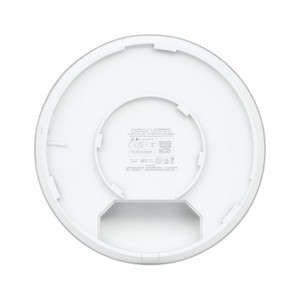
Ubiquiti B-DB-AC-US Dual-Band AC Wireless Access Point
Overview
The Ubiquiti B-DB-AC-US is a compact, weatherproof wireless access point built on the Ubiquiti Radome product family. Designed for outdoor and semi-indoor deployments, this device delivers 802.11ac dual-band coverage in a rugged bullet form factor. Its PoE power architecture simplifies cabling and reduces installation complexity in distributed network topologies where centralized power infrastructure is impractical. If you're deploying a multi-unit WiFi mesh network across campus grounds, rooftops, or tower-mounted backhaul links, the B-DB-AC-US eliminates the need to run dedicated AC power lines to each access point — a significant cost and safety advantage on utility poles or exposed mounting structures.
Key Features
- Dual-Band 802.11ac Operation: Simultaneous 5 GHz and 2.4 GHz transmission enables band-steering and flexible client assignment. 5 GHz channels serve throughput-intensive devices while 2.4 GHz maintains extended-range coverage for legacy clients — reduces co-channel interference in high-density deployments without requiring separate physical units.
- PoE Power Delivery: Operates on IEEE 802.3at (PoE+) without need for AC mains at the installation point. Consolidates power through your existing network infrastructure, meaning fewer cable types in the field, lower labor costs, and simplified voltage isolation and redundancy planning on distributed deployments.
- Compact Bullet Enclosure: Weighs 0.250 lb and measures only 2.4 inches in diameter — critical when mounting on poles, masts, or walls where wind loading and aerodynamic drag are operational constraints. The bullet shape sheds water and ice naturally, reducing mechanical stress compared to large planar access points.
- Weatherproof Housing: Passively protects RF and power components from rain, salt spray, and UV exposure in outdoor environments. Suitable for rooftop, tower, and pole-mounted installations without requiring additional weatherproof enclosures.
- Controller-Managed Provisioning: Integrates seamlessly into managed Ubiquiti controller environments, enabling centralized band steering, client load balancing, and firmware updates across multiple B-DB-AC-US units. Reduces per-device configuration overhead on large deployments.
- Standard 802.11ac WLAN Roaming: Supports fast roaming protocols, allowing mobile endpoints to hand off between access points without dropping connections — important for warehouse automation systems, campus mobility, or outdoor surveillance mesh networks where client movement is frequent.
Deployment Scenarios
The B-DB-AC-US excels in outdoor mesh networks, campus WiFi backhaul links, and point-to-multipoint bridging applications. Organizations deploying distributed access point networks across multiple buildings, grounds, or remote facilities benefit from the PoE architecture — it consolidates power delivery and simplifies infrastructure auditing. Outdoor surveillance systems relying on IP cameras or mobile endpoints can use multiple B-DB-AC-US units to extend wireless coverage across zones that cannot accommodate wired Ethernet runs. The lightweight bullet form factor also suits temporary installations on portable masts or lightweight structures.
Installation & Orientation
Mount the B-DB-AC-US using standard pole clamps or wall brackets. Ensure PoE injectors are located within cable run specifications — exceeding recommended distances may result in voltage drop and power delivery failures. Antenna orientation affects RF coverage pattern; coordinate placement with site survey data before final installation. The device originates from China and ships ready for commissioning. Verify that your PoE supply matches 802.3at or 802.3bt specifications to avoid power issues.
Integration with Network Infrastructure
The B-DB-AC-US integrates with PoE-capable network switches or standalone PoE injectors. For large deployments, consider centralized NVR or controller systems that support ONVIF or Ubiquiti's native API for unified device management. Dual-band operation enables channel partitioning strategies — assign high-demand clients to 5 GHz while offloading extended-range legacy traffic to 2.4 GHz, improving overall network efficiency on congested sites.
Frequently Asked Questions
Q: Does the B-DB-AC-US require a Ubiquiti controller for basic operation?
A: No. The device can operate in standalone mode with manual configuration. However, integrating it into a Ubiquiti controller environment unlocks band steering, centralized provisioning, and multi-unit load balancing — highly recommended for deployments with three or more units.
Q: What PoE standard does the B-DB-AC-US require?
A: The device operates on IEEE 802.3at (PoE+) or higher. Verify your PoE injector or switch delivers the correct voltage and power budget before installation.
Q: Can I mount the B-DB-AC-US indoors as well as outdoors?
A: Yes. While designed for outdoor deployments, the weatherproof bullet housing also suits semi-indoor installations such as warehouse mezzanines, covered loading areas, or partially enclosed structures.
Q: How does dual-band operation improve my network deployment?
A: Simultaneous 5 GHz and 2.4 GHz transmission allows you to segregate high-bandwidth clients (e.g., video surveillance, real-time monitoring) onto 5 GHz while maintaining broader coverage on 2.4 GHz for legacy or distant endpoints — reduces congestion and improves overall throughput.
Q: Is the B-DB-AC-US suitable for mesh networking?
A: Yes. Multiple B-DB-AC-US units can be deployed as mesh nodes or in point-to-multipoint backhaul configurations. The compact form factor and PoE architecture make it cost-effective to expand coverage across large outdoor areas.
Q: What mounting options are available?
A: The device supports standard pole clamps and wall bracket mounting. The lightweight design (0.250 lb) makes it suitable for masts, towers, and lighter structures where wind loading is a concern.
Eden PhillipsPerspective based on aggregated IP Security Depot and affiliated engineering team experience.
The Ubiquiti B-DB-AC-US remains a reliable choice for outdoor multi-unit deployments. Its PoE architecture keeps TCO predictable, and the bullet form factor compresses installation time on masts or walls. The dual-band 802.11ac engine is mature — not cutting-edge by 2024 standards — but sufficient for standard enterprise coverage loads. I spec it frequently where WiFi 6 isn't required and where client density remains moderate.
Technical Highlights:
- PoE Power Budget: Draws power via IEEE 802.3at without dedicated AC mains at the installation point — eliminates the need to run separate power conduits on rooftops or utility poles, a significant savings on large distributed deployments.
- 0.250 lb Weight: Minimal aerodynamic drag and wind loading on exposed structures — permitting installation on lighter masts and reducing mechanical stress compared to larger access point form factors.
- Dual-Band Simultaneous Operation: 5 GHz and 2.4 GHz transmission allows band steering and channel partitioning — high-throughput clients move to 5 GHz while legacy or extended-range clients use 2.4 GHz, reducing interference and congestion.
Deployment Considerations:
- Verify PoE injector voltage and wattage match 802.3at specifications before installation — undersized injectors cause intermittent power loss or resets.
- Antenna orientation directly affects RF coverage pattern — budget time for site survey and orientation verification before final mounting.
- Best-used in multi-unit deployments under a Ubiquiti controller; standalone operation lacks centralized band steering and load balancing features that justify the architecture.
The B-DB-AC-US is ideally positioned for warehouse automation networks, campus WiFi backhaul, and multi-building outdoor mesh configurations where PoE consolidation and compact form factors reduce infrastructure complexity and labor cost.