
TP-Link EAP610 vs Ubiquiti U6-PRO: Specification Comparison
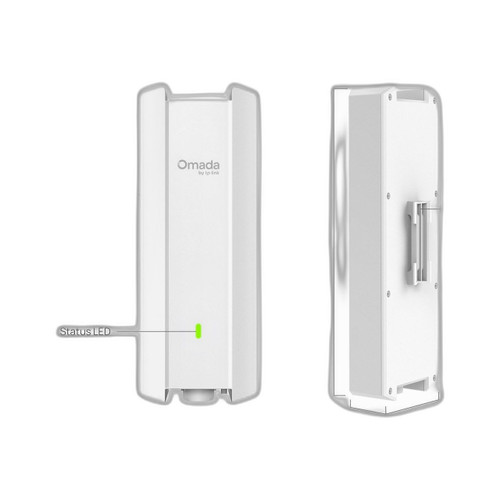
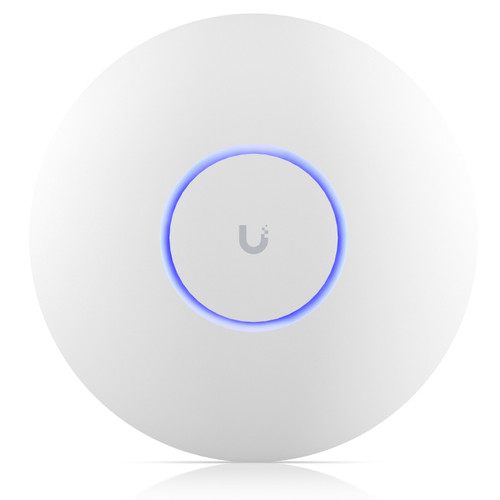
Both the TP-Link EAP610 and Ubiquiti U6-PRO are Wi-Fi 6 (802.11ax) dual-band ceiling-mount access points targeting enterprise and commercial indoor deployments. The EAP610 is an AX1800-class unit managed via TP-Link's Omada SDN platform, while the U6-PRO is a higher-throughput unit managed through Ubiquiti's UniFi controller ecosystem. This comparison evaluates the two on RF performance and client capacity, physical and environmental ratings, and management and integration capabilities — the three axes that most directly drive purchasing decisions in this category.
In This Guide
- Which AP delivers higher throughput and can handle more concurrent clients?
- Which unit is better suited to harsh or variable operating environments, and what are the power requirements?
- How do the two APs differ in management platform, VLAN and SSID capabilities, and ecosystem lock-in?
- Which should you choose: the EAP610 or the U6-PRO?
- Side-by-Side Specs
- FAQ
Which AP delivers higher throughput and can handle more concurrent clients?
The EAP610 is rated at AX1800 aggregate throughput. Its 5 GHz band and 2.4 GHz band combined yield the AX1800 designation; individual per-band throughput figures are not broken out in the provided specs. No concurrent-client count is specified for the EAP610.
The U6-PRO is rated at 5.3 Gbps aggregate, with the 5 GHz band contributing 4.8 Gbps and the 2.4 GHz band contributing 573.5 Mbps. The U6-PRO spec explicitly lists support for 250+ concurrent devices and a coverage area of approximately 140 m² (1,500 ft²). Channel bandwidth support extends to HE 160 MHz on both bands, enabling higher per-stream rates under Wi-Fi 6.
On the basis of the supplied specifications, the U6-PRO carries a materially higher aggregate throughput figure (5.3 Gbps vs. AX1800, which typically represents approximately 1.8 Gbps combined). Per-band breakdowns and maximum spatial stream count are not provided for the EAP610, so a stream-level comparison cannot be made from the available data.
Which unit is better suited to harsh or variable operating environments, and what are the power requirements?
The EAP610 carries no IP ingress-protection rating in the provided specifications and is listed with an operating temperature range of 0 °C to 60 °C (32 °F to 140 °F). Its enclosure material is not specified. Mount hardware for ceiling and wall installation, including junction-box compatibility, is included. The unit weighs an unspecified amount per the provided data.
The U6-PRO is rated IP54, meaning it is protected against dust ingress and water splashing from any direction. Its operating temperature range extends from -30 °C to 60 °C (-22 °F to 140 °F), a 30-degree cold-side advantage over the EAP610. The enclosure is polycarbonate; the mount is stainless steel (SUS304). The unit weighs 580 g (1.3 lb). The U6-PRO is also listed as NDAA compliant.
Power delivery: both units accept PoE+ (802.3at). The U6-PRO specifies a voltage range of 44–57V DC and a maximum power consumption of 13 W. The EAP610 specs reference 802.3af as a minimum and 802.3bt or 12V/4.5A DC as additional options, but the nominal consumption figure is not provided in the supplied data. Installers powering from existing 802.3af switches should verify EAP610 compatibility at reduced power.
How do the two APs differ in management platform, VLAN and SSID capabilities, and ecosystem lock-in?
The EAP610 is managed through TP-Link's Omada SDN, a controller-based platform that supports centralized configuration, guest portal, and multi-site management. Omada supports both hardware controllers and a software/cloud controller. The EAP610 supports WPA3-Personal, WPA3-Enterprise, and WPA3 Enhanced Open (OWE) alongside legacy WPA2 and WEP modes. VLAN support and SSID-per-radio count are not enumerated in the provided specifications.
The U6-PRO is managed through Ubiquiti's UniFi Network application. The provided card bullets cite 8 SSIDs per radio, enabling segmentation of guest, IoT, and production traffic on a single AP. VLAN support is explicitly listed as 'Yes' in the specs. Security protocol details beyond 'WiFi 6 (802.11ax)' are not itemized in the provided U6-PRO spec data.
Ecosystem lock-in is a genuine decision factor: EAP610 controllers are incompatible with UniFi and vice versa. Buyers with an existing Omada or UniFi infrastructure will find migration costs prohibitive. Both platforms offer free software controller options, but Ubiquiti's UniFi ecosystem is notably larger in terms of switching, routing, and camera integration depth, while Omada's hardware controller pricing is generally lower at entry scale.
Which should you choose: the EAP610 or the U6-PRO?
Our take: The U6-PRO is the stronger choice when throughput headroom, client density, and environmental durability are the primary requirements. On the specs provided, it delivers 5.3 Gbps aggregate versus the EAP610's AX1800 (~1.8 Gbps), supports 250+ concurrent clients versus an unspecified count for the EAP610, and adds IP54 ingress protection plus a -30 °C cold-side operating limit the EAP610 cannot match (0 °C floor). The EAP610 may be the appropriate selection where budget constraints favor the Omada ecosystem, where WPA3 Enhanced Open (OWE) support is explicitly required and not confirmed for the competitor, or where existing TP-Link Omada infrastructure is already deployed. Buyers standardized on UniFi switching and routing will find the U6-PRO integrates without additional controller overhead. Neither unit should be selected based on throughput ratings alone; actual site surveys and client density planning remain necessary.
Side-by-Side Comparison
Spec-for-spec, from manufacturer data.
| Specification | TP-Link EAP610 | Ubiquiti U6-PRO |
|---|---|---|
| Wi-Fi Standard | Wi-Fi 6 (802.11ax) | Wi-Fi 6 (802.11ax) |
| Frequency Bands | 2.4 GHz / 5 GHz dual-band | 2.4 GHz / 5 GHz dual-band |
| Aggregate Throughput | AX1800 (~1.8 Gbps) | 5.3 Gbps |
| 5 GHz Throughput | — | 4.8 Gbps |
| 2.4 GHz Throughput | — | 573.5 Mbps |
| Max Concurrent Clients | — | 250+ |
| Coverage Area | — | 140 m² (1,500 ft²) |
| PoE Standard | PoE+ (802.3at) | PoE+ (802.3at) |
| Max Power Consumption | — | 13 W |
| IP Rating | — | IP54 |
| Operating Temperature | 0 °C to 60 °C | -30 °C to 60 °C |
| Dimensions | 160 × 160 × 33.6 mm | ⌀197 × 35 mm |
| Weight | — | 580 g (1.3 lb) |
| VLAN Support | — | Yes |
| SSIDs per Radio | — | 8 |
| Management Platform | Omada SDN | UniFi Network |
| NDAA Compliant | — | Yes |
| WPA3 Support | Yes (Personal, Enterprise, OWE) | — |
Frequently Asked Questions
Which should you choose: the EAP610 or the U6-PRO?
The U6-PRO is the stronger choice when throughput headroom, client density, and environmental durability are the primary requirements. On the specs provided, it delivers 5.3 Gbps aggregate versus the EAP610's AX1800 (~1.8 Gbps), supports 250+ concurrent clients versus an unspecified count for the EAP610, and adds IP54 ingress protection plus a -30 °C cold-side operating limit the EAP610 cannot match (0 °C floor). The EAP610 may be the appropriate selection where budget constraints favor the Omada ecosystem, where WPA3 Enhanced Open (OWE) support is explicitly required and not confirmed for the competitor, or where existing TP-Link Omada infrastructure is already deployed. Buyers standardized on UniFi switching and routing will find the U6-PRO integrates without additional controller overhead. Neither unit should be selected based on throughput ratings alone; actual site surveys and client density planning remain necessary.
Is the EAP610 or U6-PRO better for larger or high-density deployments?
Based on the provided specifications, the U6-PRO lists explicit support for 250+ concurrent clients and a coverage area of 140 m² (1,500 ft²), along with a 5.3 Gbps aggregate throughput rating. The EAP610 does not specify a concurrent-client limit or coverage area in the supplied data, and its AX1800 rating represents a lower aggregate throughput ceiling. For documented high-density use cases, the U6-PRO's published figures offer more confidence.
Can the EAP610 or U6-PRO be installed in a warehouse or light-industrial environment?
The U6-PRO carries an IP54 rating and operates from -30 °C to 60 °C, making it explicitly suited to environments with dust, splashing water, or low ambient temperatures. The EAP610 has no IP rating listed in the provided specifications and has a 0 °C lower operating temperature limit, which excludes unheated spaces. For warehouse or light-industrial use, the U6-PRO's environmental ratings are materially better supported by the available spec data.
Do I need a paid controller or cloud subscription to manage either AP?
The EAP610 is managed via TP-Link's Omada SDN, which supports a free software controller (OC200/OC300 hardware controllers are optional paid add-ons). The U6-PRO is managed via Ubiquiti's UniFi Network application, which is available as free self-hosted software; Ubiquiti's cloud management options exist as separate subscriptions. Neither product mandates a paid cloud subscription for basic on-premises management based on the provided spec data, though full feature availability under each platform's free tier should be confirmed with the respective manufacturer.
More Wireless Access Point Comparisons
Get a Second Opinion on Your Camera Choice
Share your site layout, coverage goals, and budget. Our team will validate the camera selection, flag anything we would change, and recommend products that match the use case.