
TP-Link EAP610-OUTDOOR vs Ubiquiti U6-PRO: Specification Comparison
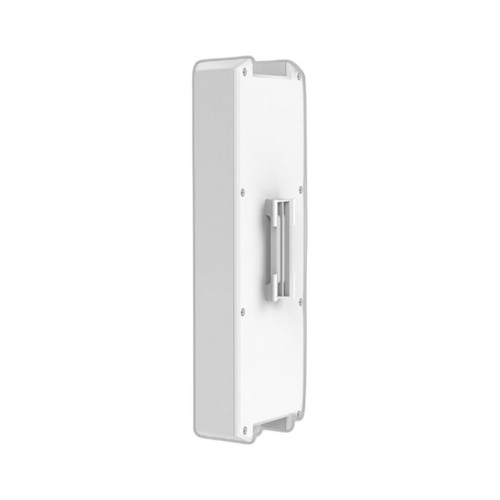
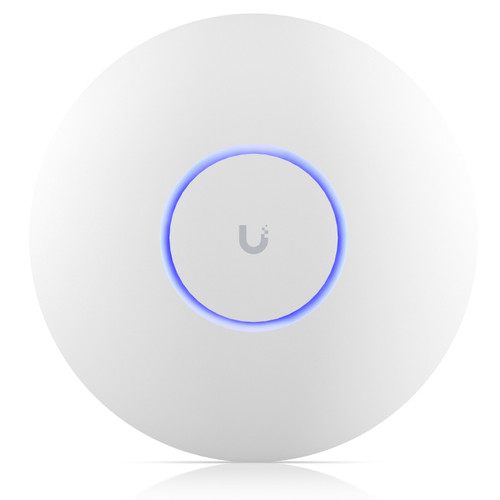
Both the TP-Link EAP610-OUTDOOR and the Ubiquiti U6-PRO are Wi-Fi 6 (802.11ax) dual-band access points aimed at business and enterprise deployments, making them legitimate cross-shop candidates for IT buyers evaluating Wi-Fi 6 infrastructure. The comparison turns on meaningfully different priorities: the EAP610-OUTDOOR is built for outdoor and harsh-environment installation with IP67 sealing, while the U6-PRO targets high-density indoor coverage with substantially higher aggregate throughput and a broader concurrent-client specification. Management platform, form factor, and power requirements also diverge in ways that matter at scale.
In This Guide
- Which access point delivers higher throughput and radio capacity?
- Which unit is better suited to harsh environments and how do their power requirements differ?
- How do the management platforms and compliance postures compare?
- Which should you choose: the EAP610-OUTDOOR or the U6-PRO?
- Side-by-Side Specs
- FAQ
Which access point delivers higher throughput and radio capacity?
The Ubiquiti U6-PRO posts a combined aggregate throughput of 5.3 Gbps — 4.8 Gbps on 5 GHz and 573.5 Mbps on 2.4 GHz. The TP-Link EAP610-OUTDOOR is rated at 1,775 Mbps combined (1,201 Mbps on 5 GHz and 574 Mbps on 2.4 GHz). That is approximately a 3× raw throughput advantage for the U6-PRO on the 5 GHz radio, which is the primary band for modern client traffic.
The U6-PRO specifies support for 250+ concurrent devices and a coverage area of 140 m² (1,500 ft²). The EAP610-OUTDOOR does not carry a stated concurrent-client count or coverage radius in the provided specifications. Both support HE 160 MHz channel width on 5 GHz, enabling Wi-Fi 6's widest bonded channels, though this is only explicitly confirmed in the U6-PRO spec. Both support WPA3 encryption, though WPA3 is explicitly listed only for the EAP610-OUTDOOR; the U6-PRO spec does not explicitly list it in the provided data.
For high-density environments — stadiums, warehouses, open offices — the U6-PRO's throughput headroom and stated 250+ client capacity give it a measurable practical advantage. For lower-density outdoor perimeter or point-to-coverage installs, the EAP610-OUTDOOR's radio performance may be sufficient without the additional overhead of a higher-tier platform.
Which unit is better suited to harsh environments and how do their power requirements differ?
The EAP610-OUTDOOR carries an IP67 rating — fully dust-tight and capable of withstanding temporary immersion — and is explicitly designed for outdoor installation. Its operating temperature range is specified at 0–40°C. The U6-PRO carries an IP54 rating (dust-protected, splash-resistant from any direction) and is classified in the provided specs as an indoor unit, with an operating temperature range of -30 to 60°C.
This creates a notable split: the EAP610-OUTDOOR has the stronger ingress-protection rating for exposed outdoor placement, but the U6-PRO has a substantially wider operating temperature range (-30°C lower bound vs. 0°C), which matters in cold-climate indoor or semi-sheltered applications such as loading docks, parking structures, or unheated warehouses.
On power: the EAP610-OUTDOOR draws up to 15.4W and accepts 802.3at PoE or 12V DC. The U6-PRO draws 13W maximum and requires PoE+ (802.3at, 44–57V DC). Both are compatible with standard 802.3at PoE switches, simplifying infrastructure planning. The EAP610-OUTDOOR also accepts an optional 12V DC adapter, giving it a secondary power path the U6-PRO spec does not list.
How do the management platforms and compliance postures compare?
The TP-Link EAP610-OUTDOOR is managed via Omada SDN, TP-Link's cloud-capable controller platform. Operating modes listed in the spec include Access Point and Mesh, indicating support for wireless mesh backhaul in the Omada ecosystem. No NDAA compliance status is stated in the provided EAP610-OUTDOOR specifications.
The Ubiquiti U6-PRO is managed via UniFi Network (management listed as 'Ethernet' in the spec, consistent with UniFi's controller architecture). It carries explicit NDAA compliance certification in the provided spec, along with a full set of regulatory certifications: CE, FCC, IC, SRRC, and Anatel. The U6-PRO spec lists 8 SSIDs per radio, enabling segmentation for guest, IoT, production, and management VLANs on a single AP — a spec not stated for the EAP610-OUTDOOR in the provided data.
For federal, state/local government, or any deployment where NDAA compliance is a procurement requirement, the U6-PRO's explicit certification is a direct qualifier. For sites already running Omada SDN, adding the EAP610-OUTDOOR maintains a single-pane management environment. Mixed-platform deployments should weigh controller licensing and operational overhead against the hardware selection.
Which should you choose: the EAP610-OUTDOOR or the U6-PRO?
Our take: The EAP610-OUTDOOR is the stronger choice when the installation environment is genuinely outdoor, exposed to rain, dust, or physical ingress — its IP67 rating exceeds the U6-PRO's IP54 by two protection tiers, and it adds a 12V DC secondary power path not present on the U6-PRO. The U6-PRO is the stronger choice for high-density indoor or semi-sheltered deployments: it delivers 5.3 Gbps aggregate versus 1,775 Mbps (roughly 3× the 5 GHz throughput), supports 250+ concurrent clients against no stated figure for the EAP610-OUTDOOR, and carries explicit NDAA compliance certification the EAP610-OUTDOOR spec does not list. The U6-PRO's -30°C lower operating bound also makes it viable in cold-climate sheltered spaces where the EAP610-OUTDOOR's 0°C floor would be a liability. Platform loyalty is a practical constraint: Omada SDN shops will favour the TP-Link; UniFi shops will favour Ubiquiti.
Side-by-Side Comparison
Spec-for-spec, from manufacturer data.
| Specification | TP-Link EAP610-OUTDOOR | Ubiquiti U6-PRO |
|---|---|---|
| Wi-Fi Standard | Wi-Fi 6 (802.11ax) | Wi-Fi 6 (802.11ax) |
| Frequency Bands | 2.4 GHz / 5 GHz | 2.4 GHz / 5 GHz |
| Aggregate Throughput | 1,775 Mbps | 5.3 Gbps |
| 5 GHz Throughput | 1,201 Mbps | 4.8 Gbps |
| 2.4 GHz Throughput | 574 Mbps | 573.5 Mbps |
| Concurrent Clients | — | 250+ |
| Coverage Area | — | 140 m² (1,500 ft²) |
| IP Rating | IP67 | IP54 |
| Environment | Indoor / Outdoor | Indoor |
| Operating Temperature | 0 to 40°C | -30 to 60°C |
| PoE Standard | 802.3at (15.4W) or 12V DC | 802.3at PoE+ (13W max) |
| Power Consumption | 15.4W | 13W |
| LAN Port | 1x GbE RJ45 | 1x GbE RJ45 |
| Management Platform | Omada SDN | UniFi Network |
| NDAA Compliant | — | Yes |
| Encryption | WPA3 | — |
Frequently Asked Questions
Which should you choose: the EAP610-OUTDOOR or the U6-PRO?
The EAP610-OUTDOOR is the stronger choice when the installation environment is genuinely outdoor, exposed to rain, dust, or physical ingress — its IP67 rating exceeds the U6-PRO's IP54 by two protection tiers, and it adds a 12V DC secondary power path not present on the U6-PRO. The U6-PRO is the stronger choice for high-density indoor or semi-sheltered deployments: it delivers 5.3 Gbps aggregate versus 1,775 Mbps (roughly 3× the 5 GHz throughput), supports 250+ concurrent clients against no stated figure for the EAP610-OUTDOOR, and carries explicit NDAA compliance certification the EAP610-OUTDOOR spec does not list. The U6-PRO's -30°C lower operating bound also makes it viable in cold-climate sheltered spaces where the EAP610-OUTDOOR's 0°C floor would be a liability. Platform loyalty is a practical constraint: Omada SDN shops will favour the TP-Link; UniFi shops will favour Ubiquiti.
Can I mount the EAP610-OUTDOOR on an exterior wall in direct rain exposure?
Yes. The EAP610-OUTDOOR carries an IP67 rating, meaning it is fully dust-tight and rated for temporary immersion. It is explicitly specified as an outdoor unit. The U6-PRO, by contrast, is rated IP54 and is classified as an indoor unit in the provided specifications — it is not specified for direct rain exposure.
Is the U6-PRO or EAP610-OUTDOOR better for a high-density deployment like an open office or warehouse with many devices?
Based on the provided specifications, the U6-PRO is better suited. It specifies support for 250+ concurrent devices and delivers 5.3 Gbps aggregate throughput (4.8 Gbps on 5 GHz alone). The EAP610-OUTDOOR spec does not state a concurrent-client figure, and its combined throughput of 1,775 Mbps is approximately one-third that of the U6-PRO.
Does either access point meet NDAA compliance requirements for government procurement?
The U6-PRO is explicitly listed as NDAA compliant in the provided specifications. The EAP610-OUTDOOR spec does not include an NDAA compliance statement in the provided data. Buyers with NDAA requirements should verify current compliance status with their supplier before specifying either unit.
More Wireless Access Point Comparisons
Get a Second Opinion on Your Camera Choice
Share your site layout, coverage goals, and budget. Our team will validate the camera selection, flag anything we would change, and recommend products that match the use case.