
TP-Link EAP610-OUTDOOR vs TP-Link EAP655-WALL: Specification Comparison
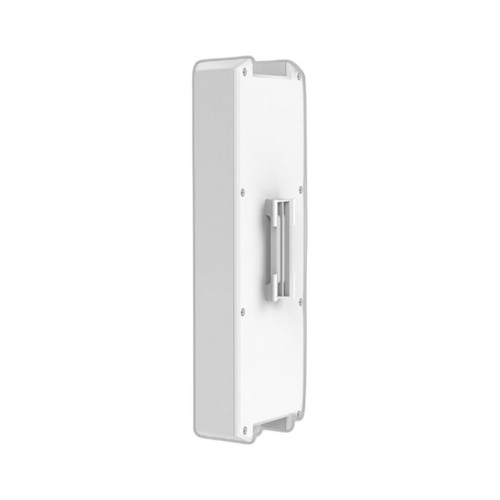
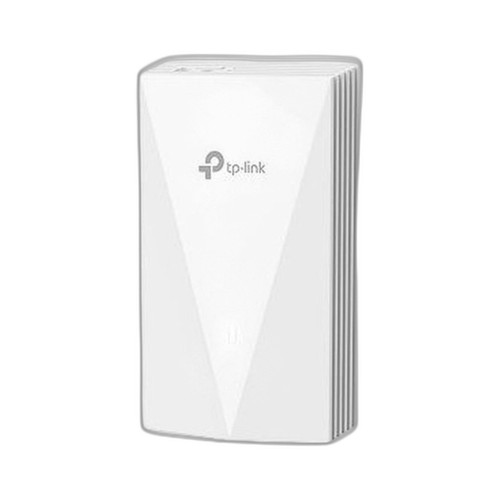
Both products are TP-Link Wi-Fi 6 (802.11ax) dual-band access points managed under the Omada SDN platform, making them legitimate cross-shop candidates for commercial wireless deployments. The EAP610-OUTDOOR is a weatherproofed AX1800 unit designed for perimeter and outdoor coverage, while the EAP655-WALL is an AX3000 wall-plate form factor built for in-room, hospitality, or corridor installations. A buyer choosing between them is trading off raw throughput and deployment environment against wiring convenience and port density at the edge.
In This Guide
Which AP delivers more wireless throughput and radio performance?
The EAP655-WALL holds a clear throughput advantage. Its AX3000 rating aggregates 574 Mbps on 2.4 GHz and 2,402 Mbps on 5 GHz for a combined 3,000 Mbps. The EAP610-OUTDOOR is rated AX1800, delivering 574 Mbps on 2.4 GHz and 1,201 Mbps on 5 GHz for 1,775 Mbps combined. The 5 GHz radio on the EAP655-WALL is approximately twice as fast as that of the EAP610-OUTDOOR, which matters in high-density client environments.
On security, the EAP655-WALL supports both WPA2 and WPA3 per its 802.11i spec listing. The EAP610-OUTDOOR lists WPA3 specifically. Neither spec sheet provides spatial stream counts or MU-MIMO tier details beyond the aggregate speed ratings, so antenna-level performance comparisons are limited to what is documented.
Which unit is suited for outdoor or physically demanding installation environments?
This is the most decisive differentiator. The EAP610-OUTDOOR carries an IP67 ingress protection rating, meaning it is fully dust-tight and can withstand temporary immersion — it is explicitly rated and named for outdoor perimeter deployment. Its operating temperature range is documented as 0–40°C. It accepts 802.3bt PoE or 12V/4.5A DC for power input, and power consumption is rated at 15.4W.
The EAP655-WALL has no IP rating listed in its specifications. It is a wall-plate form factor (143 × 86 × 42.6 mm) intended for flush indoor mounting in hallways, hotel rooms, or offices. No operating temperature range is documented in the provided spec data. Its power input is 802.3af/at PoE (15.4–30W range listed), with a maximum power consumption of 30W. Installing the EAP655-WALL in an outdoor or exposed environment is not supported by any spec cited.
How do the wired port options and management capabilities compare?
The EAP655-WALL is distinctly superior for in-room wired distribution. It provides one uplink port plus three downstream gigabit LAN ports, enabling a single cable drop to serve a room's wired devices — a key selling point for hospitality and classroom deployments. The EAP610-OUTDOOR provides a single port; no downstream LAN ports are listed in its specifications.
Both units operate under TP-Link's Omada SDN platform, providing a common management plane for mixed deployments. The EAP655-WALL explicitly lists both standalone mode and controller-managed (Omada) operation. The EAP610-OUTDOOR lists Access Point and Mesh operating modes under Omada SDN. No third-party controller compatibility is documented for either unit. The EAP610-OUTDOOR additionally supports mesh topology, which is not listed as a feature of the EAP655-WALL.
Which should you choose: the EAP610-OUTDOOR or the EAP655-WALL?
Our take: The EAP610-OUTDOOR is the stronger choice when the installation site is outdoors, semi-exposed, or subject to weather — its IP67 rating is the only documented weather-sealed option between the two. The EAP655-WALL is the stronger choice for indoor in-room or corridor deployments: its AX3000 5 GHz radio delivers 2,402 Mbps versus 1,201 Mbps on the EAP610-OUTDOOR — a 2× speed advantage — and its three downstream gigabit LAN ports eliminate the need for a separate edge switch per room, something the EAP610-OUTDOOR (single port) cannot match. Power draw also differs: 30W maximum for the EAP655-WALL versus 15.4W for the EAP610-OUTDOOR, which affects PoE switch budget calculations. Both units share Omada SDN management. Select the EAP610-OUTDOOR for perimeter, parking, or outdoor coverage; select the EAP655-WALL for high-density indoor or hospitality environments where throughput and in-room port distribution matter.
Side-by-Side Comparison
Spec-for-spec, from manufacturer data.
| Specification | TP-Link EAP610-OUTDOOR | TP-Link EAP655-WALL |
|---|---|---|
| Wi-Fi Standard | Wi-Fi 6 (802.11ax) | Wi-Fi 6 (802.11ax) |
| Speed Rating | AX1800 | AX3000 |
| 2.4 GHz Throughput | 574 Mbps | 574 Mbps |
| 5 GHz Throughput | 1,201 Mbps | 2,402 Mbps |
| Combined Throughput | 1,775 Mbps | 3,000 Mbps |
| Frequency Bands | 2.4 GHz / 5 GHz | 2.4 GHz / 5 GHz |
| IP Rating | IP67 | — |
| Intended Environment | Indoor / Outdoor | Indoor (Wall-Plate) |
| Operating Temperature | 0–40°C | — |
| Uplink Ports | 1x Gigabit (RJ45) | 1x Gigabit (uplink) |
| Downstream LAN Ports | — | 3x Gigabit |
| Power Input | 802.3bt PoE or 12V/4.5A DC | 802.3af/at PoE (15.4–30W) |
| Max Power Consumption | 15.4W | 30W |
| Encryption | WPA3 | WPA2 / WPA3 |
| Management | Omada SDN | Omada SDN / Omada App |
| Operating Modes | Access Point, Mesh | Standalone, Controller-managed |
Frequently Asked Questions
Which should you choose: the EAP610-OUTDOOR or the EAP655-WALL?
The EAP610-OUTDOOR is the stronger choice when the installation site is outdoors, semi-exposed, or subject to weather — its IP67 rating is the only documented weather-sealed option between the two. The EAP655-WALL is the stronger choice for indoor in-room or corridor deployments: its AX3000 5 GHz radio delivers 2,402 Mbps versus 1,201 Mbps on the EAP610-OUTDOOR — a 2× speed advantage — and its three downstream gigabit LAN ports eliminate the need for a separate edge switch per room, something the EAP610-OUTDOOR (single port) cannot match. Power draw also differs: 30W maximum for the EAP655-WALL versus 15.4W for the EAP610-OUTDOOR, which affects PoE switch budget calculations. Both units share Omada SDN management. Select the EAP610-OUTDOOR for perimeter, parking, or outdoor coverage; select the EAP655-WALL for high-density indoor or hospitality environments where throughput and in-room port distribution matter.
Can I use the EAP655-WALL outdoors or in a covered patio area?
No IP rating is listed for the EAP655-WALL in its specifications, so it cannot be confirmed suitable for outdoor or wet environments. The EAP610-OUTDOOR carries an IP67 rating and is the documented choice for outdoor installation.
Is the EAP610-OUTDOOR or EAP655-WALL better for a hotel room deployment where guests need both wired and wireless connectivity?
The EAP655-WALL is better suited to that scenario. It provides one uplink port plus three downstream gigabit LAN ports, allowing a single cable run to the room to serve both the AP and wired devices. The EAP610-OUTDOOR provides only one port and offers no downstream LAN distribution.
Do both APs work with the same Omada controller so I can manage them together?
Yes. Both the EAP610-OUTDOOR and EAP655-WALL list Omada SDN as their management platform, so they can be managed within a common Omada controller environment. The EAP655-WALL additionally lists standalone operation; the EAP610-OUTDOOR lists mesh mode. No other controller compatibility is documented for either unit.
More Wireless Access Point Comparisons
Get a Second Opinion on Your Camera Choice
Share your site layout, coverage goals, and budget. Our team will validate the camera selection, flag anything we would change, and recommend products that match the use case.