
Speco Technologies AP640HA vs Ubiquiti UA-G3-FLEX-B: Specification Comparison
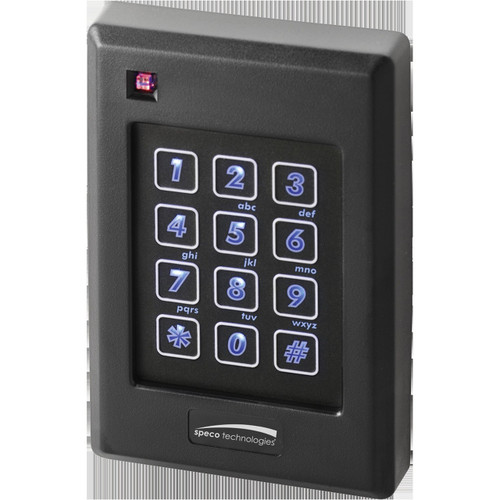
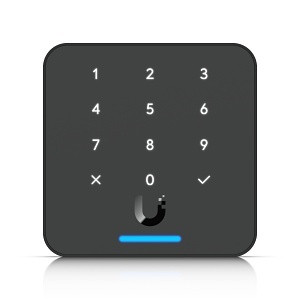
Both the Speco Technologies AP640HA and the Ubiquiti UA-G3-FLEX-B are wall-mount, outdoor-rated access control readers with integrated keypads, powered via PoE 802.3af — making them genuine cross-shop candidates for installers specifying a credential reader at a door or gate. The comparison covers credential technology and read range, environmental and power specifications, and integration architecture, since those three axes drive the majority of access-control reader procurement decisions.
In This Guide
- Which credential technologies and read range does each reader support?
- How do the two readers compare on environmental ratings, operating temperature, and power requirements?
- What are the integration, platform, and compliance differences between these two readers?
- Which should you choose: the AP640HA or the UA-G3-FLEX-B?
- Side-by-Side Specs
- FAQ
Which credential technologies and read range does each reader support?
The AP640HA reads HID and AWID 125 kHz proximity cards using the Wiegand output protocol, with a rated read range of up to 7 inches (176 mm). It also incorporates a numeric keypad for PIN entry, enabling dual-factor authentication against any Wiegand-compatible access panel. No Bluetooth, NFC, or mobile-credential support is specified.
The UA-G3-FLEX-B supports NFC, Bluetooth 4.1, Mifare, Apple Touch Pass, and PIN entry via a 12-button capacitive keypad. It communicates over wired Ethernet to a UniFi Access controller. Read range is not specified in the provided data. Mobile unlock is confirmed for iOS and Android via NFC. No 125 kHz proximity protocol is listed, meaning legacy HID prox cards are not supported.
How do the two readers compare on environmental ratings, operating temperature, and power requirements?
The AP640HA carries an IP67 rating with epoxy-potted construction and is rated from -40°F to 149°F (-40°C to 65°C). It runs on 12VDC; the provided specs also list PoE 802.3af as the power type, which is internally inconsistent — buyers should confirm with the datasheet (/content/product-datasheets/AP640HA.pdf) whether PoE or a 12VDC supply is the intended power path. Weight is 4 oz.
The UA-G3-FLEX-B is rated weatherproof for outdoor use with an operating temperature of -30°C to 60°C (-22°F to 140°F). It is powered exclusively by PoE 802.3af at a maximum of 5W over a single RJ45 port (10/100 MbE), with a voltage range of 44–57V DC. The polycarbonate, glass, and aluminium-alloy enclosure weighs 0.4 lb. IP ingress rating is not specified in the provided data.
What are the integration, platform, and compliance differences between these two readers?
The AP640HA outputs Wiegand, the dominant legacy protocol, making it compatible with virtually any third-party access control panel (Lenel, Software House, Honeywell Pro-Watch, DSC, etc.) without proprietary middleware. It is listed as ONVIF Compliant and carries a 3-year warranty. No certifications such as UL 294 are specified in the provided data.
The UA-G3-FLEX-B is a closed-ecosystem device: it requires a UniFi Access controller (UA-Hub or UA-Pro) and is managed via the Ubiquiti application stack. It holds CE, FCC, IC, UL 294, and CAN/ULC-60839-11-1 certifications and is NDAA Compliant. The warranty is listed only as 'Manufacturer Warranty' with no specific duration provided. It does not output Wiegand and cannot be used with third-party panels.
Which should you choose: the AP640HA or the UA-G3-FLEX-B?
Our take: The AP640HA is the stronger choice when the deployment requires Wiegand compatibility with an existing or third-party access control panel, legacy 125 kHz HID/AWID card infrastructure, or an extreme cold-temperature environment. Its -40°F lower operating limit outperforms the UA-G3-FLEX-B's -22°F floor by 18°F, and its IP67 epoxy-potted rating provides a defined ingress-protection standard absent from the Ubiquiti spec sheet. The UA-G3-FLEX-B is the stronger choice for Ubiquiti UniFi Access deployments requiring modern mobile credentials: it adds Bluetooth 4.1, NFC, Mifare, and Apple Touch Pass in a single device, draws only 5W over a single PoE cable, and holds UL 294 and NDAA certifications not documented for the AP640HA. Buyers standardized on non-Ubiquiti panels, or sites with a large legacy prox-card population, should specify the AP640HA; greenfield Ubiquiti Access ecosystems with mobile-credential requirements should specify the UA-G3-FLEX-B.
Side-by-Side Comparison
Spec-for-spec, from manufacturer data.
| Specification | Speco Technologies AP640HA | Ubiquiti UA-G3-FLEX-B |
|---|---|---|
| Credential Technologies | HID & AWID 125 kHz proximity, PIN keypad | NFC, Bluetooth 4.1, Mifare, Apple Touch Pass, PIN keypad |
| Read Range | Up to 7 in (176 mm) | Not specified |
| Output Protocol | Wiegand | Wired Ethernet (UniFi Access only) |
| Keypad | Integrated numeric keypad | 12-button capacitive keypad |
| Power Input | 12VDC (spec also lists PoE 802.3af — verify datasheet) | PoE 802.3af, 44–57V DC |
| Power Consumption | Not specified | 5W |
| IP / Ingress Rating | IP67 (epoxy-potted) | Not specified |
| Operating Temperature | -40 to 149°F (-40 to 65°C) | -22 to 140°F (-30 to 60°C) |
| Environment Rating | Outdoor | Outdoor |
| Enclosure Material | Not specified | Polycarbonate, glass, aluminium alloy |
| Network Port | — | (1) 10/100 MbE RJ45 |
| Mobile Credential Support | Not specified | iOS, Android (NFC) |
| Certifications | ONVIF Compliant | CE, FCC, IC, UL 294, CAN/ULC-60839-11-1 |
| NDAA Compliant | Not specified | Yes |
| Controller Dependency | Any Wiegand-compatible panel | UniFi Access controller required |
| Warranty | 3 years | Manufacturer Warranty (duration not specified) |
Frequently Asked Questions
Which should you choose: the AP640HA or the UA-G3-FLEX-B?
The AP640HA is the stronger choice when the deployment requires Wiegand compatibility with an existing or third-party access control panel, legacy 125 kHz HID/AWID card infrastructure, or an extreme cold-temperature environment. Its -40°F lower operating limit outperforms the UA-G3-FLEX-B's -22°F floor by 18°F, and its IP67 epoxy-potted rating provides a defined ingress-protection standard absent from the Ubiquiti spec sheet. The UA-G3-FLEX-B is the stronger choice for Ubiquiti UniFi Access deployments requiring modern mobile credentials: it adds Bluetooth 4.1, NFC, Mifare, and Apple Touch Pass in a single device, draws only 5W over a single PoE cable, and holds UL 294 and NDAA certifications not documented for the AP640HA. Buyers standardized on non-Ubiquiti panels, or sites with a large legacy prox-card population, should specify the AP640HA; greenfield Ubiquiti Access ecosystems with mobile-credential requirements should specify the UA-G3-FLEX-B.
Can the AP640HA or UA-G3-FLEX-B work with my existing Lenel or Software House panel?
The AP640HA outputs Wiegand, which is natively supported by Lenel, Software House, and most other third-party access control panels. The UA-G3-FLEX-B connects via wired Ethernet to a UniFi Access controller only and does not output Wiegand; it cannot be used with Lenel, Software House, or other third-party panels.
Which reader supports mobile phone credentials like Apple Wallet or Android NFC?
The UA-G3-FLEX-B supports NFC, Bluetooth 4.1, and Apple Touch Pass for iOS and Android mobile unlock. The AP640HA does not list any Bluetooth, NFC, or mobile-credential support — it reads 125 kHz HID and AWID proximity cards and PIN only.
Which reader is better suited for extreme cold-climate outdoor installations?
The AP640HA is rated down to -40°F (-40°C) with an IP67 epoxy-potted sealed housing. The UA-G3-FLEX-B is rated to -30°C (-22°F) and does not specify an IP ingress-protection rating in the available data. For installations subject to temperatures below -22°F, the AP640HA is the specified choice.
More Access Control Reader Comparisons
- SDC 923P vs Ubiquiti UA-G3-FLEX-B
- SDC 923P vs Kantech KT-SIG-20KTKS-01
- SDC 923P vs Speco Technologies AP620HA
- SDC 923P vs DMP 7463-W
- SDC 923P vs SDC 920P
- Ubiquiti UA-G3-FLEX-B vs Kantech KT-SIG-20KTKS-01
Access Control Reader Buying Guides
Get a Second Opinion on Your Camera Choice
Share your site layout, coverage goals, and budget. Our team will validate the camera selection, flag anything we would change, and recommend products that match the use case.