
Socket Mobile CX3487-1982 vs Socket Mobile CX3488-1983: Specification Comparison
Both the Socket Mobile CX3487-1982 and CX3488-1983 are Bluetooth handheld barcode scanners in the SocketScan S740 series, each targeting mobile retail, field operations, and light industrial scanning. They share the same 1D scan engine, symbology support, battery rating, and operating temperature range. This comparison examines the three most decision-relevant dimensions for a buyer choosing between two models that appear nearly identical on paper: connectivity and platform compatibility, scan capability and symbology coverage, and power and environmental suitability.
In This Guide
Which scanner offers broader device and platform compatibility?
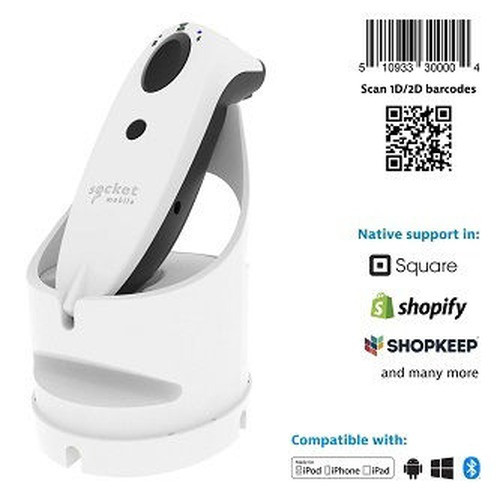
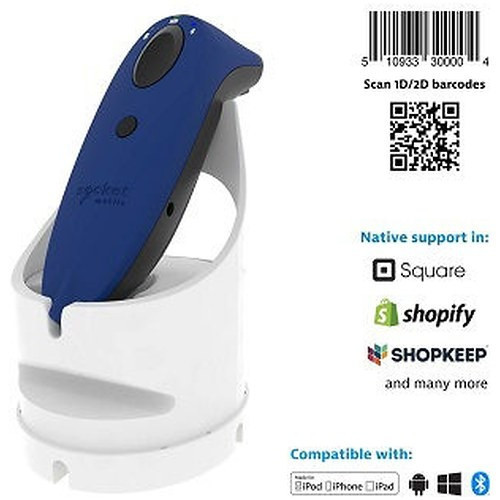
Both scanners connect via Bluetooth wireless and are specified as handheld form-factor devices. The CX3487-1982 spec lists compatibility with iOS, Android, and Windows (sourced from its card bullets), while the CX3488-1983 spec explicitly lists iOS, Android, Windows, and macOS as supported platforms. The CX3487-1982 does not list macOS compatibility in its provided specifications; the CX3488-1983 does. Neither model specifies a Bluetooth version, Bluetooth profile (e.g., HID, SPP), or wireless range in the provided data. Buyers deploying macOS-based point-of-sale or back-office systems should note that macOS compatibility is documented for the CX3488-1983 but not stated for the CX3487-1982.
Are the scan engine and supported symbologies the same across both models?
Both scanners carry a 1D scan engine designation and share an identical symbology list: Code 128, Code 39, UPC, and EAN in the 1D category, plus QR Code and Data Matrix in the 2D category. Neither model's provided specifications include a scan resolution, scan rate (scans per second), depth of field, or minimum/maximum barcode width. The product names and taglines for both units reference '1D' as the primary scan engine, though both list QR Code and Data Matrix (2D symbologies) under their specs. No spec differentiates scan performance, decode speed, or aiming pattern between the two models. From the provided data, scan capability is functionally identical between the CX3487-1982 and CX3488-1983.
How do the two scanners compare on battery life and operating environment?
Both the CX3487-1982 and CX3488-1983 specify a 2000mAh battery. Neither spec includes a rated scan count per charge, charge time, or standby duration. The operating temperature range is identical for both: 0°C to 45°C (32°F to 113°F). The CX3487-1982 includes an 'Environment Rating: Outdoor' field in its spec data; the CX3488-1983 does not carry this field in its provided specifications. Neither model lists an IP or IK ingress protection rating, drop specification, or humidity tolerance in the supplied data. The outdoor environment rating on the CX3487-1982, while unquantified, is the only environmental differentiator present in the provided specifications.
Which should you choose: the CX3487-1982 or the CX3488-1983?
Our take: The CX3488-1983 is the stronger choice when the deployment includes macOS hosts, as it is the only model with macOS listed as a supported platform in the provided specifications; the CX3487-1982 documents iOS, Android, and Windows only. Beyond platform compatibility, the two scanners are specification-identical across every other measurable dimension: both carry a 1D scan engine, identical 2D-inclusive symbology sets (Code 128, Code 39, UPC, EAN, QR Code, Data Matrix), the same 2000mAh battery, and the same 0°C–45°C operating range. The CX3487-1982 carries an 'Outdoor' environment rating not present in the CX3488-1983's specs, which may be relevant for deployments in unconditioned or outdoor environments, though no IP rating is provided for either unit. For Windows, iOS, or Android-only environments, no spec-based performance difference justifies preferring one over the other.
Side-by-Side Comparison
Spec-for-spec, from manufacturer data.
| Specification | Socket Mobile CX3487-1982 | Socket Mobile CX3488-1983 |
|---|---|---|
| SKU | CX3487-1982 | CX3488-1983 |
| Product Name | SocketScan S740 1D Barcode Scanner | SocketScan S740 1D Barcode Scanner |
| Product Type | Scanner | Scanner |
| Form Factor | Handheld | Handheld |
| Connectivity | Bluetooth | Bluetooth |
| Scan Engine | 1D | 1D |
| 1D Symbologies | Code 128; Code 39; UPC; EAN | Code 128; Code 39; UPC; EAN |
| 2D Symbologies | QR Code; Data Matrix | QR Code; Data Matrix |
| Battery Capacity | 2000mAh | 2000mAh |
| Operating Temperature | 0°C to 45°C (32°F to 113°F) | 0°C to 45°C (32°F to 113°F) |
| Supported Platforms | iOS, Android, Windows | iOS, Android, Windows, macOS |
| Environment Rating | Outdoor | — |
| Warranty | 1-year | 1-year |
Frequently Asked Questions
Which should you choose: the CX3487-1982 or the CX3488-1983?
The CX3488-1983 is the stronger choice when the deployment includes macOS hosts, as it is the only model with macOS listed as a supported platform in the provided specifications; the CX3487-1982 documents iOS, Android, and Windows only. Beyond platform compatibility, the two scanners are specification-identical across every other measurable dimension: both carry a 1D scan engine, identical 2D-inclusive symbology sets (Code 128, Code 39, UPC, EAN, QR Code, Data Matrix), the same 2000mAh battery, and the same 0°C–45°C operating range. The CX3487-1982 carries an 'Outdoor' environment rating not present in the CX3488-1983's specs, which may be relevant for deployments in unconditioned or outdoor environments, though no IP rating is provided for either unit. For Windows, iOS, or Android-only environments, no spec-based performance difference justifies preferring one over the other.
Is the CX3487-1982 or CX3488-1983 compatible with macOS devices?
Based on the provided specifications, only the CX3488-1983 lists macOS as a supported platform. The CX3487-1982 specifies iOS, Android, and Windows compatibility but does not mention macOS in its supplied spec data.
Do the CX3487-1982 and CX3488-1983 read 2D barcodes like QR codes?
Yes, both models list QR Code and Data Matrix under their symbology specifications, in addition to 1D symbologies Code 128, Code 39, UPC, and EAN. The scan engine is labeled '1D' on both units, but 2D codes are included in the documented symbology support for each.
Which scanner is better suited for outdoor or field deployments?
The CX3487-1982 carries an 'Outdoor' environment rating in its specifications; the CX3488-1983 does not include this field in its provided data. However, neither model supplies an IP ingress protection rating, drop specification, or humidity range, so the practical degree of outdoor ruggedness cannot be quantified from the available specs alone.
More Barcode Scanner Comparisons
- Datalogic PM9100-910RB vs CipherLab A1000ACBU0001
- Datalogic PM9100-910RB vs CipherLab A1000ACWU0001
- Datalogic PM9100-910RB vs Zebra LI2208-SR7U2100AZW
- Datalogic PM9100-910RB vs CipherLab A8001RSC00025
- Datalogic PM9100-910RB vs Datalogic PM9100-D910RB
- Datalogic PM9100-910RB vs Datalogic QBT2500-BK
Barcode Scanner Buying Guides
Get a Second Opinion on Your Camera Choice
Share your site layout, coverage goals, and budget. Our team will validate the camera selection, flag anything we would change, and recommend products that match the use case.