
Socket Mobile CX3426-1872 vs Honeywell 520-36/48-H3: Specification Comparison
Both the Socket Mobile CX3426-1872 and the Honeywell 520-36/48-H3 (Xenon XP 1952g) are wireless handheld barcode scanners capable of reading 1D and 2D symbologies via Bluetooth — a product class commonly cross-shopped for POS, warehouse picking, and retail floor applications. This comparison evaluates their scan engine technology, durability and environmental ratings, and connectivity specifications to help buyers identify which unit better fits their operational requirements.
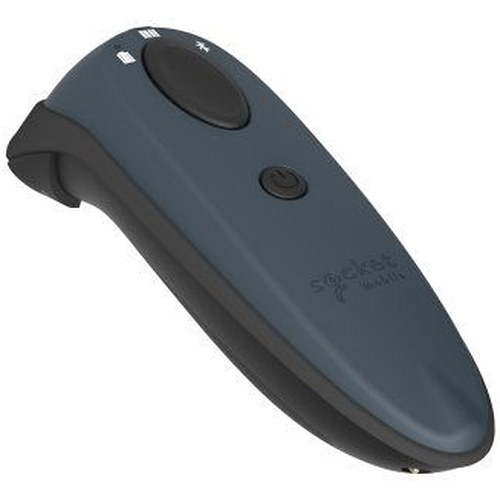
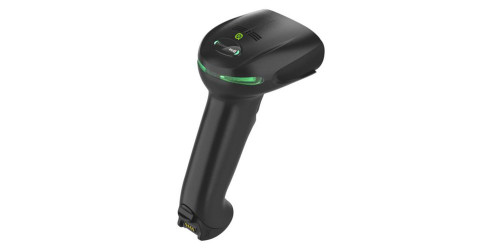
In This Guide
- Which scanner reads a broader range of symbologies and what type of scan engine does each use?
- How do these scanners compare in durability and environmental protection for demanding deployments?
- What are the connectivity options and warranty terms for each unit?
- Which should you choose: the CX3426-1872 or the 520-36/48-H3?
- Side-by-Side Specs
- FAQ
Which scanner reads a broader range of symbologies and what type of scan engine does each use?
The Socket Mobile CX3426-1872 uses a 2D Linear Imager engine and is specified to read QR Code, Data Matrix, PDF417, Code 128, and Code 39. Note that the product listing contains an internal inconsistency: the structured spec field labels the scan engine as '1D' while the marketing attributes describe it as a '2D Linear Imager' — buyers should verify the engine type directly with Socket Mobile before purchasing.
The Honeywell 520-36/48-H3 uses an Area Imager engine rated for both 1D and 2D reads, covering EAN, UPC, Code 128, QR Code, and Data Matrix. Its specified working range is 2.5 to 50.8 cm (1 to 20 in). Area imager technology typically offers superior decode performance on damaged, low-contrast, or omnidirectionally presented codes compared to linear imager designs. The Honeywell unit also explicitly includes EAN and UPC — common retail symbologies absent from the CX3426-1872's listed symbology set.
How do these scanners compare in durability and environmental protection for demanding deployments?
The Honeywell 520-36/48-H3 carries an IP65 ingress protection rating, meaning it is fully dust-tight and protected against low-pressure water jets. It is also rated for drops of up to 2.0 m (6.5 ft). These ratings make it suitable for environments where spills, dust, and accidental drops are realistic hazards — such as distribution centers, manufacturing floors, and grocery warehouses.
The Socket Mobile CX3426-1872 provides no IP rating or drop specification in the supplied data. Its operating temperature range is stated as 0°C to 45°C. Without published IP or drop ratings, buyers cannot confirm the CX3426-1872's suitability for environments where moisture, dust, or physical impact are concerns. It is positioned as a scanner for climate-controlled warehouse and retail environments based on its temperature spec alone.
What are the connectivity options and warranty terms for each unit?
The Socket Mobile CX3426-1872 specifies Bluetooth wireless connectivity. No Bluetooth version or specification revision is stated in the provided data. The unit carries a 1-year warranty.
The Honeywell 520-36/48-H3 specifies Bluetooth 4.2 and also includes USB connectivity — providing a wired fallback that the CX3426-1872 does not list. The Honeywell unit carries a 3-year warranty, which is three times the coverage period of the Socket Mobile unit. For buyers managing large fleets or operating in high-throughput environments, the extended warranty and the specificity of Bluetooth 4.2 may reduce total cost of ownership and simplify procurement planning.
Which should you choose: the CX3426-1872 or the 520-36/48-H3?
Our take: The 520-36/48-H3 is the stronger choice when durability, warranty coverage, and connectivity completeness are priorities. The Honeywell unit holds an IP65 rating and a 2.0 m drop tolerance versus no published equivalent for the CX3426-1872, making it verifiably suited for harsh floor environments. Its 3-year warranty triples the CX3426-1872's 1-year coverage, reducing fleet replacement risk. Bluetooth 4.2 is explicitly versioned on the Honeywell, while the Socket Mobile unit lists no Bluetooth revision; the Honeywell also adds USB as a wired fallback. The CX3426-1872's spec sheet contains a scan-engine contradiction (structured field says '1D'; marketing copy says '2D Linear Imager') that warrants clarification before purchase. The CX3426-1872 may fit light-duty, climate-controlled retail or POS deployments where budget and form factor are the dominant criteria and durability demands are low.
Side-by-Side Comparison
Spec-for-spec, from manufacturer data.
| Specification | Socket Mobile CX3426-1872 | Honeywell 520-36/48-H3 |
|---|---|---|
| Product Series | CX3426-1872 | Xenon XP 1952g |
| Form Factor | Handheld | Handheld |
| Scan Engine | 2D Linear Imager (spec field says 1D — verify) | Area Imager (1D/2D) |
| Symbologies — 1D | Code 128, Code 39 | Code 128, EAN, UPC |
| Symbologies — 2D | QR Code, Data Matrix, PDF417 | QR Code, Data Matrix |
| Bluetooth Version | — | Bluetooth 4.2 |
| USB Connectivity | — | Yes |
| Working Range | — | 2.5–50.8 cm (1–20 in) |
| IP Rating | — | IP65 |
| Drop Rating | — | 2.0 m (6.5 ft) |
| Operating Temperature | 0°C to 45°C (32°F to 113°F) | — |
| Application | Warehouse, POS (per marketing) | General Purpose |
| Warranty | 1 year | 3 years |
| Part Number / SKU | CX3426-1872 | 520-36/48-H3 |
Frequently Asked Questions
Which should you choose: the CX3426-1872 or the 520-36/48-H3?
The 520-36/48-H3 is the stronger choice when durability, warranty coverage, and connectivity completeness are priorities. The Honeywell unit holds an IP65 rating and a 2.0 m drop tolerance versus no published equivalent for the CX3426-1872, making it verifiably suited for harsh floor environments. Its 3-year warranty triples the CX3426-1872's 1-year coverage, reducing fleet replacement risk. Bluetooth 4.2 is explicitly versioned on the Honeywell, while the Socket Mobile unit lists no Bluetooth revision; the Honeywell also adds USB as a wired fallback. The CX3426-1872's spec sheet contains a scan-engine contradiction (structured field says '1D'; marketing copy says '2D Linear Imager') that warrants clarification before purchase. The CX3426-1872 may fit light-duty, climate-controlled retail or POS deployments where budget and form factor are the dominant criteria and durability demands are low.
Is the CX3426-1872 or 520-36/48-H3 better for a warehouse with spills and dust?
Based on the provided specifications, the Honeywell 520-36/48-H3 is the documented choice for that environment. It carries an IP65 rating (fully dust-tight, low-pressure water jet resistant) and a 2.0 m drop tolerance. The Socket Mobile CX3426-1872 lists no IP rating or drop specification, so its suitability for wet or dusty conditions cannot be confirmed from the available data.
Does either scanner read EAN and UPC barcodes for retail checkout?
EAN and UPC are explicitly listed in the Honeywell 520-36/48-H3's symbology set. The Socket Mobile CX3426-1872's published symbologies — QR Code, Data Matrix, PDF417, Code 128, and Code 39 — do not include EAN or UPC as specified in the provided data. Buyers requiring EAN/UPC reads should confirm CX3426-1872 capability directly with Socket Mobile before selecting it for retail checkout use.
Which scanner offers better long-term value for a large deployment?
The Honeywell 520-36/48-H3's 3-year warranty versus the Socket Mobile CX3426-1872's 1-year warranty is a concrete spec difference that affects total cost of ownership at scale. The Honeywell unit also specifies Bluetooth 4.2 and includes USB connectivity, providing clearer integration planning. No pricing data was provided for either unit, so a cost-per-year or fleet-cost comparison cannot be made from the available specifications alone.
More Barcode Scanner Comparisons
- Zebra DS3678 vs Honeywell 520-36/48-H3
- Zebra DS3678 vs CipherLab A2564S2BS0001
- Zebra DS3678 vs Honeywell 1962H-WC-CUP
- Zebra DS3678 vs Socket Mobile CX4238-3326
- Zebra DS3678 vs Zebra DS3678
- Zebra DS3678 vs Zebra DS8178-SRSF007ZZWW
Barcode Scanner Buying Guides
Get a Second Opinion on Your Camera Choice
Share your site layout, coverage goals, and budget. Our team will validate the camera selection, flag anything we would change, and recommend products that match the use case.