
Sato WWCT03241-WAR vs Zebra ZT51042-T110000Z: Specification Comparison
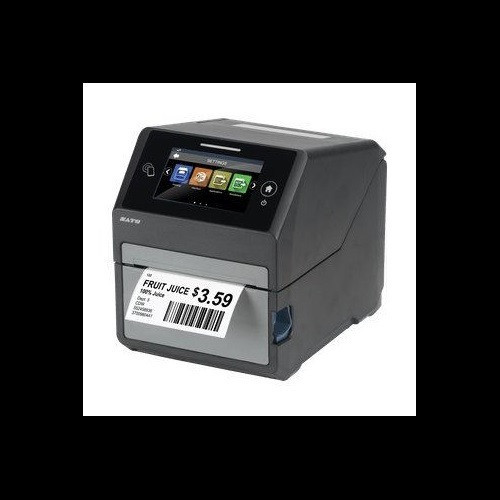
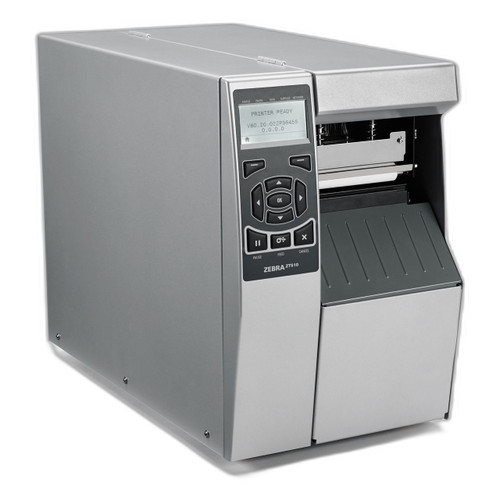
Both the Sato CT4-LX (WWCT03241-WAR) and the Zebra ZT51042-T110000Z are desktop-form-factor, 203 DPI thermal label printers targeting barcode and label output at the workstation level. A buyer evaluating either would be choosing a compact thermal printer for shipping, compliance, or inventory labeling. The key differentiator driving this comparison is the Sato's integrated UHF RFID encoding capability versus the Zebra's integrated automated cutter — two distinct feature sets that make each unit suited to meaningfully different workflow requirements despite sharing the same print class.
In This Guide
- Which printer supports RFID encoding, and what does that mean for label capability?
- How do the two printers compare on connectivity, print speed, and onboard resources?
- Which unit better addresses finishing, barcode symbology breadth, and environmental operating range?
- Which should you choose: the WWCT03241-WAR or the ZT51042-T110000Z?
- Side-by-Side Specs
- FAQ
Which printer supports RFID encoding, and what does that mean for label capability?
The Sato WWCT03241-WAR includes integrated UHF RFID encoding operating at 860–960 MHz and conforming to the EPC C1G2 standard. This allows it to simultaneously print and encode RFID inlays in a single pass, making it viable for supply chain, asset tracking, and retail RFID compliance programs that require smart labels. The spec also references a SATO RF Analyze function that auto-tunes the antenna per inlay type, though no quantitative tuning range or sensitivity figures are provided in the supplied specs.
The Zebra ZT51042-T110000Z has no RFID capability listed anywhere in its provided specifications. For any deployment requiring RFID-encoded labels — GS1, EPC, or retailer mandates — the Zebra unit cannot fulfill that requirement as specced. Buyers whose workflow is purely barcode-based (1D/2D printed symbologies only) would not need RFID and would not be penalized by its absence.
How do the two printers compare on connectivity, print speed, and onboard resources?
The Sato CT4-LX provides four connectivity interfaces — Ethernet, Wi-Fi, Bluetooth, and USB — giving integrators maximum flexibility for wired LAN, wireless, and direct host connections simultaneously. Its specified print speed is 8 inches per second (ips) at 203 DPI, with a maximum print width of 4.09 inches. Onboard memory is substantial: 4 GB flash, 1 GB DDR3 RAM, and 2 GB user storage. A 4.3-inch full-color touchscreen display is included. Media width range is 1–4.1 inches and the maximum media roll diameter is 5 inches.
The Zebra ZT51042-T110000Z lists only Wi-Fi as its connectivity option in the provided specifications — no Ethernet, Bluetooth, or USB port is documented. No print speed in ips is listed. Memory is specified as 512 MB RAM; flash or user storage figures are absent. A keypad interface is referenced in the raw spec text, but display size and type are not provided. Paper width range is documented as 0.79 inches to 4.5 inches (20–114 mm), which is a slightly wider upper bound than the Sato. No ribbon length figure is provided, and the weight listed (50 lbs / 22.7 kg) is inconsistent with a desktop unit of this class — this figure appears to be a data artifact and should be verified against the physical datasheet before quoting.
Which unit better addresses finishing, barcode symbology breadth, and environmental operating range?
The Zebra ZT51042-T110000Z includes an integrated automated label cutter, which automates label separation and reduces operator handling in continuous or high-volume print runs. No cutter or finisher option is documented in the Sato CT4-LX specs. On symbologies, the Zebra explicitly lists Code 128, Code 39, UPC, EAN (1D), and QR Code (2D), as well as references to Plessey, Postnet, Standard 2-of-5, Industrial 2-of-5, and Interleaved 2-of-5 in raw spec text. The Sato specification does not enumerate supported barcode symbologies.
Operating environment data is present only for the Sato: 32°F–104°F (0°C–40°C). No operating temperature range is provided for the Zebra. The Sato is powered by AC 100–240 V, 50/60 Hz (universal input); Zebra power input specs are absent. Both carry a 1-year warranty. Physical weight for the Sato is documented at 7.3 lbs (3.3 kg), consistent with a desktop unit; the Zebra's listed 50 lbs / 22.7 kg is almost certainly a data error and cannot be relied upon for installation planning without consulting the manufacturer datasheet.
Which should you choose: the WWCT03241-WAR or the ZT51042-T110000Z?
Our take: The WWCT03241-WAR is the stronger choice when the deployment requires simultaneous RFID encoding and thermal printing, or when multi-interface connectivity is a requirement. The Sato provides UHF RFID at 860–960 MHz (EPC C1G2) — a capability entirely absent from the Zebra's documented specs — and supports four connectivity interfaces (Ethernet, Wi-Fi, Bluetooth, USB) versus the Zebra's single documented interface (Wi-Fi). It also carries 1 GB DDR3 RAM and 4 GB flash versus the Zebra's 512 MB RAM with no flash figure provided. Conversely, the ZT51042-T110000Z is the stronger choice for pure-barcode, high-volume label lines where an integrated cutter matters and RFID is not required — though buyers must independently verify the Zebra's print speed and the 50 lb weight figure, both of which are absent or suspect in the supplied data, before finalizing a spec.
Side-by-Side Comparison
Spec-for-spec, from manufacturer data.
| Specification | Sato WWCT03241-WAR | Zebra ZT51042-T110000Z |
|---|---|---|
| Form Factor | Desktop | Desktop |
| Print Resolution | 203 DPI | 203 DPI |
| Print Method | Direct Thermal / Thermal Transfer | Thermal (no ink/toner) |
| Print Speed | 8 ips | — |
| Max Print Width | 4.09" | 4.0" |
| Media Width Range | 1" – 4.1" | 0.79" – 4.5" |
| Max Media Roll Diameter | 5" | — |
| Connectivity | Ethernet, Wi-Fi, Bluetooth, USB | Wi-Fi only |
| Display | 4.3" full-color touchscreen | — |
| RAM | 1 GB DDR3 | 512 MB |
| Flash / Storage | 4 GB flash, 2 GB user storage | — |
| RFID | 860–960 MHz UHF, EPC C1G2 | — |
| Integrated Cutter | — | Yes |
| Barcode Symbologies | — | Code 128, Code 39, UPC, EAN, QR Code |
| Operating Temp Range | 32°F – 104°F (0°C – 40°C) | — |
| Warranty | 1-year | 1-year |
Frequently Asked Questions
Which should you choose: the WWCT03241-WAR or the ZT51042-T110000Z?
The WWCT03241-WAR is the stronger choice when the deployment requires simultaneous RFID encoding and thermal printing, or when multi-interface connectivity is a requirement. The Sato provides UHF RFID at 860–960 MHz (EPC C1G2) — a capability entirely absent from the Zebra's documented specs — and supports four connectivity interfaces (Ethernet, Wi-Fi, Bluetooth, USB) versus the Zebra's single documented interface (Wi-Fi). It also carries 1 GB DDR3 RAM and 4 GB flash versus the Zebra's 512 MB RAM with no flash figure provided. Conversely, the ZT51042-T110000Z is the stronger choice for pure-barcode, high-volume label lines where an integrated cutter matters and RFID is not required — though buyers must independently verify the Zebra's print speed and the 50 lb weight figure, both of which are absent or suspect in the supplied data, before finalizing a spec.
Can either printer encode RFID smart labels, or is that a separate device?
Only the Sato WWCT03241-WAR includes integrated UHF RFID encoding (860–960 MHz, EPC C1G2) as a built-in feature, allowing it to print and encode in one pass. The Zebra ZT51042-T110000Z has no RFID encoding capability listed in its provided specifications — a separate RFID encoder would be required for smart-label workflows if the Zebra were chosen.
Is the WWCT03241-WAR or ZT51042-T110000Z better for a wired LAN environment?
The Sato WWCT03241-WAR is the documented choice for wired LAN: it lists Ethernet as a standard interface alongside Wi-Fi, Bluetooth, and USB. The Zebra ZT51042-T110000Z specifies only Wi-Fi connectivity in the provided specs; no Ethernet port is documented. Buyers requiring a hardwired network connection should confirm Ethernet availability with Zebra's datasheet before selecting the ZT51042-T110000Z.
Which printer is better suited for high-volume, continuous label runs on an assembly line?
The Zebra ZT51042-T110000Z has an integrated automated cutter that separates labels without operator intervention, which is a practical advantage in continuous or high-volume line environments. The Sato CT4-LX does not list a cutter in its provided specs. However, the Zebra's print speed is not documented in the supplied data, so throughput capacity cannot be numerically compared; buyers should request that figure from Zebra before committing to the ZT51042-T110000Z for high-volume duty cycles.
More Label Printer Comparisons
- Sato WD212-409DN-EX1-2 vs Zebra ZT51042-T110000Z
- Sato WD212-409DN-EX1-2 vs Zebra ZT11142-D01000FZ
- Sato WD212-409DN-EX1-2 vs Sato WD212-409DW-EX1-2
- Sato WD212-409DN-EX1-2 vs Sato WT312-403DW-EX1-2
- Sato WD212-409DW-EX1-2 vs Zebra ZT51042-T110000Z
- Sato WD212-409DW-EX1-2 vs Zebra ZT11142-D01000FZ
Label Printer Buying Guides
Get a Second Opinion on Your Camera Choice
Share your site layout, coverage goals, and budget. Our team will validate the camera selection, flag anything we would change, and recommend products that match the use case.