
Sato WWCT03241-WAR vs Sato WD212-409DW-EX1-2: Specification Comparison
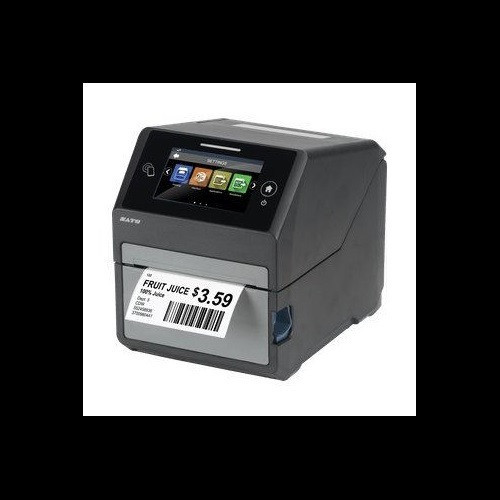
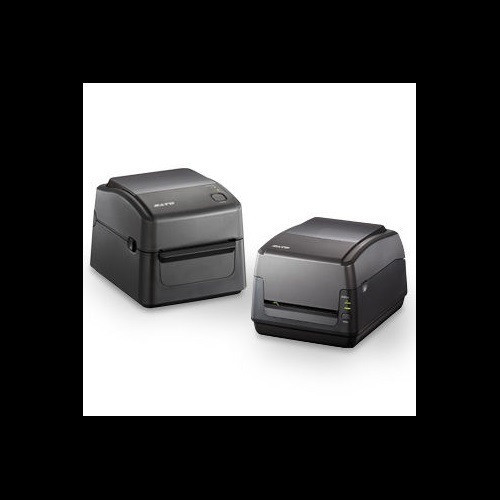
Both the Sato CT4-LX (WWCT03241-WAR) and the Sato WS4 (WD212-409DW-EX1-2) are desktop thermal printers sharing the same 203 dpi resolution, dual print method (direct thermal and thermal transfer), 4.09-inch maximum print width, and identical connectivity suite. They occupy the same product class and price tier, making them a direct cross-shop for operations needing a compact 4-inch desktop label printer. The key differentiators are integrated UHF RFID encoding on the CT4-LX versus the WS4's lighter footprint, and significant differences in onboard memory and display technology.
In This Guide
- Which printer delivers faster throughput and does either support RFID encoding?
- How do onboard memory, storage, and operator interface compare between these two models?
- What are the physical footprint, operating environment, and media handling differences?
- Which should you choose: the WWCT03241-WAR or the WD212-409DW-EX1-2?
- Side-by-Side Specs
- FAQ
Which printer delivers faster throughput and does either support RFID encoding?
Print speed is a clear split: the CT4-LX (WWCT03241-WAR) runs at 8 ips, versus 6 ips on the WS4 (WD212-409DW-EX1-2) — a 33% speed advantage for the CT4-LX on identical 4.09-inch max print width. For high-volume label runs this gap compounds quickly.
The CT4-LX integrates UHF RFID encoding operating at 860–960 MHz per the EPC Class 1 Gen 2 standard, with SATO RF Analyze antenna auto-tuning cited in the product bullets. The WS4 specifications list no RFID capability. For any workflow requiring simultaneous label print and RFID inlay encode — serialized cartons, asset tags, supply-chain compliance labels — only the CT4-LX qualifies. Buyers who need standard barcode-only labels will not pay a penalty choosing the WS4 on this axis.
How do onboard memory, storage, and operator interface compare between these two models?
Memory is the starkest specification gap in this comparison. The CT4-LX carries 4 GB Flash, 1 GB DDR3 RAM, and 2 GB user storage. The WS4 specifies 16 MB Flash, 32 MB SDRAM, and 16 MB user storage. The CT4-LX holds roughly 250× the flash capacity and 32× the RAM. This matters for storing large font libraries, complex format templates, and firmware headroom without a host connection.
On operator interface, the CT4-LX provides a 4.3-inch full-color touchscreen display. The WS4 lists an LCD display with no size or color specification provided. For operators configuring jobs locally or working in environments without a tethered host, the CT4-LX touchscreen represents a practical usability advantage. The WS4's simpler display may be adequate for fixed-format, host-driven environments where local UI interaction is minimal.
What are the physical footprint, operating environment, and media handling differences?
The CT4-LX dimensions are 7.0" × 9.375" × 8.4375" at 7.3 lbs (3.3 kg). The WS4 measures 8.69" × 10.96" × 7.38" at 5.46 lbs (2.48 kg). The WS4 is wider and deeper but notably lighter — a 1.84 lb difference. Neither unit is specified for rack or wall mounting; both are desktop form factors.
Operating temperature range differs slightly: the CT4-LX is rated 32°F–104°F (0°C–40°C); the WS4 is rated 41°F–104°F (5°C–40°C), so the CT4-LX covers a 9°F lower cold threshold. Both support the same 100–240 V AC universal power input at 50/60 Hz. Media width range also differs: the CT4-LX accepts 1"–4.1" media; the WS4 accepts 1"–4.65", giving the WS4 a small edge for wider label stock. Both support a maximum 5" roll diameter and up to 984 ft ribbon length, and both carry a 1-year manufacturer warranty.
Which should you choose: the WWCT03241-WAR or the WD212-409DW-EX1-2?
Our take: The WWCT03241-WAR (CT4-LX) is the stronger choice when the workflow demands UHF RFID encoding, higher throughput, or substantial onboard processing capacity. Concretely: the CT4-LX prints 33% faster (8 ips vs. 6 ips), carries roughly 250× more flash memory (4 GB vs. 16 MB), and adds integrated 860–960 MHz EPC C1G2 RFID encoding that the WS4 entirely lacks. For supply-chain serialization, pharmaceutical compliance, or asset-tagging environments where simultaneous print-and-encode is required, the WS4 cannot serve as a substitute. The WD212-409DW-EX1-2 (WS4) is the more appropriate selection for cost-sensitive, barcode-only desktop label printing where a lighter unit (5.46 lbs vs. 7.3 lbs), slightly wider media support (up to 4.65"), and a simpler host-driven setup are priorities and RFID capability is not needed.
Side-by-Side Comparison
Spec-for-spec, from manufacturer data.
| Specification | Sato WWCT03241-WAR | Sato WD212-409DW-EX1-2 |
|---|---|---|
| SKU | WWCT03241-WAR | WD212-409DW-EX1-2 |
| Model | CT4-LX | WS4 |
| Print Resolution | 203 dpi | 203 dpi |
| Print Speed | 8 ips | 6 ips |
| Print Method | Direct Thermal / Thermal Transfer | Direct Thermal / Thermal Transfer |
| Max Print Width | 4.09" | 4.09" |
| Media Width Range | 1" to 4.1" | 1" to 4.65" |
| RFID | 860–960 MHz UHF, EPC C1G2 | — |
| Display | 4.3" full-color touchscreen | LCD (size/color not specified) |
| Flash Memory | 4 GB | 16 MB |
| RAM | 1 GB DDR3 | 32 MB SDRAM |
| User Storage | 2 GB | 16 MB |
| Connectivity | Ethernet, Wi-Fi, Bluetooth, USB | Ethernet, Wi-Fi, Bluetooth, USB |
| Operating Temp (°F) | 32°F to 104°F | 41°F to 104°F |
| Weight | 7.3 lbs (3.3 kg) | 5.46 lbs (2.48 kg) |
| Dimensions (W×D×H) | 7.0" × 9.375" × 8.4375" | 8.69" × 10.96" × 7.38" |
| Power Input | AC 100–240V, 50/60Hz | AC 100–240V, 50/60Hz |
| Max Roll Diameter | 5" | 5" |
| Max Ribbon Length | 984 ft | 984 ft |
| Warranty | 1-year | 1-year |
Frequently Asked Questions
Which should you choose: the WWCT03241-WAR or the WD212-409DW-EX1-2?
The WWCT03241-WAR (CT4-LX) is the stronger choice when the workflow demands UHF RFID encoding, higher throughput, or substantial onboard processing capacity. Concretely: the CT4-LX prints 33% faster (8 ips vs. 6 ips), carries roughly 250× more flash memory (4 GB vs. 16 MB), and adds integrated 860–960 MHz EPC C1G2 RFID encoding that the WS4 entirely lacks. For supply-chain serialization, pharmaceutical compliance, or asset-tagging environments where simultaneous print-and-encode is required, the WS4 cannot serve as a substitute. The WD212-409DW-EX1-2 (WS4) is the more appropriate selection for cost-sensitive, barcode-only desktop label printing where a lighter unit (5.46 lbs vs. 7.3 lbs), slightly wider media support (up to 4.65"), and a simpler host-driven setup are priorities and RFID capability is not needed.
Is the WWCT03241-WAR or the WD212-409DW-EX1-2 better for high-volume label runs?
Based on the provided specifications, the WWCT03241-WAR (CT4-LX) is better suited for high-volume runs. It prints at 8 ips versus 6 ips on the WD212-409DW-EX1-2 (WS4), and its 4 GB flash / 1 GB DDR3 memory platform supports storing large template and font libraries locally without host dependency, reducing bottlenecks in continuous print operations.
Does either printer support RFID label encoding, or do I need a separate encoder?
Only the WWCT03241-WAR (CT4-LX) includes integrated UHF RFID encoding, operating at 860–960 MHz per the EPC Class 1 Gen 2 standard. The WD212-409DW-EX1-2 (WS4) specifications list no RFID capability. If your application requires simultaneous barcode print and RFID inlay encode — common in GS1-compliant supply chain, retail, or asset-tracking workflows — the CT4-LX is the only option between these two.
Which model handles wider label media, and does the operating temperature range differ?
The WD212-409DW-EX1-2 (WS4) accepts media up to 4.65" wide; the WWCT03241-WAR (CT4-LX) tops out at 4.1". Both share a 4.09" maximum print width regardless. On temperature, the CT4-LX is rated down to 32°F (0°C), while the WS4's lower limit is 41°F (5°C), so the CT4-LX has a slight edge in cooler environments such as unheated warehouses or dock areas.
More Label Printer Comparisons
- Sato WD212-409DN-EX1-2 vs Zebra ZT51042-T110000Z
- Sato WD212-409DN-EX1-2 vs Zebra ZT11142-D01000FZ
- Sato WD212-409DN-EX1-2 vs Sato WD212-409DW-EX1-2
- Sato WD212-409DN-EX1-2 vs Sato WT312-403DW-EX1-2
- Sato WD212-409DW-EX1-2 vs Zebra ZT51042-T110000Z
- Sato WD212-409DW-EX1-2 vs Zebra ZT11142-D01000FZ
Label Printer Buying Guides
Get a Second Opinion on Your Camera Choice
Share your site layout, coverage goals, and budget. Our team will validate the camera selection, flag anything we would change, and recommend products that match the use case.