
Pelco SRXP4-2V10-IMD vs Pelco SRXV2-2F3-IMD-IR: Specification Comparison
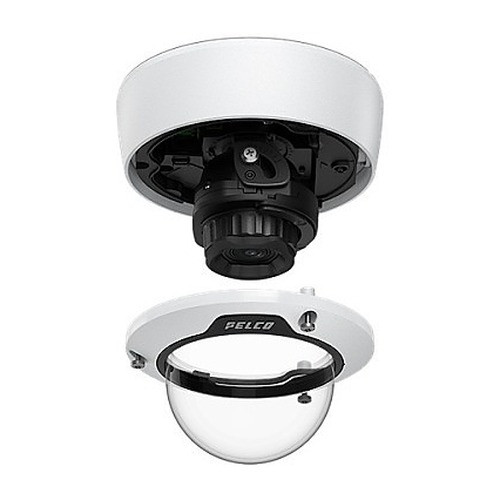
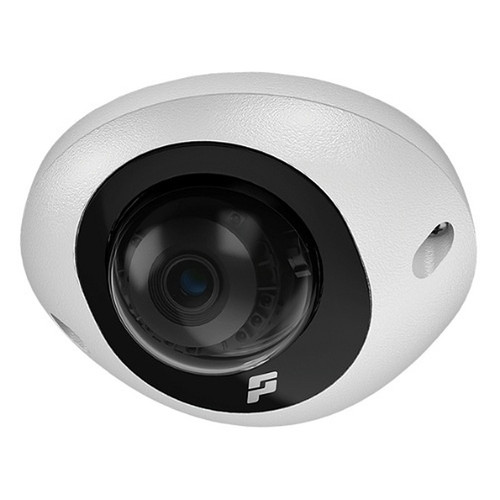
Both the Pelco SRXP4-2V10-IMD and the SRXV2-2F3-IMD-IR are 2MP indoor dome cameras in Pelco's Sarix lineup, powered by PoE and rated IK09, making them natural cross-shop candidates for enterprise and commercial indoor surveillance deployments. The SRXP4-2V10-IMD belongs to the higher-tier Sarix Professional 4 Series, while the SRXV2-2F3-IMD-IR sits in the entry-level Sarix Value 2 Series. This comparison examines how those tiers translate into real differences in imaging performance, installation flexibility, and VMS integration.
In This Guide
How do the imaging specs compare?
Both cameras use a 1/2.8-inch progressive scan CMOS sensor at 2MP (1920×1080), but diverge sharply in frame rate and dynamic range. The SRXP4-2V10-IMD delivers up to 60 fps versus the SRXV2-2F3-IMD-IR's 30 fps ceiling—a meaningful difference for capturing fast motion. WDR performance also favors the Professional 4: 126 dB with WDR on versus 120 dB for the Value 2. At low light, the SRXP4-2V10-IMD reaches 0.01 lux in color and 0.005 lux in monochrome (both at 33 ms), while the SRXV2-2F3-IMD-IR is rated 0.02 lux in color but achieves 0 lux in IR mode thanks to its integrated 850 nm IR illuminator.
The lens story separates these products significantly. The SRXP4-2V10-IMD features a motorized varifocal lens spanning 3.4–10.5 mm with remote zoom, autofocus, and P-Iris control, covering 101° to 31° horizontal field of view. The SRXV2-2F3-IMD-IR lists a varifocal 2.7–13.5 mm focal length range, but the specs do not confirm motorized control, remote zoom, or autofocus for that model. The Professional 4 also adds 3D noise reduction and support for Pelco Smart Compression and Idle Scene Mode for bandwidth management—neither feature is listed for the Value 2.
What about installation and environment?
Both cameras are indoor-rated domes with IK09 vandal resistance and PoE Class 3 power, simplifying single-cable deployment. However, their ingress protection ratings differ substantially: the SRXP4-2V10-IMD carries an IP66 rating (dust-tight, protected against powerful water jets), while the SRXV2-2F3-IMD-IR is rated only IP42 (protected against solid objects >1 mm and dripping water at a tilt up to 15°). For typical drop-ceiling or indoor corridor installs this gap may be immaterial, but in kitchens, loading docks, or any area subject to cleaning spray, IP66 provides meaningful additional protection.
Operating temperature is specified only for the SRXV2-2F3-IMD-IR (0°C to +50°C); no operating temperature range is listed in the provided specs for the SRXP4-2V10-IMD. Both cameras support wall, ceiling, pole, pendant, and corner mounting per the listed spec data. The SRXP4-2V10-IMD adds image rotation at 0°, 90°, 180°, 270°, and Corridor Mode, which the Value 2 does not list.
Which fits your VMS and analytics better?
ONVIF compliance is broader on the SRXP4-2V10-IMD, covering Profiles S, T, G, and M versus Profiles S and T only on the SRXV2-2F3-IMD-IR. Profile G adds on-camera recording management and Profile M adds metadata and analytics event interoperability—relevant for any VMS leveraging edge analytics or recording redundancy. The Professional 4 also explicitly supports Classified Object Detection in addition to Pixel Motion Detection, while the Value 2's analytics capabilities are not detailed in the provided specs.
Edge storage capacity also differs: the SRXP4-2V10-IMD supports microSD/SDHC/SDXC up to 1.5 TB and includes a USB 2.0 port, along with line-level audio I/O (G.711 PCM 8 kHz; Opus) and alarm in/out dry contacts. The SRXV2-2F3-IMD-IR lists microSD storage support but the maximum capacity is not specified in the provided specs. Audio I/O and alarm I/O are not listed for the Value 2. Memory specs where available: the Professional 4 carries 1 GB RAM / 512 MB Flash; the Value 2 lists 512 MB RAM / 256 MB Flash. The Professional 4 also supports a wider protocol list including IPv6, while IPv6 support is not listed for the Value 2. The SRXV2-2F3-IMD-IR carries an NDAA Section 889 compliance listing; this is not stated in the provided specs for the SRXP4-2V10-IMD.
Which should you choose: the SRXP4-2V10-IMD or the SRXV2-2F3-IMD-IR?
Our take: The SRXP4-2V10-IMD is the stronger choice when imaging fidelity, VMS depth, and installation flexibility are priorities. It delivers a higher frame rate (60 fps vs. 30 fps), superior WDR (126 dB vs. 120 dB), and lower color-mode sensitivity (0.01 lux vs. 0.02 lux). Its motorized varifocal lens with remote zoom and autofocus reduces truck rolls during commissioning, whereas the Value 2's lens control capabilities are not confirmed in the available specs. ONVIF Profile G and M support on the Professional 4 enables edge recording management and analytics metadata interoperability absent on the Value 2. The SRXV2-2F3-IMD-IR is a reasonable fit for cost-sensitive, low-ambient-light interiors where integrated 850 nm IR (0 lux mono) is the decisive factor and the 30 fps frame rate is acceptable—and it explicitly carries NDAA Section 889 compliance, which may be required on certain government or federally funded projects. Verify NDAA status for the SRXP4-2V10-IMD independently, as it is not stated in the provided specifications.
Side-by-Side Comparison
Spec-for-spec, from manufacturer data.
| Specification | Pelco SRXP4-2V10-IMD | Pelco SRXV2-2F3-IMD-IR |
|---|---|---|
| Series | Sarix Professional 4 | Sarix Value 2 |
| Resolution | 2MP (1920×1080) | 2MP (1920×1080) |
| Image Sensor | 1/2.8" progressive scan CMOS | 1/2.8" progressive scan CMOS |
| Max Frame Rate | 60 fps | 30 fps |
| Lens / Focal Length | 3.4–10.5 mm motorized varifocal, autofocus, P-Iris | 2.7–13.5 mm varifocal (motor/autofocus not confirmed in specs) |
| Horizontal Field of View | 101° – 31° | — |
| Min Illumination (Color) | 0.01 lux at 33 ms | 0.02 lux |
| Min Illumination (Mono / IR) | 0.005 lux at 33 ms | 0 lux (IR mode) |
| IR Illuminator | Not listed | 850 nm integrated |
| WDR | 126 dB (WDR on) / 83 dB (WDR off) | 120 dB |
| Video Compression | H.264, H.265, MJPEG, Pelco Smart Compression | H.265, H.264, Motion JPEG |
| IP Rating | IP66 | IP42 |
| IK / Vandal Rating | IK09 | IK09 |
| Operating Temperature | — | 0°C to +50°C |
| Power Input / PoE Class | PoE Class 3 | PoE Class 3 |
| ONVIF Profiles | S, T, G, M | S, T |
| Edge Storage | microSD/SDHC/SDXC up to 1.5 TB; USB 2.0 | microSD (max capacity not specified) |
| Audio I/O | Line level I/O (G.711 PCM 8 kHz; Opus) | — |
| Alarm I/O | Alarm In, Alarm Out | — |
| Analytics | Pixel Motion, Classified Object Detection | Not specified |
| Memory | 1 GB RAM, 512 MB Flash | 512 MB RAM, 256 MB Flash |
| NDAA Section 889 | Not listed in provided specs | Compliant |
| Warranty | 5-year | 5-year |
Frequently Asked Questions
Which should you choose: the SRXP4-2V10-IMD or the SRXV2-2F3-IMD-IR?
The SRXP4-2V10-IMD is the stronger choice when imaging fidelity, VMS depth, and installation flexibility are priorities. It delivers a higher frame rate (60 fps vs. 30 fps), superior WDR (126 dB vs. 120 dB), and lower color-mode sensitivity (0.01 lux vs. 0.02 lux). Its motorized varifocal lens with remote zoom and autofocus reduces truck rolls during commissioning, whereas the Value 2's lens control capabilities are not confirmed in the available specs. ONVIF Profile G and M support on the Professional 4 enables edge recording management and analytics metadata interoperability absent on the Value 2. The SRXV2-2F3-IMD-IR is a reasonable fit for cost-sensitive, low-ambient-light interiors where integrated 850 nm IR (0 lux mono) is the decisive factor and the 30 fps frame rate is acceptable—and it explicitly carries NDAA Section 889 compliance, which may be required on certain government or federally funded projects. Verify NDAA status for the SRXP4-2V10-IMD independently, as it is not stated in the provided specifications.
Is the SRXP4-2V10-IMD or SRXV2-2F3-IMD-IR better for low-light performance?
It depends on the lighting scenario. The SRXP4-2V10-IMD reaches 0.01 lux in color and 0.005 lux in monochrome mode (at 33 ms), making it more sensitive in ambient-lit environments. The SRXV2-2F3-IMD-IR is rated 0.02 lux in color but drops to 0 lux in IR mode due to its built-in 850 nm IR illuminator—so in truly dark spaces with no ambient light, the Value 2's IR gives it a practical advantage the Professional 4 lacks, as no IR illuminator is listed for the SRXP4-2V10-IMD.
Does either camera require a specific VMS for full feature support?
Both cameras are ONVIF-compliant, but to different degrees. The SRXP4-2V10-IMD supports ONVIF Profiles S, T, G, and M; the SRXV2-2F3-IMD-IR supports only Profiles S and T. Profile G enables VMS-controlled edge recording and retrieval; Profile M enables analytics metadata. Any ONVIF Profile S/T VMS will work with both, but only a Profile G or M-capable VMS will unlock the Professional 4's extended capabilities. Pelco's own VMS ecosystem is expected to support both, but VMS compatibility should be verified with the specific platform vendor.
Is either camera NDAA Section 889 compliant for government installations?
NDAA Section 889 compliance is explicitly listed in the provided specifications for the SRXV2-2F3-IMD-IR. This compliance designation is not stated in the provided specifications for the SRXP4-2V10-IMD. Buyers with federal or NDAA-constrained project requirements should verify the SRXP4-2V10-IMD's compliance status directly with Pelco before specifying it.
Get a Second Opinion on Your Camera Choice
Share your site layout, coverage goals, and budget. Our team will validate the camera selection, flag anything we would change, and recommend products that match the use case.