
Pelco SRXF3-12360-ERS vs Pelco SRXF3-12360-I: Specification Comparison
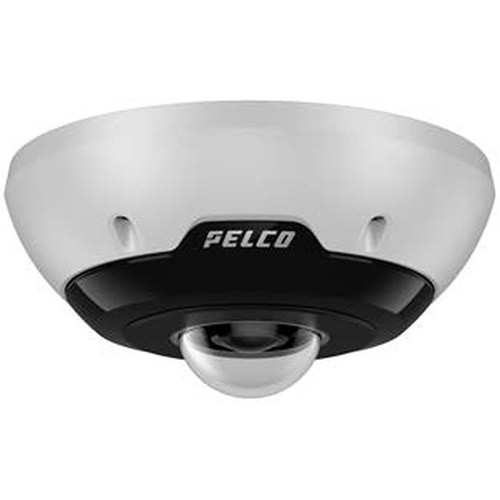
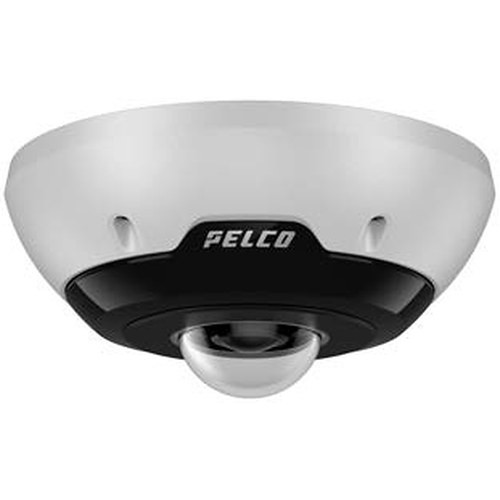
Both the Pelco SRXF3-12360-ERS and SRXF3-12360-I belong to the Sarix Fisheye 3 series, sharing a 12MP sensor, 360° panoramic field of view, and identical PoE+ power architecture. This comparison is intended for installers and IT buyers evaluating which variant fits a specific deployment environment — outdoor/perimeter versus indoor/ceiling — given that the core imaging platform is largely shared between the two SKUs.
In This Guide
How do the imaging specs compare?
Both cameras deliver an identical 12MP resolution at 3840×2160 (with a secondary noted resolution of 3520×1920 on the ERS), a 2.7 mm f/2.5 lens (though the SRXF3-12360-I also lists a 1.4 mm focal length in its specs, an internal inconsistency in the provided data), F2.0 aperture, and a maximum frame rate of 12.5 fps at full resolution. WDR is specified as active on both, with a ceiling of 83 dB noted in both sets of specs. H.265 and H.264 compression is available on both units.
The most meaningful imaging differentiator is low-light capability. The SRXF3-12360-ERS specifies integrated IR illumination at 850 nm for active day/night operation, enabling image capture in zero-ambient-light conditions. The SRXF3-12360-I lists a minimum illumination of 0.10 lux but explicitly states no IR illumination is present — ambient light is required. Both units note Day/Night functionality and microphone support. On-board memory is listed identically at 4 GB RAM and 4 GB Flash for both.
What about installation and environment?
The SRXF3-12360-ERS is rated IP66 and NEMA 4X, confirming full dust exclusion and protection against powerful water jets — appropriate for outdoor perimeter, façade, or exposed soffit mounting. Its operating temperature range spans -40°C to +60°C, making it suitable for extreme cold environments such as northern climates or cold-storage facilities. Impact resistance is IK10 on both models.
The SRXF3-12360-I carries an IP52 rating, providing protection against limited dust ingress and dripping water only, and is classified as an indoor environment camera. Its operating temperature floor is -10°C, narrowing its deployment range considerably compared to the ERS. Both units are PoE+ (802.3at) Class 3 powered and share the same listed mount types: wall, ceiling, pole, pendant, and corner. The SRXF3-12360-I dimensions are specified as 6" × 6" × 2.81"; the ERS lists 153.5 mm × 153.5 mm × 71.3 mm (approximately 6.04" × 6.04" × 2.81"), indicating near-identical physical footprints.
Which fits your VMS and analytics better?
Both models are ONVIF Profile S and Profile T compliant, supporting the same VMS integration pathways across compatible platforms. Both carry Pelco Smart Analytics with 8 behavior-based analytics modes, and both list analytics-disabled operating modes in their specs. HDMS Smart Codec technology and idle scene mode for bandwidth management are noted identically across both SKUs.
On-board storage via microSD is supported on both units. Audio input via microphone is listed as supported on both. HTTPS encryption is confirmed on both. From an integration standpoint, the two models are functionally identical — the differentiator is entirely environmental and low-light capability, not VMS compatibility, analytics depth, or edge storage architecture.
Which should you choose: the SRXF3-12360-ERS or the SRXF3-12360-I?
Our take: The SRXF3-12360-ERS is the stronger choice when the deployment site is outdoors, exposed to weather, or subject to extreme cold temperatures. Its IP66/NEMA 4X rating versus the SRXF3-12360-I's IP52 represents a significant protection class difference — IP66 withstands direct water jets while IP52 covers dripping water only. The ERS also extends the cold-temperature floor from -10°C to -40°C, a decisive advantage in northern or industrial-cold environments. Most critically, the ERS includes integrated 850 nm IR illumination for zero-lux operation, while the SRXF3-12360-I requires ambient light (minimum 0.10 lux). Where the installation is a controlled indoor ceiling mount — retail, office, lobby, or warehouse interior — with adequate ambient lighting and no exposure to the elements, the SRXF3-12360-I is the appropriate and likely lower-cost choice. Both carry a 5-year warranty and identical VMS/analytics capabilities.
Side-by-Side Comparison
Spec-for-spec, from manufacturer data.
| Specification | Pelco SRXF3-12360-ERS | Pelco SRXF3-12360-I |
|---|---|---|
| Series | Sarix Fisheye 3 | Sarix Fisheye 3 |
| Resolution | 12MP | 12MP |
| Max Resolution | 3840 × 2160 | 3840 × 2160 |
| Lens / Focal Length | 2.7 mm f/2.5 | 2.7 mm f/2.5 (1.4 mm also listed in specs) |
| Aperture | F2.0 | F2.0 |
| Field of View | 180° / 360° | 180° / 360° |
| Max Frame Rate | 12.5 fps @ full resolution | 12.5 fps @ full resolution |
| IR Illumination | 850 nm integrated IR | None (ambient light required) |
| Min Illumination | — | 0.10 lux |
| WDR | Yes, up to 83 dB | Yes, up to 83 dB |
| Video Compression | H.265 / H.264 | H.265 / H.264 |
| IP Rating | IP66, NEMA 4X | IP52 |
| Impact Rating | IK10 | IK10 |
| Operating Temperature | -40°C to +60°C | -10°C to +60°C |
| Power Input / PoE Class | PoE+ (802.3at) / Class 3 | PoE+ (802.3at) / Class 3 |
| ONVIF Compliance | Profile S, Profile T | Profile S, Profile T |
| Analytics | Pelco Smart Analytics, 8 behaviors | Pelco Smart Analytics, 8 behaviors |
| Audio | Microphone supported | Microphone supported |
| Edge Storage | microSD | microSD |
| Environment Rating | Outdoor | Indoor |
| Dimensions | 153.5 mm × 153.5 mm × 71.3 mm | 6" × 6" × 2.81" |
| Warranty | 5 years | 5 years |
Frequently Asked Questions
Which should you choose: the SRXF3-12360-ERS or the SRXF3-12360-I?
The SRXF3-12360-ERS is the stronger choice when the deployment site is outdoors, exposed to weather, or subject to extreme cold temperatures. Its IP66/NEMA 4X rating versus the SRXF3-12360-I's IP52 represents a significant protection class difference — IP66 withstands direct water jets while IP52 covers dripping water only. The ERS also extends the cold-temperature floor from -10°C to -40°C, a decisive advantage in northern or industrial-cold environments. Most critically, the ERS includes integrated 850 nm IR illumination for zero-lux operation, while the SRXF3-12360-I requires ambient light (minimum 0.10 lux). Where the installation is a controlled indoor ceiling mount — retail, office, lobby, or warehouse interior — with adequate ambient lighting and no exposure to the elements, the SRXF3-12360-I is the appropriate and likely lower-cost choice. Both carry a 5-year warranty and identical VMS/analytics capabilities.
Is the SRXF3-12360-ERS or SRXF3-12360-I better for low light?
The SRXF3-12360-ERS is better for low-light and no-light conditions. It includes integrated 850 nm IR illumination that enables imaging in complete darkness. The SRXF3-12360-I specifies a minimum illumination of 0.10 lux but has no IR — it requires some ambient light to produce an image.
Can I use the SRXF3-12360-I outdoors?
Based on the provided specifications, no. The SRXF3-12360-I is classified as an indoor camera with an IP52 rating, which provides only limited dust and drip-water protection. Outdoor deployment would expose it to conditions beyond its rated envelope. The SRXF3-12360-ERS, rated IP66 and NEMA 4X, is the specified outdoor-capable variant.
Do the SRXF3-12360-ERS and SRXF3-12360-I work with the same VMS platforms?
Yes. Both models share ONVIF Profile S and Profile T compliance, Pelco Smart Analytics with 8 behaviors, HDMS Smart Codec, HTTPS encryption, and microSD edge storage. From a VMS and analytics integration perspective, the two SKUs are functionally identical — the differences are limited to environmental ratings, IR illumination, and operating temperature range.
Get a Second Opinion on Your Camera Choice
Share your site layout, coverage goals, and budget. Our team will validate the camera selection, flag anything we would change, and recommend products that match the use case.