
Pelco SRXE4-6V9-EMD-1 vs Pelco SRXE4-8V9-IMD-IR1: Specification Comparison
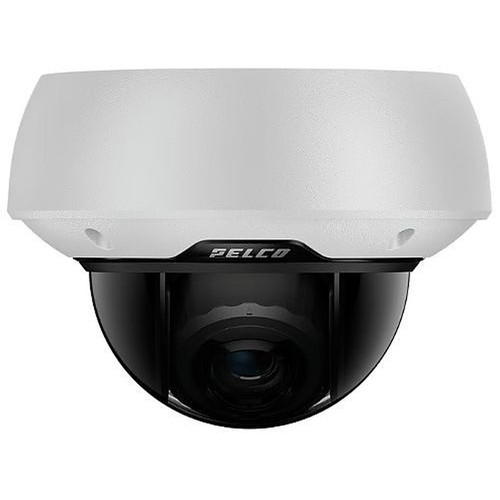
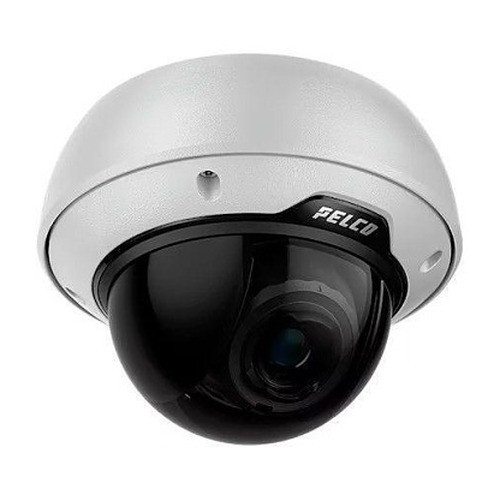
Both the Pelco SRXE4-6V9-EMD-1 and SRXE4-8V9-IMD-IR1 belong to the Sarix Enhanced 4 Series and share the same 4MP resolution class, motorized varifocal lens range, and fixed-dome form factor — making them direct cross-shop candidates for integrators choosing between an outdoor-rated and an indoor IR deployment. The key differentiators are environmental hardening, IR illumination method, and cold-weather operating range. This comparison draws exclusively from the specifications provided for each model.
In This Guide
How do the imaging specs compare?
Both cameras use a 1/1.8-inch progressive scan CMOS sensor, deliver 2560 x 1440 (4MP) at up to 60 fps, and share the same 4.4–9.3 mm motorized varifocal lens with a 32–109° horizontal field of view. WDR is identical at 130 dB SureVision, and video compression options are the same: H.265, H.264, and Motion JPEG. Aperture is F1.4 on both units.
Low-light performance diverges at the illumination floor. The SRXE4-6V9-EMD-1 specifies 0.003 lux color and 0.001 lux monochrome, relying on ambient or supplemental IR for near-darkness operation. The SRXE4-8V9-IMD-IR1 specifies 0.003 lux color and 0 lux IR, indicating integrated 850 nm IR illumination that enables imaging in complete darkness. The outdoor model's 0.001 lux monochrome floor is competitive, but the indoor model's 0-lux IR rating reflects active onboard illumination rather than passive sensitivity alone.
What about installation and environment?
The SRXE4-6V9-EMD-1 carries IP66, IP67, IP68 (2 m for 2 hr), IPX9K, and NEMA 4X ingress ratings, making it suitable for exposed outdoor installations including wash-down environments. Its operating temperature spans −50°C to +65°C (with PoE+ or external power), covering extreme cold-weather deployments. The SRXE4-8V9-IMD-IR1 is rated IP66 only and operates from −10°C to +65°C — adequate for conditioned or semi-conditioned indoor spaces but not for outdoor or freezer environments.
Both units carry an IK11 impact rating per the specs' Impact Rating field, and both list PoE Class 3 as the power input. Form factor is dome on both. The outdoor model's listed mounting options include wall, ceiling, pole, pendant, corner, and recessed; the indoor model's spec lists rack as the mount type, which appears to be a data entry artifact — buyers should confirm mounting hardware with Pelco documentation. Both carry a 5-year warranty.
Which fits your VMS and analytics better?
Both cameras support ONVIF Profile S, Profile T, Profile G, and Profile M, ensuring broad VMS compatibility. Edge analytics are identical across both models: Smart Analytics covering Person/Vehicle Detection, Direction Violation, Loitering, Beam Crossing, Crowd Detection, Audio Analytics, and Tamper Alert. Cybersecurity features are also matched: FIPS 140-3 Level 3, TPM, Secure Boot, HTTPS, and 802.1X on both. Both are NDAA Section 889 and TAA compliant.
On-board storage via microSD is specified for both models, enabling edge recording for resilience or standalone operation. The outdoor model's spec notes microphone support under audio; the indoor model's spec lists '850nm' under IR/Lowlight but does not explicitly confirm a built-in microphone in the provided fields. Integrators requiring confirmed audio input on the indoor unit should verify against the full Pelco datasheet before specifying.
Which should you choose: the SRXE4-6V9-EMD-1 or the SRXE4-8V9-IMD-IR1?
Our take: The SRXE4-6V9-EMD-1 is the stronger choice when the deployment environment is outdoor, subject to moisture, wash-down, or temperatures below −10°C. Its IP68 / IPX9K / NEMA 4X ingress stack and −50°C lower operating limit directly exceed the indoor model's IP66-only / −10°C floor — a critical delta for parking structures, building perimeters, or cold-storage exteriors. Conversely, the SRXE4-8V9-IMD-IR1 is the appropriate selection for interior spaces where complete-darkness performance is required: its integrated 850 nm IR achieves a 0-lux IR illumination floor versus the outdoor model's 0.001-lux passive monochrome floor, meaning it does not depend on ambient light or supplemental fixtures. All analytics, ONVIF profiles, cybersecurity certifications, lens range, WDR, frame rate, and compression options are identical between the two. Specify the outdoor model for any exterior or harsh-environment zone; specify the indoor IR model for interior zones with lighting outage scenarios.
Side-by-Side Comparison
Spec-for-spec, from manufacturer data.
| Specification | Pelco SRXE4-6V9-EMD-1 | Pelco SRXE4-8V9-IMD-IR1 |
|---|---|---|
| Series | Sarix Enhanced 4 | Sarix Enhanced 4 |
| Resolution | 4MP (2560 x 1440) | 4MP (2560 x 1440) |
| Image Sensor | 1/1.8" progressive scan CMOS | 1/1.8" progressive scan CMOS |
| Lens / Focal Length | 4.4–9.3 mm motorized varifocal | 4.4–9.3 mm motorized varifocal |
| HFOV | 32–109° | 32–109° |
| Aperture | F1.4 | F1.4 |
| Min Illumination | 0.003 lux color / 0.001 lux B/W | 0.003 lux color / 0 lux IR |
| IR Illumination | Not specified (passive low-light) | 850 nm integrated IR |
| WDR | 130 dB SureVision | 130 dB SureVision |
| Max Frame Rate | 60 fps | 60 fps |
| Video Compression | H.265; H.264; Motion JPEG | H.265; H.264; Motion JPEG |
| IP Rating | IP66 / IP67 / IP68 (2m/2hr) / IPX9K / NEMA 4X | IP66 |
| Impact Rating | IK11 | IK11 |
| Operating Temperature | −50°C to +65°C (PoE+ or ext. power) | −10°C to +65°C |
| Power Input / PoE Class | PoE Class 3 | PoE Class 3 |
| Environment Rating | Outdoor | Indoor |
| Edge Storage | microSD | microSD |
| ONVIF Compliance | Profile S; T; G; M | Profile S; T; G; M |
| Cybersecurity | FIPS 140-3 L3; TPM; Secure Boot; HTTPS; 802.1X | FIPS 140-3 L3; TPM; Secure Boot; HTTPS; 802.1X |
| Compliance | NDAA Sec. 889; TAA | NDAA Sec. 889; TAA |
| Warranty | 5 years | 5 years |
Frequently Asked Questions
Which should you choose: the SRXE4-6V9-EMD-1 or the SRXE4-8V9-IMD-IR1?
The SRXE4-6V9-EMD-1 is the stronger choice when the deployment environment is outdoor, subject to moisture, wash-down, or temperatures below −10°C. Its IP68 / IPX9K / NEMA 4X ingress stack and −50°C lower operating limit directly exceed the indoor model's IP66-only / −10°C floor — a critical delta for parking structures, building perimeters, or cold-storage exteriors. Conversely, the SRXE4-8V9-IMD-IR1 is the appropriate selection for interior spaces where complete-darkness performance is required: its integrated 850 nm IR achieves a 0-lux IR illumination floor versus the outdoor model's 0.001-lux passive monochrome floor, meaning it does not depend on ambient light or supplemental fixtures. All analytics, ONVIF profiles, cybersecurity certifications, lens range, WDR, frame rate, and compression options are identical between the two. Specify the outdoor model for any exterior or harsh-environment zone; specify the indoor IR model for interior zones with lighting outage scenarios.
Is the SRXE4-6V9-EMD-1 or SRXE4-8V9-IMD-IR1 better for low-light performance?
For complete-darkness environments, the SRXE4-8V9-IMD-IR1 has an advantage: its integrated 850 nm IR illumination achieves a specified 0 lux IR floor, meaning it can image with no ambient light at all. The SRXE4-6V9-EMD-1 specifies 0.001 lux monochrome, which requires at least trace ambient light. If you need total-darkness coverage indoors, the IR model is the correct choice; for outdoor scenes with some ambient light, the outdoor model's 0.001 lux floor is highly capable.
Can the SRXE4-6V9-EMD-1 be installed in a freezer or extreme cold environment?
Yes — the SRXE4-6V9-EMD-1 is rated for operation from −50°C to +65°C when powered by PoE+ or external power, making it suitable for cold-storage and outdoor arctic-condition deployments. The SRXE4-8V9-IMD-IR1 is rated only to −10°C, which is not sufficient for freezer or extreme cold applications.
Do both cameras support the same VMS integrations and analytics?
Yes. Both models carry identical ONVIF compliance (Profile S, T, G, and M) and the same Smart Analytics feature set: Person/Vehicle Detection, Direction Violation, Loitering, Beam Crossing, Crowd Detection, Audio Analytics, and Tamper Alert. Cybersecurity certifications (FIPS 140-3 Level 3, TPM, Secure Boot, 802.1X) and compliance approvals (NDAA Section 889, TAA) are also matched, so VMS compatibility and analytics capability are not a differentiating factor between the two models.
Get a Second Opinion on Your Camera Choice
Share your site layout, coverage goals, and budget. Our team will validate the camera selection, flag anything we would change, and recommend products that match the use case.