
Janam XT40-ATHKRMGW00 vs Janam XT3-STHGBMGW01: Specification Comparison
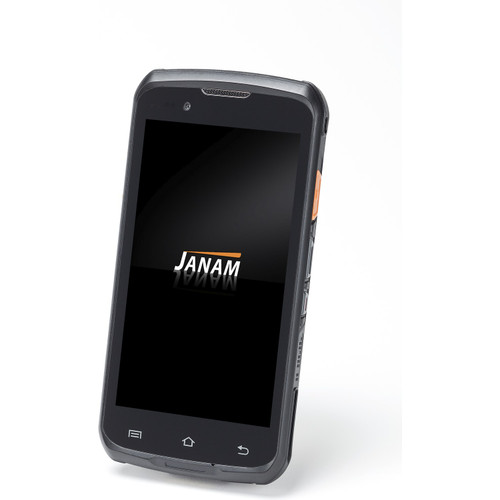
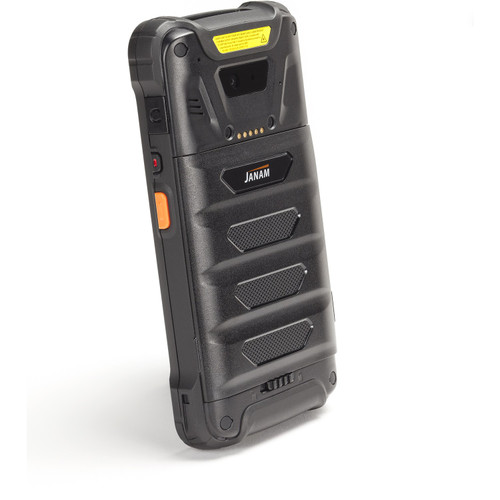
Both the Janam XT40-ATHKRMGW00 and the XT3-STHGBMGW01 are handheld rugged mobile computers targeting field and warehouse workflows that require simultaneous barcode scanning and RFID/NFC data capture. They share the same form factor, the same storage baseline, and the same Qualcomm octa-core platform, but diverge on operating system generation, scan engine model, battery architecture, and ingress-protection rating — the three axes most likely to drive a procurement decision in this product class.
In This Guide
- Which device delivers broader scan-engine capability and data-capture coverage?
- Which unit offers stronger environmental protection and longer untethered runtime?
- Which device offers a more current software platform and enterprise management pathway?
- Which should you choose: the XT40-ATHKRMGW00 or the XT3-STHGBMGW01?
- Side-by-Side Specs
- FAQ
Which device delivers broader scan-engine capability and data-capture coverage?
The XT40-ATHKRMGW00 uses a Honeywell N5703 1D/2D imager and explicitly lists PDF417 among its supported 2D symbologies alongside QR Code, Data Matrix, Code 128, Code 39, UPC, and EAN. Its NFC stack covers NFC Forum Tags 1–5, ISO 14443 Type A/B, ISO 15693, MIFARE, and Sony FeliCa on 13.56 MHz.
The XT3-STHGBMGW01 uses a Honeywell N6703 Area Imager, which the spec sheet describes as omnidirectional with a 6–12 inch rated read range. Its listed 2D symbologies are QR Code and Data Matrix only — PDF417 is not cited in the provided specs. NFC coverage is comparable: NFC Forum Tags 1–5, ISO 14443 Type A/B, ISO 15693, MIFARE 1k/4k/Plus/UltraLight/DESFire, and Sony FeliCa. The XT3 spec also adds Ethernet connectivity via dock/accessory and a Pogo Pin industrial connector, which the XT40 specs do not mention.
Which unit offers stronger environmental protection and longer untethered runtime?
On ingress protection, the XT3-STHGBMGW01 is rated IP67 (dust-tight; temporary immersion to 1 metre), while the XT40-ATHKRMGW00 carries an IP65 rating (dust-tight; water jets from any direction but not immersion). Both are rated for 1.5 m (5 ft) drop-to-concrete on all sides.
On battery, the XT40-ATHKRMGW00 carries a 4,500 mAh removable Li-ion rated for 8–12 hours of continuous scanning and cellular use. The XT3-STHGBMGW01 ships with a 2,900 mAh hot-swappable Li-ion rated for 8–10 hours of mixed usage, with a 5,800 mAh extended battery listed as optional. Hot-swap capability on the XT3 allows battery replacement without powering down — a meaningful operational difference in shift-critical deployments. The XT40's higher native capacity, however, may reduce swap frequency in single-shift scenarios.
Which device offers a more current software platform and enterprise management pathway?
The XT40-ATHKRMGW00 ships with Android 13 (AOSP or GMS selectable) and is upgradable to Android 15 per the provided specs. AOSP availability suits environments where Google Mobile Services are restricted. The XT3-STHGBMGW01 ships with Android 9 (GMS/AER) and is upgradable to Android 11; it carries the Android Enterprise Recommended designation, which imposes validated MDM-compatibility standards.
The XT40's processor runs at 2.4 GHz versus the XT3's 2.2 GHz; both use Qualcomm Snapdragon octa-core silicon and 4 GB RAM. The XT40 uses Bluetooth 5.1; the XT3 uses Bluetooth 5.0 BLE. The XT3 provides 9 programmable external buttons, a 3.5 mm headset jack, dual-microphone with noise cancellation, and PTT support — hardware features not listed in the XT40 specs. The XT40's front camera is 5 MP; the XT3's is 8 MP. Both rear cameras are 13 MP.
Which should you choose: the XT40-ATHKRMGW00 or the XT3-STHGBMGW01?
Our take: The XT40-ATHKRMGW00 is the stronger choice when a current Android platform, higher native battery capacity, and AOSP flexibility are the primary requirements. It ships on Android 13 (upgradable to Android 15) versus the XT3's Android 9 (upgradable to Android 11 only), extends battery life to 8–12 hours on a 4,500 mAh cell versus the XT3's 2,900 mAh / 8–10 hours baseline, and explicitly supports PDF417 scanning which is not cited in the XT3's provided specs. Conversely, the XT3-STHGBMGW01 holds a clear edge in three areas: IP67 immersion resistance versus the XT40's IP65, a hot-swappable battery architecture suited to multi-shift operations without downtime, and the Android Enterprise Recommended certification for validated MDM onboarding. Buyers in wet or wash-down environments, or running continuous multi-shift workflows where battery swap speed matters more than raw capacity, should favour the XT3. Buyers prioritising a longer Android support runway or AOSP deployment should favour the XT40.
Side-by-Side Comparison
Spec-for-spec, from manufacturer data.
| Specification | Janam XT40-ATHKRMGW00 | Janam XT3-STHGBMGW01 |
|---|---|---|
| Operating System | Android 13 (AOSP or GMS); upgradable to Android 15 | Android 9 (GMS/AER); upgradable to Android 11 |
| Processor | 2.4 GHz Qualcomm Snapdragon octa-core | 2.2 GHz Qualcomm Snapdragon octa-core |
| RAM | 4 GB | 4 GB |
| Internal Storage | 64 GB | 64 GB |
| microSD Expansion | Up to 512 GB (SDXC) | Up to 512 GB |
| Scan Engine | Honeywell N5703 1D/2D imager | Honeywell N6703 Area Imager (omnidirectional) |
| 2D Symbologies (specified) | QR Code; Data Matrix; PDF417; and others | QR Code; Data Matrix |
| IP Rating | IP65 | IP67 |
| Drop Rating | 1.5 m (5 ft) to concrete | 1.5 m (5 ft) to concrete |
| Battery Capacity | 4,500 mAh removable Li-ion | 2,900 mAh hot-swappable Li-ion (5,800 mAh optional) |
| Battery Life (spec) | 8–12 hours continuous scanning/cellular | 8–10 hours mixed cellular/WiFi |
| Bluetooth | Bluetooth 5.1 | Bluetooth 5.0 BLE |
| Wi-Fi | 802.11 a/b/g/n/ac | 802.11 a/b/g/n/ac/d/h/i/k/r/v |
| Wired Interface | USB Type-C | USB-C; Ethernet via dock; Pogo Pin connector |
| Screen | 5" HD (720×1280) multi-touch capacitive | 5" HD (1280×720) IPS; 500 nits; Gorilla Glass; multi-touch capacitive |
| Rear / Front Camera | 13 MP / 5 MP | 13 MP autofocus / 8 MP |
| Weight (with battery) | 9.8 oz (280 g) | 9.5 oz (272 g) |
| Dimensions (L×W×D) | 152 mm × 76 mm × 18 mm | 156 mm × 82 mm × 21 mm |
| Enterprise Certification | — | Android Enterprise Recommended |
Frequently Asked Questions
Which should you choose: the XT40-ATHKRMGW00 or the XT3-STHGBMGW01?
The XT40-ATHKRMGW00 is the stronger choice when a current Android platform, higher native battery capacity, and AOSP flexibility are the primary requirements. It ships on Android 13 (upgradable to Android 15) versus the XT3's Android 9 (upgradable to Android 11 only), extends battery life to 8–12 hours on a 4,500 mAh cell versus the XT3's 2,900 mAh / 8–10 hours baseline, and explicitly supports PDF417 scanning which is not cited in the XT3's provided specs. Conversely, the XT3-STHGBMGW01 holds a clear edge in three areas: IP67 immersion resistance versus the XT40's IP65, a hot-swappable battery architecture suited to multi-shift operations without downtime, and the Android Enterprise Recommended certification for validated MDM onboarding. Buyers in wet or wash-down environments, or running continuous multi-shift workflows where battery swap speed matters more than raw capacity, should favour the XT3. Buyers prioritising a longer Android support runway or AOSP deployment should favour the XT40.
Is the XT40-ATHKRMGW00 or XT3-STHGBMGW01 better for wet or outdoor environments?
The XT3-STHGBMGW01 is rated IP67, meaning it is dust-tight and can withstand temporary immersion. The XT40-ATHKRMGW00 is rated IP65, which covers dust-tightness and water jets but not immersion. For environments with wash-down procedures or rain exposure where the device may be submerged briefly, the XT3 provides a higher-rated seal per the provided specs.
Which device will stay supported by Android updates longer?
Based on the provided specs, the XT40-ATHKRMGW00 ships on Android 13 and is upgradable to Android 15, giving it a materially longer forward software runway. The XT3-STHGBMGW01 ships on Android 9 and is upgradable to Android 11 only. Buyers concerned about OS-level security patches and application compatibility over a multi-year deployment should factor this gap into their decision.
Can either device be used in a multi-shift operation where batteries must be swapped without shutting down?
The XT3-STHGBMGW01 spec sheet describes its 2,900 mAh Li-ion battery as hot-swappable, enabling replacement without powering down the device — a key feature for continuous multi-shift workflows. The XT40-ATHKRMGW00 battery is described as removable and rechargeable but the provided specs do not describe it as hot-swappable. The XT40's larger 4,500 mAh cell may reduce how often swaps are needed in a single shift, but the XT3's hot-swap architecture offers a distinct operational advantage when downtime cannot be tolerated.
More Mobile Computer Comparisons
- Janam XT40-ATHKRMGW00 vs Zebra MC3390XR
- Janam XT40-ATHKRMGW00 vs Zebra MC3330XR
- Janam XT40-ATHKRMGW00 vs Janam XT3-STHJBMGW00
- Janam XT3-STHGBMGW01 vs Zebra MC3390XR
- Janam XT3-STHGBMGW01 vs Zebra MC3330XR
- Janam XT3-STHGBMGW01 vs Janam XT3-STHJBMGW00
Mobile Computer Buying Guides
Get a Second Opinion on Your Camera Choice
Share your site layout, coverage goals, and budget. Our team will validate the camera selection, flag anything we would change, and recommend products that match the use case.