
Janam XT3-STKGBMNW00 vs Janam XT40-ATHKRMGW00: Specification Comparison
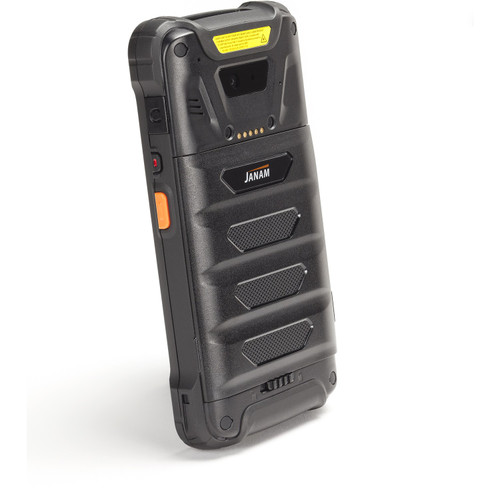
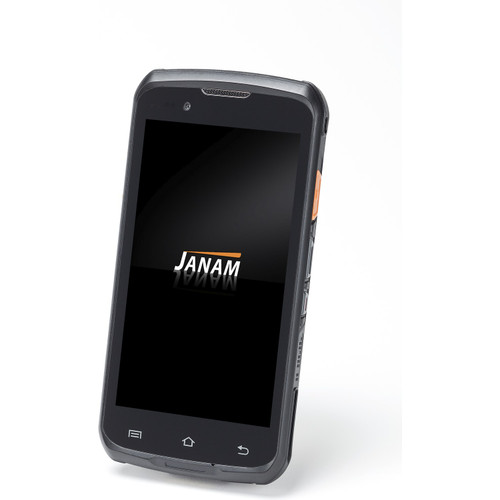
Both the Janam XT3-STKGBMNW00 and XT40-ATHKRMGW00 are handheld rugged mobile computers combining RFID/NFC capture with Honeywell 1D/2D barcode imaging on Android. Targeted at field service, inventory, and logistics workflows, they share the same 5-inch HD touchscreen footprint, hot-environment drop ratings, and USB-C connectivity. The comparison centres on OS generation and longevity, battery endurance, wireless stack depth, and environmental ingress protection — the four axes most likely to determine procurement decisions in enterprise and industrial deployments.
In This Guide
- Which device offers a more current and future-proof OS platform?
- How do battery capacity and wireless capability compare for shift-length deployments?
- Which device is more rugged, and how do the scanning engines differ?
- Which should you choose: the XT3-STKGBMNW00 or the XT40-ATHKRMGW00?
- Side-by-Side Specs
- FAQ
Which device offers a more current and future-proof OS platform?
The XT3-STKGBMNW00 ships with Android 9, optionally Android 11, under Google Mobile Services (GMS) with Android Enterprise Recommended (AER) certification. AER designation confirms the device meets Google's enterprise manageability baseline, but Android 9 reached end of Google security support in 2022, and Android 11 in 2024. No upgrade path beyond Android 11 is stated in the provided specifications.
The XT40-ATHKRMGW00 ships on Android 13 with GMS or AOSP and is explicitly documented as upgradable to Android 15. This gives the XT40 a meaningful longevity advantage: buyers deploying in 2026 receive a supported OS version and a documented forward upgrade path, which matters for MDM policy compliance, Play Protect certification, and app-store API requirements. No AER certification claim is present in the XT40 specifications.
How do battery capacity and wireless capability compare for shift-length deployments?
The XT3-STKGBMNW00 carries a 2,900 mAh hot-swappable Li-ion battery with a 5,800 mAh extended option noted in the specifications. Hot-swap capability allows a spare battery to be inserted without powering down the device, a material advantage in continuous-operation environments. No hours-of-use figure is provided in the XT3 specifications.
The XT40-ATHKRMGW00 uses a 4,500 mAh removable Li-ion battery. The specifications state 8–12 hours of continuous scanning and cellular use. The battery is described as removable but the specifications do not explicitly state hot-swap capability.
On wireless, the XT3 supports 802.11a/b/g/n/ac plus the additional amendments d/h/i/k/r/v — the k/r/v amendments are directly relevant to enterprise fast roaming and radio resource management. Bluetooth is version 5.0 with BLE. The XT40 supports 802.11a/b/g/n/ac without the additional amendments listed, and Bluetooth 5.1. The XT40 adds integrated LTE (FDD/TD), WCDMA, and GSM/EDGE/GPRS cellular radios as part of its standard wireless stack per specifications; the XT3 lists WWAN as optional. GPS on the XT40 includes A-GPS, BeiDou, GLONASS, and Galileo; no GPS specification is present for the XT3.
Which device is more rugged, and how do the scanning engines differ?
Both units are rated for 1.5 m (5 ft) drops to concrete on all sides. The XT3-STKGBMNW00 carries an IP67 ingress protection rating, meaning it is dust-tight and rated for temporary immersion in water up to 1 metre. The XT40-ATHKRMGW00 is rated IP65, which is dust-tight and protected against low-pressure water jets but not submersion. For wash-down or wet environments, the XT3's IP67 rating provides a higher protection level.
The XT3 uses a Honeywell N6703 1D/2D imager. The XT40 uses a Honeywell N5703 1D/2D imager. The N6703 is a later-generation engine than the N5703; however, no scan-range, decode-speed, or motion-tolerance figures are provided in the specifications for either unit, so a quantitative scan-performance comparison cannot be made from available data. Both engines decode the same core 1D and 2D symbology sets including Code 128, Code 39, UPC, EAN, QR, Data Matrix, and PDF417.
NFC on the XT3 covers NFC Forum Tags 1–5, ISO14443 Type A and B, ISO15693, MIFARE 1k/4k/Plus/UltraLight/DESFire, and Sony FeliCa. The XT40 covers NFC Forum Tags 1–5, ISO14443 Type A/B, ISO15693, MIFARE, and Sony FeliCa at 13.56 MHz. The XT3 specification explicitly lists MIFARE DESFire and UltraLight variants; the XT40 specification does not enumerate those sub-variants.
Which should you choose: the XT3-STKGBMNW00 or the XT40-ATHKRMGW00?
Our take: The XT40-ATHKRMGW00 is the stronger choice when OS longevity, integrated cellular connectivity, and battery endurance are the primary procurement criteria. The XT40 ships on Android 13 with a documented upgrade path to Android 15, compared to the XT3's Android 9/11 with no stated upgrade path — a decisive gap for multi-year enterprise deployments. Its 4,500 mAh battery with a rated 8–12 hour runtime outpaces the XT3's 2,900 mAh cell, and its integrated LTE/WWAN radio eliminates the need for an optional add-on. Conversely, the XT3-STKGBMNW00 is the stronger choice where IP67 immersion resistance is required (versus XT40's IP65), where enterprise Wi-Fi roaming amendments (802.11k/r/v) are mandatory, or where hot-swap battery operation is needed to eliminate downtime between shifts. Both units match on drop rating, screen size, weight class, and core symbology support.
Side-by-Side Comparison
Spec-for-spec, from manufacturer data.
| Specification | Janam XT3-STKGBMNW00 | Janam XT40-ATHKRMGW00 |
|---|---|---|
| Operating System | Android 9 (GMS/AER); Android 11 option | Android 13 (GMS or AOSP); upgradable to Android 15 |
| OS Upgrade Path | Not stated beyond Android 11 | Documented upgrade to Android 15 |
| Processor | 2.2 GHz Qualcomm Snapdragon octa-core | 2.4 GHz Qualcomm Snapdragon octa-core |
| RAM / Storage | 4 GB RAM / 64 GB (3 GB/32 GB option); microSD | 4 GB RAM / 64 GB; microSD up to 512 GB (SDXC) |
| Scan Engine | Honeywell N6703 1D/2D imager | Honeywell N5703 1D/2D imager |
| Scan Pattern | Omnidirectional | Not stated in specifications |
| NFC | ISO14443 A/B; ISO15693; MIFARE 1k/4k/Plus/UltraLight/DESFire; FeliCa | ISO14443 A/B; ISO15693; MIFARE; FeliCa (13.56 MHz); DESFire/UltraLight not enumerated |
| Battery Capacity | 2,900 mAh (5,800 mAh optional); hot-swappable | 4,500 mAh removable Li-ion |
| Battery Life | Not stated | 8–12 hours continuous scanning and cellular use |
| IP Rating | IP67 | IP65 |
| Drop Rating | 1.5 m (5 ft) to concrete, all sides | 1.5 m (5 ft) to concrete, all sides |
| Wi-Fi | 802.11a/b/g/n/ac/d/h/i/k/r/v | 802.11a/b/g/n/ac |
| Bluetooth | Bluetooth 5.0 BLE | Bluetooth 5.1 |
| Cellular (WWAN) | Optional | LTE (FDD/TD); WCDMA; GSM/EDGE/GPRS (integrated) |
| GPS | Not stated | A-GPS; BeiDou; GLONASS; Galileo |
| Weight | 9.5 oz (272 g) with battery | 9.8 oz (280 g) with battery |
Frequently Asked Questions
Which should you choose: the XT3-STKGBMNW00 or the XT40-ATHKRMGW00?
The XT40-ATHKRMGW00 is the stronger choice when OS longevity, integrated cellular connectivity, and battery endurance are the primary procurement criteria. The XT40 ships on Android 13 with a documented upgrade path to Android 15, compared to the XT3's Android 9/11 with no stated upgrade path — a decisive gap for multi-year enterprise deployments. Its 4,500 mAh battery with a rated 8–12 hour runtime outpaces the XT3's 2,900 mAh cell, and its integrated LTE/WWAN radio eliminates the need for an optional add-on. Conversely, the XT3-STKGBMNW00 is the stronger choice where IP67 immersion resistance is required (versus XT40's IP65), where enterprise Wi-Fi roaming amendments (802.11k/r/v) are mandatory, or where hot-swap battery operation is needed to eliminate downtime between shifts. Both units match on drop rating, screen size, weight class, and core symbology support.
Is the XT3-STKGBMNW00 or XT40-ATHKRMGW00 better for warehouse deployments where devices may get wet or submerged?
The XT3-STKGBMNW00 carries an IP67 rating, meaning it is rated for temporary water immersion up to 1 metre. The XT40-ATHKRMGW00 is rated IP65, which covers water jets but not submersion. For environments with wash-down procedures or risk of immersion — such as cold-storage or food-processing facilities — the XT3's IP67 rating provides a higher level of protection per the stated specifications.
Which device is a better fit for a long-term Android deployment that needs software support and MDM compatibility beyond 2026?
The XT40-ATHKRMGW00 is documented as shipping on Android 13 and upgradable to Android 15, giving it a forward OS roadmap. The XT3-STKGBMNW00 ships on Android 9 (optionally Android 11); neither of those versions currently receives Google security updates, and no upgrade path beyond Android 11 is stated in the specifications. Buyers with multi-year deployment windows or strict MDM/Play Protect requirements should factor this OS delta into their decision.
Does either device include built-in cellular (LTE) or is that an add-on cost on both?
Per the provided specifications, the XT40-ATHKRMGW00 includes LTE (FDD/TD), WCDMA, and GSM/EDGE/GPRS as part of its standard wireless stack. The XT3-STKGBMNW00 lists WWAN as optional, meaning cellular capability requires a separate configuration or accessory; the specifications do not detail pricing or SKU for that option. If cellular connectivity is required out of the box, the XT40 has the advantage as specified.
More Mobile Computer Comparisons
- Janam XT40-ATHKRMGW00 vs Zebra MC3390XR
- Janam XT40-ATHKRMGW00 vs Zebra MC3330XR
- Janam XT40-ATHKRMGW00 vs Janam XT3-STHGBMGW01
- Janam XT40-ATHKRMGW00 vs Janam XT3-STHJBMGW00
- Janam XT3-STHGBMGW01 vs Zebra MC3390XR
- Janam XT3-STHGBMGW01 vs Zebra MC3330XR
Mobile Computer Buying Guides
Get a Second Opinion on Your Camera Choice
Share your site layout, coverage goals, and budget. Our team will validate the camera selection, flag anything we would change, and recommend products that match the use case.