
Janam XR2-ATHKYMGWU0 vs Janam XT40-ATHKRMGW00: Specification Comparison
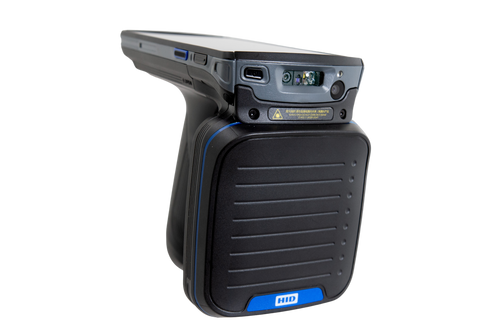
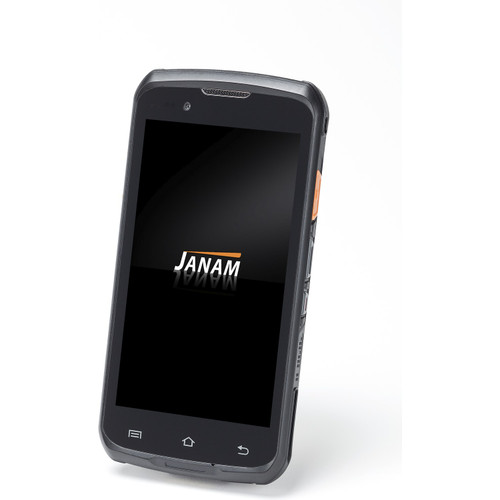
Both the Janam XR2-ATHKYMGWU0 and XT40-ATHKRMGW00 are Android 13 AOSP rugged handheld mobile computers sharing the same Honeywell N5703 1D/2D scan engine and Bluetooth 5.1 radio. The XR2 adds an integrated UHF RFID reader rated at 1,300+ tags/sec, while the XT40 incorporates NFC (13.56 MHz, multi-standard) in a significantly lighter and slimmer enclosure. Both target field mobility and inventory workflows but differ materially in RFID technology, ruggedization class, battery architecture, and physical form factor.
In This Guide
- Which device better matches your RFID and barcode capture requirements?
- How do the two devices compare on durability, physical size, and battery endurance?
- What differences exist in wireless connectivity, OS variant, and platform integration?
- Which should you choose: the XR2-ATHKYMGWU0 or the XT40-ATHKRMGW00?
- Side-by-Side Specs
- FAQ
Which device better matches your RFID and barcode capture requirements?
The XR2-ATHKYMGWU0 integrates UHF RFID (North America band) with a rated throughput of 1,300+ tags/second alongside the Honeywell N5703 2D imager covering GS1-128, Code 39, Code 128, QR, and Data Matrix. UHF RFID operates at 860–960 MHz and reads passive tags at distances of several meters, making it suited to bulk inventory sweeps, asset tracking across warehouses, and supply-chain receiving where tags are not individually presented.
The XT40-ATHKRMGW00 omits UHF RFID entirely and instead provides NFC (13.56 MHz) supporting NFC Forum Tags 1–5, ISO 14443 Type A/B, ISO 15693, MIFARE, and Sony FeliCa. NFC is a contact-proximity technology (typically under 10 cm) used for access credentials, patient wristbands, smart labels at point-of-care, and tap-to-authenticate workflows. Its Honeywell N5703 imager adds PDF417 to its reported symbology list, which the XR2 spec does not explicitly cite. Buyers must determine whether bulk long-range UHF reads or short-range multi-standard NFC reads — or neither — fit their tag infrastructure.
How do the two devices compare on durability, physical size, and battery endurance?
The XR2-ATHKYMGWU0 carries an IP67 rating (dust-tight; immersion to 1 m for 30 min) and is rated for 1.2 m drops to concrete. Its battery is a fixed 9,000 mAh Li-ion cell at 3.7 V. The device is substantially larger and heavier: 143.3 × 169 × 90.5 mm and 678 g (23.9 oz). The added mass and volume reflect the integrated UHF RFID antenna and larger battery pack. No continuous-use battery runtime figure is provided in the available spec data.
The XT40-ATHKRMGW00 is rated IP65 (dust-tight; water jets, not immersion) and survives 1.5 m drops to concrete on all sides — a higher drop rating than the XR2 despite the lower IP class. Its battery is a removable 4,500 mAh Li-ion with a stated runtime of 8–12 hours of continuous scanning and cellular use. The device is dramatically lighter and slimmer at 152 × 76 × 18 mm and 280 g (9.8 oz), more than 50% lighter than the XR2. The removable battery enables hot-swap strategies for shift-length uptime without tethered charging.
What differences exist in wireless connectivity, OS variant, and platform integration?
The XR2-ATHKYMGWU0 supports 802.11a/b/g/n Wi-Fi (no ac/ax cited in spec), Bluetooth 5.1, and dual-SIM GSM/LTE with a broad band set: TD-LTE B34/B38/B39/B40/B41 and FDD-LTE B1/B2/B3/B4/B5/B7/B8/B12. It runs Android 13 AOSP only (no GMS option cited) and is listed as upgradable to Android 15. Storage is 4 GB RAM / 64 GB internal with microSD up to 512 GB. Its screen is 5.7 inches at 720×1440 resolution with Corning Gorilla Glass. The processor is a 2.45 GHz Qualcomm octa-core. Wired interface details are not specified in the available data.
The XT40-ATHKRMGW00 supports 802.11a/b/g/n/ac Wi-Fi (ac included), Bluetooth 5.1, USB Type-C, and optional LTE (FDD/TD) with WCDMA and GSM/EDGE/GPRS. It offers Android 13 in both AOSP and GMS variants — the GMS option matters for organizations requiring Google Play Protect certification or MDM solutions that depend on Play Services. Storage is 4 GB RAM / 64 GB internal with SDXC microSD up to 512 GB. Its screen is 5 inches at 720×1280. The processor is a 2.4 GHz Qualcomm Snapdragon octa-core. A physical function keypad with side scan trigger and volume keys is specified; the XR2 keypad layout is not described in the available spec.
Which should you choose: the XR2-ATHKYMGWU0 or the XT40-ATHKRMGW00?
Our take: The XR2-ATHKYMGWU0 is the stronger choice when the workflow demands long-range, high-throughput UHF RFID reads — its 1,300+ tags/sec UHF engine and 9,000 mAh fixed battery suit bulk warehouse sweeps, dock-door receiving, and extended shift use without recharging. Against that, the XT40-ATHKRMGW00 holds three meaningful advantages: it drops from 1.5 m versus the XR2's 1.2 m; it weighs 280 g versus 678 g, reducing fatigue in hand-carried roles; and its removable 4,500 mAh battery with an 8–12 hour stated runtime supports hot-swap uptime strategies. The XT40 also adds NFC (ISO 14443/15693/MIFARE/FeliCa), 802.11ac Wi-Fi, USB Type-C, and an optional GMS Android build absent from the XR2 spec. Choose the XR2 for UHF RFID-centric deployments tolerant of added weight; choose the XT40 for NFC-based or barcode-only workflows where operator comfort, drop survivability, and GMS platform compatibility are priorities.
Side-by-Side Comparison
Spec-for-spec, from manufacturer data.
| Specification | Janam XR2-ATHKYMGWU0 | Janam XT40-ATHKRMGW00 |
|---|---|---|
| Operating System | Android 13 AOSP; upgradable to Android 15 | Android 13 AOSP or GMS; upgradable to Android 15 |
| RFID Technology | UHF RFID (North America); 1,300+ tags/sec | NFC 13.56 MHz (ISO 14443 A/B, ISO 15693, MIFARE, FeliCa); no UHF |
| Scan Engine | Honeywell N5703 1D/2D imager | Honeywell N5703 1D/2D imager |
| IP Rating | IP67 | IP65 |
| Drop Rating | 1.2 m (4 ft) to concrete | 1.5 m (5 ft) to concrete, all sides |
| Battery Capacity | 9,000 mAh fixed Li-ion | 4,500 mAh removable Li-ion |
| Battery Runtime | — | 8–12 hours continuous scanning and cellular use |
| Weight | 678 g (23.9 oz) | 280 g (9.8 oz) |
| Dimensions | 143.3 × 169 × 90.5 mm | 152 × 76 × 18 mm |
| Display | 5.7 in, 720×1440, Corning Gorilla Glass | 5 in, 720×1280, multi-touch capacitive |
| Processor | 2.45 GHz Qualcomm octa-core | 2.4 GHz Qualcomm Snapdragon octa-core |
| RAM / Storage | 4 GB RAM / 64 GB internal | 4 GB RAM / 64 GB internal |
| microSD Expansion | Up to 512 GB (ExFAT) | Up to 512 GB (SDXC) |
| Wi-Fi | 802.11 a/b/g/n | 802.11 a/b/g/n/ac |
| Cellular | Dual-SIM GSM/LTE (FDD B1–B12; TD-LTE B34–B41) | Optional LTE (FDD/TD); WCDMA; GSM/EDGE/GPRS |
| Wired Interface | — | USB Type-C |
| Bluetooth | Bluetooth 5.1 | Bluetooth 5.1 |
| Camera | 5 MP front; 13 MP rear with flash | 5 MP front; 13 MP rear with LED flash |
| Physical Keypad | — | Side scan trigger; volume up/down; power; function key |
Frequently Asked Questions
Which should you choose: the XR2-ATHKYMGWU0 or the XT40-ATHKRMGW00?
The XR2-ATHKYMGWU0 is the stronger choice when the workflow demands long-range, high-throughput UHF RFID reads — its 1,300+ tags/sec UHF engine and 9,000 mAh fixed battery suit bulk warehouse sweeps, dock-door receiving, and extended shift use without recharging. Against that, the XT40-ATHKRMGW00 holds three meaningful advantages: it drops from 1.5 m versus the XR2's 1.2 m; it weighs 280 g versus 678 g, reducing fatigue in hand-carried roles; and its removable 4,500 mAh battery with an 8–12 hour stated runtime supports hot-swap uptime strategies. The XT40 also adds NFC (ISO 14443/15693/MIFARE/FeliCa), 802.11ac Wi-Fi, USB Type-C, and an optional GMS Android build absent from the XR2 spec. Choose the XR2 for UHF RFID-centric deployments tolerant of added weight; choose the XT40 for NFC-based or barcode-only workflows where operator comfort, drop survivability, and GMS platform compatibility are priorities.
Is the XR2-ATHKYMGWU0 or XT40-ATHKRMGW00 better for warehouse inventory scanning with passive RFID tags?
The XR2-ATHKYMGWU0 is the appropriate choice for passive UHF RFID inventory scanning. It integrates a UHF RFID reader rated at 1,300+ tags/second — enabling bulk reads of pallets or shelf sections at several meters' distance. The XT40-ATHKRMGW00 does not include UHF RFID; its RFID capability is limited to NFC at 13.56 MHz, which requires near-contact presentation of each tag and is not suited to bulk inventory sweeps.
Which device is lighter and easier to carry during long shifts?
The XT40-ATHKRMGW00 is substantially lighter at 280 g (9.8 oz) compared to the XR2-ATHKYMGWU0 at 678 g (23.9 oz) — a difference of approximately 398 g. The XT40 is also far slimmer (18 mm deep versus 90.5 mm for the XR2). For roles involving prolonged hand-carrying, the XT40 imposes significantly less fatigue. The XR2's added bulk is attributable to its integrated UHF RFID antenna assembly and larger 9,000 mAh battery.
Does either device support Google Mobile Services (GMS) for enterprise MDM deployments requiring the Google Play Store?
Only the XT40-ATHKRMGW00 is specified as available with Android 13 with Google Mobile Services (GMS) in addition to an AOSP variant. The XR2-ATHKYMGWU0 spec lists Android 13 AOSP only — no GMS option is cited in the available data. Organizations whose MDM platform (e.g., VMware Workspace ONE, Microsoft Intune, SOTI) requires Play Protect certification or Play Services APIs should verify GMS availability with Janam directly for the XR2, and note that the XT40's GMS build is explicitly documented in its spec.
More Mobile Computer Comparisons
- Janam XT40-ATHKRMGW00 vs Zebra MC3390XR
- Janam XT40-ATHKRMGW00 vs Zebra MC3330XR
- Janam XT40-ATHKRMGW00 vs Janam XT3-STHGBMGW01
- Janam XT40-ATHKRMGW00 vs Janam XT3-STHJBMGW00
- Janam XT3-STHGBMGW01 vs Zebra MC3390XR
- Janam XT3-STHGBMGW01 vs Zebra MC3330XR
Mobile Computer Buying Guides
Get a Second Opinion on Your Camera Choice
Share your site layout, coverage goals, and budget. Our team will validate the camera selection, flag anything we would change, and recommend products that match the use case.