
Janam XG4-YAKJRMNCX1 vs Janam XG4-2AHJRMGCX1: Specification Comparison
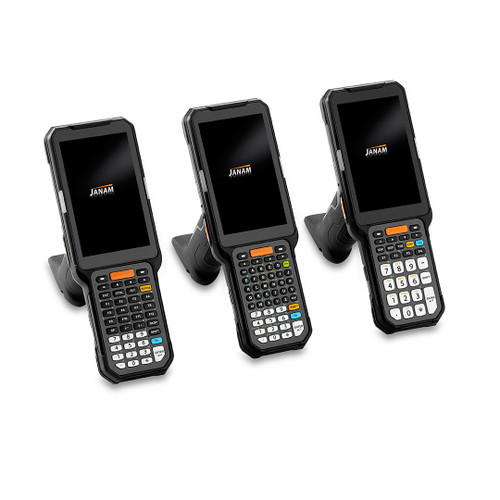
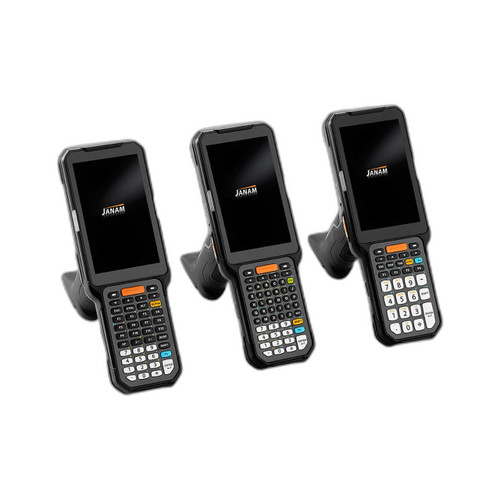
Both the Janam XG4-YAKJRMNCX1 and XG4-2AHJRMGCX1 are pistol-grip rugged Android 11 handheld mobile computers from the same XG4 model family, designed for demanding scan-intensive environments such as warehousing, logistics, and field operations. The comparison evaluates their scanning capability and interface depth, wireless and cellular connectivity, and physical ruggedness and power specifications — the three dimensions most critical to enterprise mobile computer procurement decisions.
In This Guide
- Which model offers more capable scanning and richer interface options?
- How do the two models compare on wireless and cellular network support?
- Which unit is better specified for harsh environments and extended shift use?
- Which should you choose: the XG4-YAKJRMNCX1 or the XG4-2AHJRMGCX1?
- Side-by-Side Specs
- FAQ
Which model offers more capable scanning and richer interface options?
The XG4-YAKJRMNCX1 specifies its scan engine explicitly as a 1D/2D Area Imager using either the Honeywell N6703 or EX30 module, capable of reading 1D barcodes, 2D codes, and QR codes. Its interface suite is fully documented: USB Type-C/OTG, Bluetooth 5, 802.11ac WLAN, and 4G LTE/WCDMA/EDGE/GPRS. It also includes a 13MP top-facing autofocus camera and a choice of three keypad configurations — 31-key numeric, 42-key function numeric, or 52-key alpha-numeric.
The XG4-2AHJRMGCX1 specifies a 2D Imager scanner but does not identify the scan engine module or manufacturer. Interface options, keypad configurations, and camera specifications are not provided in the available specs for this model. Buyers requiring specific scanner engine compatibility or interface depth for system integration should note that the XG4-YAKJRMNCX1 carries significantly more documented detail in this area.
How do the two models compare on wireless and cellular network support?
The XG4-YAKJRMNCX1 supports 802.11a/b/g/n/ac with 2×2 MU-MIMO and the full amendment set 802.11d/h/i/k/r/v, plus 4G LTE FDD/TDD, WCDMA, EDGE/GPRS, and Bluetooth 5. This breadth covers enterprise roaming (802.11k/r/v) and fast 4G fallback, making it well-suited for facilities with mixed WLAN and cellular coverage.
The XG4-2AHJRMGCX1 is listed as supporting GSM/LTE Cellular plus Wi-Fi 802.11ac and is designated NDAA compliant — a specification absent from the XG4-YAKJRMNCX1's provided data. The cellular band plan, WLAN amendment support, MU-MIMO capability, and Bluetooth version are not specified for the XG4-2AHJRMGCX1. NDAA compliance may be a decisive factor for government or federally funded deployments, but wireless performance details for that model cannot be compared on a like-for-like basis from the available specs.
Which unit is better specified for harsh environments and extended shift use?
The XG4-YAKJRMNCX1 carries an IP65 ingress protection rating and a documented drop specification of 1.8m (6 ft) to concrete at operating temperature and 2m (6.5 ft) at ambient temperature, both per MIL-STD-810G. Its 5,700mAh 3.7V Li-ion battery is rated for 12–14 hours of typical field use, and the unit weighs 18.55 oz (526g) with battery installed.
The XG4-2AHJRMGCX1 also carries an IP65 rating and a 5 ft (approximately 1.52m) drop rating. Its battery is described as hot-swappable lithium-ion, which is a meaningful operational differentiator — enabling continuous uptime without powering down — but capacity in mAh, voltage, and runtime estimates are not specified. The MIL-STD certification basis for the drop rating is not stated. The XG4-YAKJRMNCX1's drop rating (1.8m–2m vs. approximately 1.52m) and battery runtime data are better documented; the XG4-2AHJRMGCX1's hot-swap capability addresses a different operational concern.
Which should you choose: the XG4-YAKJRMNCX1 or the XG4-2AHJRMGCX1?
Our take: The XG4-YAKJRMNCX1 is the stronger documented choice for buyers who need validated scanner engine identification, full WLAN amendment support, and a quantified battery runtime. Its specs confirm a Honeywell N6703 or EX30 scan engine, 2×2 MU-MIMO 802.11a/b/g/n/ac with 802.11k/r/v enterprise roaming, a 1.8m–2m MIL-STD-810G drop rating, and a 5,700mAh battery rated at 12–14 hours. The XG4-2AHJRMGCX1 counters with two meaningful advantages: NDAA compliance (not documented for the XG4-YAKJRMNCX1) and a hot-swappable battery (not offered by the XG4-YAKJRMNCX1), plus a nominally lower drop spec of approximately 1.52m. For government or federally funded programs requiring NDAA compliance, or for 24/7 operations where battery swap without shutdown is critical, the XG4-2AHJRMGCX1 warrants serious evaluation despite its thinner published spec sheet.
Side-by-Side Comparison
Spec-for-spec, from manufacturer data.
| Specification | Janam XG4-YAKJRMNCX1 | Janam XG4-2AHJRMGCX1 |
|---|---|---|
| Brand | Janam | Janam |
| MPN | XG4-YAKJRMNCX1 | XG4-2AHJRMGCX1 |
| Operating System | Android 11 (also Android 9 available) | Android 11 |
| Form Factor | Pistol-grip / gun-style handheld | Pistol-grip gun |
| Processor | Qualcomm Snapdragon 660 octa-core 2.2GHz | — |
| RAM / Storage | 4GB RAM / 64GB; microSD (SDXC) | — |
| Scan Engine | 1D/2D Area Imager (Honeywell N6703 or EX30) | 2D Imager (module not specified) |
| Display | 4.3" IPS WVGA (480×800), 500+ nits, Gorilla Glass 3 | — |
| WLAN | 802.11a/b/g/n/ac + d/h/i/k/r/v, 2×2 MU-MIMO | 802.11ac |
| Cellular | 4G LTE FDD/TDD; WCDMA; EDGE/GPRS | GSM / LTE |
| Bluetooth | Bluetooth 5 | — |
| IP Rating | IP65 | IP65 |
| Drop Rating | 1.8m (operating temp); 2m (ambient) per MIL-STD-810G | 5 ft (~1.52m); MIL-STD basis not stated |
| Battery | 5,700mAh 3.7V Li-ion; 12–14 hr typical | Hot-swappable Li-ion; capacity/runtime not specified |
| Camera | 13MP top-facing autofocus | — |
| NDAA Compliant | — | Yes |
Frequently Asked Questions
Which should you choose: the XG4-YAKJRMNCX1 or the XG4-2AHJRMGCX1?
The XG4-YAKJRMNCX1 is the stronger documented choice for buyers who need validated scanner engine identification, full WLAN amendment support, and a quantified battery runtime. Its specs confirm a Honeywell N6703 or EX30 scan engine, 2×2 MU-MIMO 802.11a/b/g/n/ac with 802.11k/r/v enterprise roaming, a 1.8m–2m MIL-STD-810G drop rating, and a 5,700mAh battery rated at 12–14 hours. The XG4-2AHJRMGCX1 counters with two meaningful advantages: NDAA compliance (not documented for the XG4-YAKJRMNCX1) and a hot-swappable battery (not offered by the XG4-YAKJRMNCX1), plus a nominally lower drop spec of approximately 1.52m. For government or federally funded programs requiring NDAA compliance, or for 24/7 operations where battery swap without shutdown is critical, the XG4-2AHJRMGCX1 warrants serious evaluation despite its thinner published spec sheet.
Is the XG4-YAKJRMNCX1 or XG4-2AHJRMGCX1 better for federal government deployments?
The XG4-2AHJRMGCX1 is explicitly listed as NDAA compliant in the provided specs; NDAA compliance is not documented for the XG4-YAKJRMNCX1. For federal or federally funded projects where NDAA compliance is a procurement requirement, the XG4-2AHJRMGCX1 should be evaluated first.
Which model is better suited for continuous 24/7 warehouse operations without device downtime?
The XG4-2AHJRMGCX1 specifies a hot-swappable lithium-ion battery, meaning the battery can be replaced without powering down the device — a significant advantage for around-the-clock shift operations. The XG4-YAKJRMNCX1 does not list hot-swap capability; its 5,700mAh battery is rated at 12–14 hours per charge.
Does either model support enterprise WLAN roaming protocols like 802.11r or 802.11k?
Yes — the XG4-YAKJRMNCX1 explicitly lists 802.11d/h/i/k/r/v support alongside 802.11a/b/g/n/ac with 2×2 MU-MIMO, which covers fast BSS transition (802.11r) and neighbor reporting (802.11k) used in enterprise roaming. The XG4-2AHJRMGCX1's Wi-Fi spec is listed only as '802.11ac'; support for these roaming amendments is not documented for that model.
More Mobile Computer Comparisons
- Datalogic 944850001 vs Honeywell CK67-X0N-5EC1C2G
- Datalogic 944850001 vs Honeywell CK67-X1N-58A1B1G
- Datalogic 944850001 vs Honeywell CK67-X1N-58A1A1G
- Datalogic 944850001 vs Honeywell CK67-X1N-58A1C1G
- Datalogic 944850001 vs Datalogic 944950001
- Datalogic 944850001 vs Datalogic 944900004
Mobile Computer Buying Guides
Get a Second Opinion on Your Camera Choice
Share your site layout, coverage goals, and budget. Our team will validate the camera selection, flag anything we would change, and recommend products that match the use case.