
i-PRO X66700-Z3LS vs i-PRO X66700-Z3S: Specification Comparison
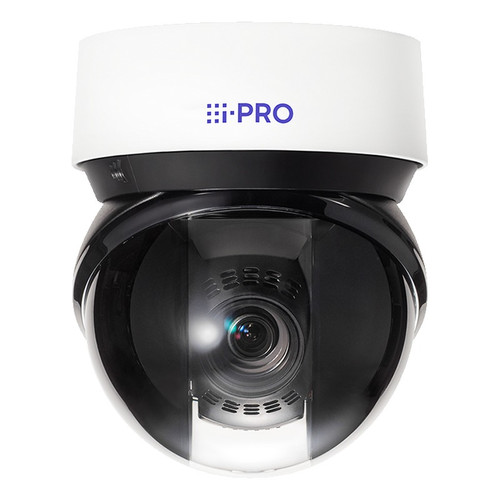
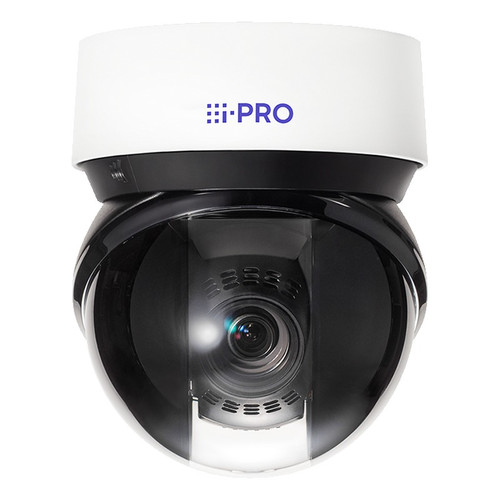
Both the i-PRO WV-X66700-Z3LS and WV-X66700-Z3S are 8MP 4K outdoor PTZ dome cameras built on the same Ambarella CV22 SoC, sharing an identical 30x optical zoom lens, 360° endless pan, and IP66/IK10 enclosure. A buyer choosing between them is evaluating a narrow but meaningful set of differences: low-light sensitivity, minimum operating temperature, AI analytics depth, PoE power draw, SD card capacity ceiling, and finish material — not fundamental camera class or resolution.
In This Guide
How do the imaging specs compare?
Both cameras use the same approx. 1/2.8-type CMOS sensor with a 5.57 mm × 3.13 mm scanning area, identical 30x motorized optical zoom (4.5–135 mm focal length, F1.8–F4.7 aperture), 90x digital extra zoom at 1280×720, and the same DORI envelope — identify range of 352.0 m at tele. Maximum dynamic range is 132 dB on both models with Super Dynamic level 31. The Z3LS specifies color minimum illumination of 0.13 lx with a B/W floor of 0 lx (IR-assisted), while the Z3S specifies only 0.1 lx B/W; the Z3S datasheet does not list a separate color minimum illumination figure. Both include a built-in gyro-based image stabilizer and Active ClearSight.
IR range is where the two models diverge most sharply for low-light outdoor coverage: the Z3LS carries a 280 m IR range at 30 IRE (200 m at 50 IRE), whereas the Z3S lists only 3.0 m — a figure inconsistent with its 'Built-in IR: Yes' tag and likely represents focus range rather than IR throw; no IR distance figure comparable to the Z3LS's 280 m spec appears in the Z3S data provided. Shutter speed maximums also differ slightly: Z3LS tops at 1/4000s–16/30s extended, Z3S at 1/4000s–16s. Both support the same six resolutions from 3840×2160 down to 320×180 and the same H.265/H.264/MJPEG codec suite.
What about installation and environment?
Both cameras share an identical physical footprint (φ167 mm × 205 mm H, SR 77.5 mm dome radius) and mass of approximately 3 kg without attachment, simplifying bracket interchangeability. Both are rated IP66 and IK10 with a NEMA-TS2 listing and wind resistance up to 40 m/s (~89 mph). The Z3LS enclosure is aluminum die cast with a polycarbonate dome; the Z3S adds stainless steel to that material list. The Z3LS carries an explicit NEMA 4X rating in its spec block; the Z3S does not list NEMA 4X in the provided data.
Temperature range is a meaningful differentiator: the Z3LS is rated –30°C to +60°C, while the Z3S extends the cold floor to –50°C to +60°C — a 20-degree advantage relevant for arctic, high-altitude, or extreme cold-storage deployments. On power, the Z3LS draws 45.9 W via PoE++ (802.3bt, Class 6); the Z3S draws 37.8 W — also PoE++ Class 6, but 8.1 W less, which affects PoE switch budget calculations on dense deployments. Both use RJ45 10Base-T/100Base-TX.
Which fits your VMS and analytics better?
Both cameras support ONVIF Profiles G, M, S, and T; up to 14 simultaneous users; H.265/H.264 CBR/VBR unicast and multicast; audio via 3.5 mm stereo mini jack (input and output); G.726, G.711, and AAC-LC compression; and identical alarm I/O (3× alarm in, 1× alarm out, 1× AUX). Both carry AI sound classification for gunshot, yell, vehicle horn, and glass break. MQTT and NTCIP are listed under IPv4 protocols for both models. The Z3LS specifies 'Smart Coding' GOP control options (Off/Low/Mid/Advanced/Frame rate); the Z3S does not list Smart Coding in the provided specs.
AI analytics depth differs: the Z3LS lists AI motion, privacy, face, people, and vehicle detection; the Z3S lists AI Video Motion Detection and AI Face Detection only — people and vehicle detection are not listed in the Z3S provided data. Edge storage capacity differs: the Z3LS supports microSD 2 GB through microSDXC 512 GB, while the Z3S lists only microSDXC in 64/128/256/512 GB capacities, omitting the microSD and microSDHC tiers. Both support schedule, manual, alarm, and network-failure-backup recording modes. The Z3LS setup menu explicitly names nine languages; the Z3S states '9 languages' without listing them. Both cameras carry a 5-year warranty, UL/c-UL/CE/IEC62368-1 safety certifications, and FCC Part 15 Class A EMC ratings.
Which should you choose: the X66700-Z3LS or the X66700-Z3S?
Our take: The Z3LS is the stronger choice when IR illumination range, richer edge analytics, and NEMA 4X certification are priorities. The three sharpest spec deltas are: (1) IR range — Z3LS 280 m vs. Z3S 3.0 m as listed (the Z3S figure appears anomalous, but no corrected IR throw distance is present in the provided spec data); (2) AI analytics breadth — Z3LS adds people detection and vehicle detection beyond the Z3S's face and motion scope; and (3) PoE draw — Z3S consumes 37.8 W vs. Z3LS 45.9 W, giving the Z3S an 8.1 W per-port budget advantage on PoE++ switches. Conversely, the Z3S's –50°C cold-floor rating makes it the specified choice for extreme cold environments where the Z3LS's –30°C floor is insufficient. Both cameras are otherwise near-identical in lens, resolution, ONVIF support, and enclosure size.
Side-by-Side Comparison
Spec-for-spec, from manufacturer data.
| Specification | i-PRO X66700-Z3LS | i-PRO X66700-Z3S |
|---|---|---|
| Resolution | 8MP (3840×2160) | 8MP (3840×2160) |
| Image Sensor | Approx. 1/2.8-type CMOS | Approx. 1/2.8-type CMOS |
| Focal Length / Optical Zoom | 4.5–135 mm, 30x motorized | 4.5–135 mm, 30x motorized |
| Min. Illumination (Color) | 0.13 lx | Not listed in provided specs |
| Min. Illumination (B/W) | 0 lx (IR on) | 0.1 lx |
| IR Range | 280 m (30 IRE) / 200 m (50 IRE) | 3.0 m (as listed; likely focus range — no long-range IR figure in provided specs) |
| Dynamic Range (WDR) | Max. 132 dB (Super Dynamic On, Level 31) | Max. 132 dB (Super Dynamic On, Level 31) |
| Operating Temperature | –30°C to +60°C | –50°C to +60°C |
| IP / NEMA Rating | IP66, NEMA 4X | IP66 (NEMA 4X not listed in provided specs) |
| IK / Impact Rating | IK10 | IK10 |
| Power / PoE | PoE++ (802.3bt), 45.9 W | PoE++ (802.3bt), 37.8 W |
| Edge Storage | microSD 2 GB – microSDXC 512 GB | microSDXC 64 GB – 512 GB only |
| AI Analytics | Motion, privacy, face, people, vehicle detection | Video motion detection, face detection |
| AI Sound Classification | Gunshot, yell, vehicle horn, glass break | Gunshot, yell, vehicle horn, glass break |
| ONVIF Profiles | G / M / S / T | G / M / S / T |
| Enclosure Finish | Aluminum die cast, polycarbonate dome | Aluminum die cast, stainless steel, polycarbonate |
| Dimensions (H × Dia.) | φ167 mm × 205 mm H | φ167 mm × 205 mm H |
| Weight | Approx. 3 kg (without attachment) | Approx. 3 kg (without attachment) |
| Warranty | 5-Year | 5-Year |
Frequently Asked Questions
Which should you choose: the X66700-Z3LS or the X66700-Z3S?
The Z3LS is the stronger choice when IR illumination range, richer edge analytics, and NEMA 4X certification are priorities. The three sharpest spec deltas are: (1) IR range — Z3LS 280 m vs. Z3S 3.0 m as listed (the Z3S figure appears anomalous, but no corrected IR throw distance is present in the provided spec data); (2) AI analytics breadth — Z3LS adds people detection and vehicle detection beyond the Z3S's face and motion scope; and (3) PoE draw — Z3S consumes 37.8 W vs. Z3LS 45.9 W, giving the Z3S an 8.1 W per-port budget advantage on PoE++ switches. Conversely, the Z3S's –50°C cold-floor rating makes it the specified choice for extreme cold environments where the Z3LS's –30°C floor is insufficient. Both cameras are otherwise near-identical in lens, resolution, ONVIF support, and enclosure size.
Is the X66700-Z3LS or X66700-Z3S better for low-light or nighttime coverage?
Based on the provided specs, the Z3LS lists a 280 m IR illumination range at 30 IRE and a color minimum illumination of 0.13 lx. The Z3S lists only 3.0 m under IR Distance in the spec data provided — no comparable long-range IR throw figure appears for the Z3S. If long-range IR coverage at night is required, the Z3LS spec data supports that use case; the Z3S IR range as listed does not.
Can the X66700-Z3S handle colder climates than the X66700-Z3LS?
Yes, based on the provided specs. The Z3S is rated for an ambient operating temperature of –50°C to +60°C. The Z3LS is rated –30°C to +60°C. For installations in arctic regions, high-altitude sites, or environments that regularly drop below –30°C, the Z3S carries the specified cold-temperature rating; the Z3LS does not.
Does the X66700-Z3LS or X66700-Z3S offer more edge AI analytics?
The Z3LS lists AI motion detection, privacy detection, face detection, people detection, and vehicle detection. The Z3S lists AI Video Motion Detection and AI Face Detection in the provided spec data — people detection and vehicle detection are not listed for the Z3S. If people counting or vehicle classification at the edge is a requirement, the Z3LS spec data covers those functions; the Z3S data does not.
Get a Second Opinion on Your Camera Choice
Share your site layout, coverage goals, and budget. Our team will validate the camera selection, flag anything we would change, and recommend products that match the use case.