
i-PRO X25300-V3LN vs i-PRO X35302-F2LM: Specification Comparison
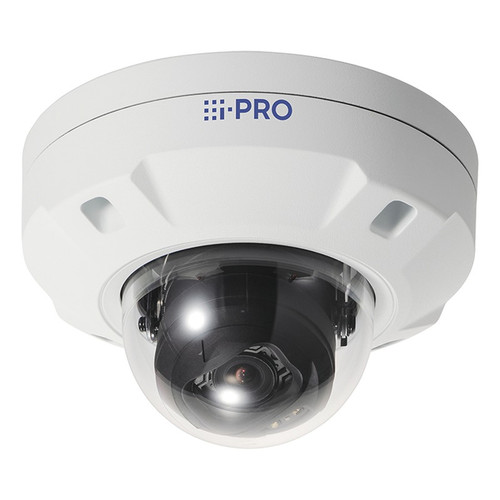
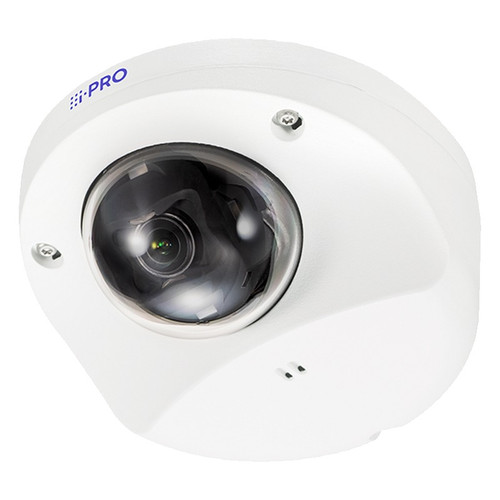
Both the i-PRO WV-X25300-V3LN and WV-X35302-F2LM are 2MP outdoor AI dome IP cameras in the i-PRO X-Series, sharing the same 1/2.8-type CMOS sensor and 144 dB Super Dynamic WDR. The key differentiators are optical design — the X25300-V3LN carries a 3.1x motorized varifocal lens while the X35302-F2LM uses a fixed ultra-wide 2.4 mm lens — plus power draw, connector type, and transportation-grade certifications on the F2LM. This comparison addresses imaging reach, installation environment fit, and integration capability.
In This Guide
How do the imaging specs compare?
The WV-X25300-V3LN outputs at 1920×1080 through a 2.9–9 mm motorized varifocal lens with 3.1x optical zoom (extra digital zoom to 9.3x at 640×360). Its horizontal field of view spans 36°–113°, and its DORI detect range reaches 118.2 m (387.7 ft) at tele. Minimum illumination is 0.005 lx (B&W, 50 IRE, F1.5), and IR illumination extends to 70 m. Frame rate is specified at 30 fps. Built-in gyroscopic image stabilization is included for 30 fps mode, and the SoC is the Ambarella CV52.
The WV-X35302-F2LM records at a higher native resolution of 2048×1536 through a fixed 2.4 mm lens (F2.1) with a 132° horizontal field of view — suited for wide-angle coverage rather than reach. Its DORI detect range is 17.1 m (56.1 ft). Minimum illumination is 0.02 lx (color) / 0 lx (B&W with IR), and IR LED range is 21 m at 30 IRE (15 m at 50 IRE). Frame rate is listed as variable (no fixed fps figure specified). The SoC is the Ambarella CV25M. Image stabilization is not specified for this model. The F2LM adds GOP Smart Coding control not mentioned in the X25300-V3LN spec sheet.
What about installation and environment?
Both cameras are rated IP66 / NEMA 4X and IK10 impact-resistant, and both tolerate winds up to 40 m/s. However, the operating temperature ranges differ: the X25300-V3LN operates from -40°C to +55°C (power-on from -30°C), while the X35302-F2LM operates from -40°C to +60°C (power-on from -20°C), giving it a slightly higher upper thermal limit. The X35302-F2LM additionally carries railway/vehicle certifications (EN50155, JIS E 5006, IEC62236, EN50121, IEC61373, EN45545) and is noted as having a tamper-resistant enclosure. The X25300-V3LN is also rated IP67, which the F2LM spec sheet does not list.
Power requirements differ significantly. The X25300-V3LN requires PoE+ (802.3at, PoE Class 4) at up to 14 W or DC 12 V, and uses an RJ45 connector. The X35302-F2LM operates on standard PoE (802.3af, PoE Class 0) at a maximum of 8.6 W, and uses an M12 connector — a meaningful distinction in transportation and industrial installations where M12 locking connectors are standard but may require adapter cables in typical building infrastructure. The X25300-V3LN is substantially heavier (1.1 kg / 2.43 lbs vs 475 g / 1.05 lbs) and larger in footprint (ø154 mm vs 109 mm W × 119 mm D).
Which fits your VMS and analytics better?
Both cameras support ONVIF Profiles G, S, T, and M, and are compatible with Microsoft Edge, Firefox, and Google Chrome browsers. Both support microSDXC up to 512 GB for edge storage, FIPS 140-2 Level 3 security, HTTPS, IEEE 802.1X, and SNMPv1/v2/v3. Both list AI analytics including AI Video Motion Detection and Face/People/Vehicle Detection, plus AI Sound Classification (Gunshot, Yell, Vehicle Horn, Glass Break). The X25300-V3LN spec sheet additionally lists occupancy/privacy AI analytics and specifies 4 alarm I/O terminals (2 in, 2 out) with a 3.5 mm audio input/output jack. The X35302-F2LM lists a built-in microphone for audio input; external alarm I/O terminal count is not specified in the provided spec data.
Protocol support differs at the IP layer: the X35302-F2LM explicitly lists IPv6 support (DHCPv6, MLD) in addition to IPv4, while the X25300-V3LN spec sheet only enumerates IPv4 protocols. The X25300-V3LN also lists RTSP, RTP/RTCP, DDNS, UPnP, IGMP, ICMP, ARP, SRTP, FTP, SFTP, LLDP, and MQTT. The X35302-F2LM lists FTP, SFTP, MQTT, LLDP, and SRTP support as well, plus the IPv6 stack. Both support mobile compatibility with iOS 8.0+ and Android.
Which should you choose: the X25300-V3LN or the X35302-F2LM?
Our take: The X25300-V3LN is the stronger choice when subject distance, optical reach, or low-light sensitivity are the primary requirements. Its 3.1x motorized varifocal lens achieves a DORI detect range of 118.2 m versus the F2LM's 17.1 m, its IR illumination reaches 70 m versus 21 m, and its minimum illumination is 0.005 lx versus 0.02 lx (color). It also adds IP67 immersion rating and built-in gyroscopic image stabilization, and its 2+2 alarm I/O terminals suit integration-heavy installations. The X35302-F2LM is the stronger choice when wide-angle coverage, lower power budget (8.6 W PoE vs 14 W PoE+), M12 connector compatibility, transportation/vehicle-grade certifications (EN50155, IEC61373), or a higher native pixel array (2048×1536) in a compact, lighter enclosure (475 g) are required. Buyers on standard PoE switches without PoE+ ports cannot power the X25300-V3LN without infrastructure upgrades.
Side-by-Side Comparison
Spec-for-spec, from manufacturer data.
| Specification | i-PRO X25300-V3LN | i-PRO X35302-F2LM |
|---|---|---|
| Resolution | 1920×1080 | 2048×1536 |
| Image Sensor | Approx. 1/2.8 type CMOS | Approx. 1/2.8 type CMOS |
| Lens / Focal Length | 2.9–9 mm motorized varifocal (3.1x optical zoom) | 2.4 mm fixed |
| Horizontal Field of View | 36°–113° (16:9) | 132° (16:9) |
| Min. Illumination | 0.005 lx (B&W, 50 IRE, F1.5) | 0.02 lx (color) / 0 lx (B&W with IR) |
| IR Range | 70 m | 21 m (30 IRE) / 15 m (50 IRE) |
| DORI Detect Range | 118.2 m (TELE) / 25.4 m (WIDE) | 17.1 m |
| Dynamic Range (WDR) | 144 dB max (Super Dynamic) | 144 dB max (Super Dynamic) |
| Max Frame Rate | 30 fps | Variable (no fixed figure specified) |
| Video Compression | H.265, H.264, MJPEG | H.265, H.264 |
| IP Rating | IP66 / IP67 / NEMA 4X | IP66 / NEMA 4X |
| IK / Impact Rating | IK10 | IK10 |
| Operating Temperature | -40°C to +55°C (power-on: -30°C) | -40°C to +60°C (power-on: -20°C) |
| Power Input / PoE Class | PoE+ 802.3at (Class 4, 14 W) or DC 12 V | PoE 802.3af (Class 0, 8.6 W max) |
| Network Connector | RJ45 | M12 |
| Edge Storage | microSDXC up to 512 GB | microSDXC up to 512 GB |
| Audio | 3.5 mm stereo input + 3.5 mm mono output | Built-in microphone |
| Alarm I/O | 4 terminals (2 in, 2 out) | Not specified in provided specs |
| SoC | Ambarella CV52 | Ambarella CV25M |
| Image Stabilization | Built-in gyro (30 fps mode) | Not specified in provided specs |
| Railway/Vehicle Certifications | Not listed | EN50155, JIS E 5006, IEC62236, EN50121, IEC61373, EN45545 |
| Dimensions | ø154 mm × 105 mm (H) | 109 mm (W) × 53 mm (H) × 119 mm (D) |
| Weight | 1.1 kg (2.43 lbs) | 475 g (1.05 lbs) |
| ONVIF Profiles | G / S / T / M | G / M / S / T |
| IPv6 Support | Not listed in provided specs | Yes (DHCPv6, MLD, and IPv6 protocol stack) |
| Warranty | 5-year | 5-year |
Frequently Asked Questions
Which should you choose: the X25300-V3LN or the X35302-F2LM?
The X25300-V3LN is the stronger choice when subject distance, optical reach, or low-light sensitivity are the primary requirements. Its 3.1x motorized varifocal lens achieves a DORI detect range of 118.2 m versus the F2LM's 17.1 m, its IR illumination reaches 70 m versus 21 m, and its minimum illumination is 0.005 lx versus 0.02 lx (color). It also adds IP67 immersion rating and built-in gyroscopic image stabilization, and its 2+2 alarm I/O terminals suit integration-heavy installations. The X35302-F2LM is the stronger choice when wide-angle coverage, lower power budget (8.6 W PoE vs 14 W PoE+), M12 connector compatibility, transportation/vehicle-grade certifications (EN50155, IEC61373), or a higher native pixel array (2048×1536) in a compact, lighter enclosure (475 g) are required. Buyers on standard PoE switches without PoE+ ports cannot power the X25300-V3LN without infrastructure upgrades.
Is the X25300-V3LN or X35302-F2LM better for low-light performance?
Based on the provided specs, the X25300-V3LN has a lower minimum illumination figure — 0.005 lx (B&W, 50 IRE, F1.5) versus 0.02 lx (color) for the X35302-F2LM — and its IR illumination reaches 70 m compared to 21 m (at 30 IRE) on the F2LM. For scenes requiring longer-range night visibility, the X25300-V3LN has a measurable advantage per spec.
Can I power the X35302-F2LM from a standard PoE switch, and what about the X25300-V3LN?
Yes. The X35302-F2LM draws a maximum of 8.6 W and is PoE Class 0, compatible with 802.3af standard PoE switches. The X25300-V3LN requires PoE+ (802.3at, Class 4, up to 14 W) or DC 12 V; a standard 802.3af-only switch will not power it. Also note the F2LM uses an M12 connector rather than RJ45.
Which camera is rated for use in railway or vehicle applications?
Only the X35302-F2LM carries the railway/vehicle application certifications listed in the provided specs: EN50155, JIS E 5006, IEC62236, EN50121, IEC61373, and EN45545. The X25300-V3LN spec sheet does not list any of these certifications.
Get a Second Opinion on Your Camera Choice
Share your site layout, coverage goals, and budget. Our team will validate the camera selection, flag anything we would change, and recommend products that match the use case.