
i-PRO S35302-F2L1 vs i-PRO X25300-V3LN: Specification Comparison
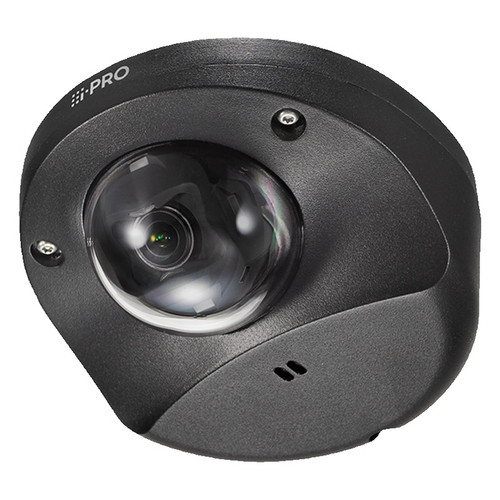
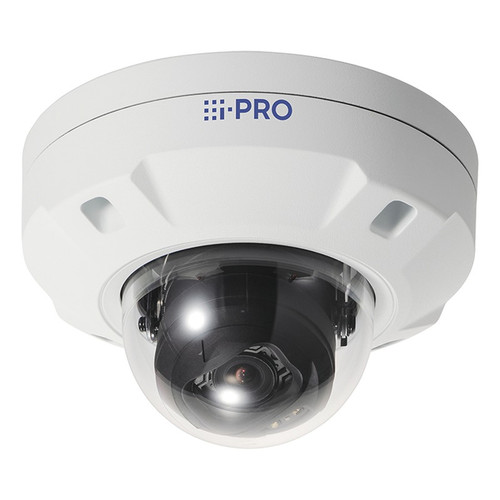
Both the i-PRO WV-S35302-F2L1 and WV-X25300-V3LN are 2MP outdoor dome IP cameras from i-PRO's AI-capable lineup, designed for perimeter and area surveillance. The S35302-F2L1 is a fixed wide-angle dome from the S-Series, while the X25300-V3LN is a varifocal motorized-zoom dome from the X-Series. Buyers evaluating these two models are weighing a compact, ultra-wide fixed lens against a longer-range varifocal unit with significantly extended IR reach and a more advanced chipset.
In This Guide
How do the imaging specs compare?
Both cameras share a 1/2.8-type CMOS sensor with an identical 5.57 × 3.13 mm scanning area and both deliver 144 dB maximum dynamic range via i-PRO's Super Dynamic processing. The S35302-F2L1 outputs a native 2048×1536 resolution at a variable frame rate, while the X25300-V3LN is rated at 1920×1080 at 30 fps. The S35302-F2L1's fixed 2.4 mm lens delivers a 132° horizontal field of view, whereas the X25300-V3LN's 3.1x motorized zoom spans 2.9–9 mm, providing a 36–113° horizontal range — substantially narrower at tele end but offering far greater subject magnification and a tele-end detect distance of 118.2 m versus the fixed camera's 17.1 m.
Low-light performance diverges significantly. The S35302-F2L1 specifies a minimum illumination of 0.02 lux in color and 0 lux (IR on), with an IR range of 21 m. The X25300-V3LN specifies 0.005 lux in B&W (50IRE, F1.5, 1/30s) and an IR illumination range of 70 m — more than three times the IR reach. The X25300-V3LN also carries the newer Ambarella CV52 SoC, versus the CV25M in the S35302-F2L1, and adds a built-in gyro-based electronic image stabilizer (30 fps mode only), which is not present on the S35302-F2L1. Maximum aperture on the X25300-V3LN is F1.3 at wide end versus F2.1 fixed on the S35302-F2L1, contributing to its lower minimum illumination figure.
What about installation and environment?
Both cameras are rated IP66, NEMA 4X compliant, IK10 impact-resistant, and wind-resistant to 40 m/s. The X25300-V3LN adds an IP67 rating (full submersion protection) not listed for the S35302-F2L1. The X25300-V3LN also lists a 50 J impact energy compliance per IEC 60068-2-75, while the S35302-F2L1 specifies only IK10 per IEC 62262 without citing a joule rating. Operating temperature for the S35302-F2L1 spans -40 °C to +50 °C (power-on lower limit: -20 °C), while the X25300-V3LN extends the upper bound to +55 °C (power-on lower limit: -30 °C).
Power requirements differ: the S35302-F2L1 operates on standard PoE (IEEE 802.3af, Class 0, max 8.6 W), making it compatible with standard PoE switches. The X25300-V3LN requires PoE+ (802.3at, Class 4, 14 W) or a DC 12V 1.2A supply, so existing PoE infrastructure must be verified for compatibility. Physically, the S35302-F2L1 is considerably smaller and lighter (109 × 53 × 119 mm, ~475 g) versus the X25300-V3LN's dome housing (ø154 × 105 mm, ~1.1 kg), which affects mounting hardware selection and ceiling/wall load considerations.
Which fits your VMS and analytics better?
Both cameras support ONVIF Profiles G, M, S, and T, and both connect via 10BASE-T/100BASE-TX RJ45. Both support H.265 and H.264 compression; the X25300-V3LN additionally supports MJPEG. Edge storage is equivalent: both accept microSD/SDHC/SDXC cards up to 512 GB. Both support up to 14 simultaneous users and share FIPS 140-2 Level 3 security certification. The X25300-V3LN lists SRTP in its IPv4 protocol stack and explicit Secure Boot support, while the S35302-F2L1 lists IPv6 protocol support (including DHCPv6, MLD) not enumerated for the X25300-V3LN.
AI analytics are functionally equivalent between the two: both offer AI-based VMD, face, people, and vehicle detection, AI sound classification (gunshot, yell, vehicle horn, glass break), audio detection, scene change detection, and up to 8 privacy zones. Audio handling differs: the X25300-V3LN provides a dedicated 3.5 mm stereo input jack and a 3.5 mm mono output jack with half- and full-duplex modes, plus 4 hardware alarm I/O terminals (2 in, 2 out) and AAC-LC audio compression. The S35302-F2L1 lists G.726 and G.711 audio and a built-in microphone but does not list a 3.5 mm audio jack, dedicated audio output, or hardware I/O terminals in the provided specifications. Both carry identical safety certifications (UL62368-1, c-UL, CE, IEC62368-1) and a stated 5-year warranty.
Which should you choose: the S35302-F2L1 or the X25300-V3LN?
Our take: The X25300-V3LN is the stronger choice when surveillance range, low-light sensitivity, and flexible framing are the primary requirements. Its 70 m IR range is 3.3× the S35302-F2L1's 21 m, its 3.1x motorized zoom extends tele-detect distance to 118.2 m versus 17.1 m for the fixed lens, and its minimum illumination of 0.005 lux outperforms the S35302-F2L1's 0.02 lux in color mode. It also adds IP67 submersion protection, a higher operating ceiling of +55 °C, physical alarm I/O terminals, and a more capable audio I/O interface. The S35302-F2L1 is the practical choice for wide-area coverage in constrained budgets or standard PoE infrastructure, where its 132° fixed field of view, lighter 475 g form factor, and 8.6 W PoE (802.3af) compliance reduce both hardware and cabling costs. Installations already on 802.3af switches cannot power the X25300-V3LN without infrastructure upgrades.
Side-by-Side Comparison
Spec-for-spec, from manufacturer data.
| Specification | i-PRO S35302-F2L1 | i-PRO X25300-V3LN |
|---|---|---|
| Resolution | 2048×1536 | 1920×1080 |
| Image Sensor | 1/2.8-type CMOS | 1/2.8-type CMOS |
| Lens / Focal Length | Fixed 2.4 mm | Motorized zoom 2.9–9 mm (3.1x) |
| Horizontal Field of View | 132° (16:9) | 36–113° (16:9) |
| Minimum Illumination | 0.02 lux (Color); 0 lux (B/W IR) | 0.005 lux (B&W, F1.5, 1/30s) |
| IR Range | 21 m (30IRE) | 70 m |
| WDR / Dynamic Range | 144 dB max (Super Dynamic On, Level 31) | 144 dB max (Super Dynamic On, Level 31) |
| Max Frame Rate | Variable (spec not stated as fixed fps) | 30 fps |
| Video Compression | H.265, H.264 | H.265, H.264, MJPEG |
| IP Rating | IP66, NEMA 4X | IP66, IP67, NEMA 4X |
| IK / Impact Rating | IK10 (IEC 62262) | IK10 (IEC 62262); 50 J (IEC 60068-2-75) |
| Operating Temperature | -40 °C to +50 °C (Power-on: -20 °C to +50 °C) | -40 °C to +55 °C (Power-on: -30 °C to +55 °C) |
| Power Input / PoE Class | PoE 802.3af, Class 0, max 8.6 W | PoE+ 802.3at, Class 4, 14 W; or DC 12V 1.2A |
| Edge Storage | microSD up to 512 GB (SDXC/SDHC/SD) | microSDXC up to 512 GB |
| Audio I/O | Built-in mic; G.726 / G.711 (no external jack specified) | 3.5 mm stereo input; 3.5 mm mono output; half/full duplex; G.726 / G.711 / AAC-LC |
| Alarm I/O Terminals | — (not specified in provided specs) | 4 terminals (2 in, 2 out) |
| Image Stabilization | — | Built-in gyro (30 fps mode) |
| Dimensions | 109 × 53 × 119 mm | ø154 × 105 mm (H) |
| Weight | approx. 475 g | approx. 1.1 kg |
| Warranty | 5-year | 5-year |
Frequently Asked Questions
Which should you choose: the S35302-F2L1 or the X25300-V3LN?
The X25300-V3LN is the stronger choice when surveillance range, low-light sensitivity, and flexible framing are the primary requirements. Its 70 m IR range is 3.3× the S35302-F2L1's 21 m, its 3.1x motorized zoom extends tele-detect distance to 118.2 m versus 17.1 m for the fixed lens, and its minimum illumination of 0.005 lux outperforms the S35302-F2L1's 0.02 lux in color mode. It also adds IP67 submersion protection, a higher operating ceiling of +55 °C, physical alarm I/O terminals, and a more capable audio I/O interface. The S35302-F2L1 is the practical choice for wide-area coverage in constrained budgets or standard PoE infrastructure, where its 132° fixed field of view, lighter 475 g form factor, and 8.6 W PoE (802.3af) compliance reduce both hardware and cabling costs. Installations already on 802.3af switches cannot power the X25300-V3LN without infrastructure upgrades.
Is the S35302-F2L1 or X25300-V3LN better for low-light and night performance?
The X25300-V3LN is specified for significantly better low-light performance: its minimum illumination is 0.005 lux (B&W, F1.5) versus 0.02 lux (color) on the S35302-F2L1, and its IR illumination range is 70 m compared to 21 m on the S35302-F2L1. Its F1.3 maximum aperture at wide end also admits more light than the S35302-F2L1's fixed F2.1 aperture.
Can I use my existing standard PoE switch with both cameras?
Only the S35302-F2L1 is compatible with standard 802.3af PoE switches; it draws a maximum of 8.6 W. The X25300-V3LN requires PoE+ (802.3at) or a DC 12V supply and consumes up to 14 W. If your infrastructure is 802.3af-only, you would need to upgrade the switch port or add a PoE injector to run the X25300-V3LN.
Do both cameras support the same edge AI analytics and VMS integration?
Yes — both cameras offer the same on-camera AI analytics (face, people, vehicle, and AI-VMD detection plus four-class AI sound classification) and identical ONVIF Profile G/M/S/T support. The X25300-V3LN adds SRTP and lists explicit Secure Boot, while the S35302-F2L1 lists IPv6 protocol support. Both support microSD storage up to 512 GB and up to 14 simultaneous client connections.
Get a Second Opinion on Your Camera Choice
Share your site layout, coverage goals, and budget. Our team will validate the camera selection, flag anything we would change, and recommend products that match the use case.