
i-PRO S1536LA vs i-PRO U1532LA: Specification Comparison
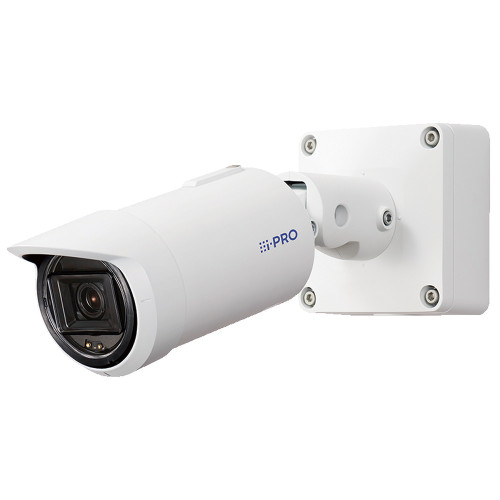
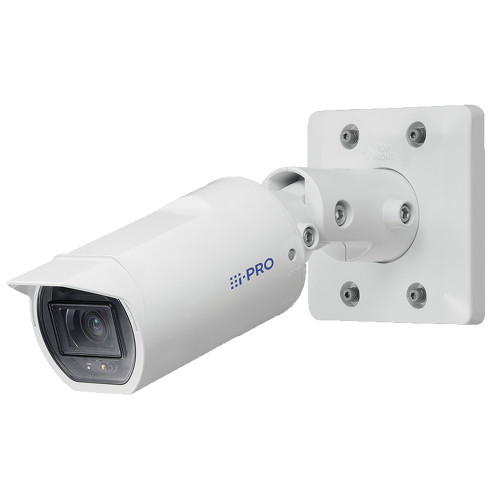
Both the i-PRO WV-S1536LA and WV-U1532LA are 2-megapixel outdoor bullet IP cameras with motorized varifocal lenses, PoE power, IP66/IK10 weatherproofing, and built-in IR illumination. They occupy the same resolution class and form factor, making them direct cross-shop candidates for perimeter and general surveillance deployments. The key differentiators lie in sensor size, frame rate, IR range, dynamic range, audio capability, onboard analytics depth, safety certifications, and physical footprint — all of which are addressed spec-for-spec below.
In This Guide
How do the imaging specs compare?
The S1536LA uses a larger 1/2.8-type CMOS sensor versus the U1532LA's 1/3-type sensor. The S1536LA delivers a maximum frame rate of 60fps at 1920×1080, while the U1532LA is capped at 30fps at the same resolution — a meaningful difference for fast-motion scenes. The S1536LA also has a wider motorized zoom range of 2.9–9mm (3.1× optical), compared to the U1532LA's 2.9–7.3mm (2.5× optical). IR illumination is substantially greater on the S1536LA at 70m (30IRE) versus 30m on the U1532LA. Low-light sensitivity differs significantly: the S1536LA achieves 0.007 lx in color and 0.005 lx in B&W (F1.3), while the U1532LA is rated at 0.1 lx color and 0.04 lx B&W — a roughly 8–14× sensitivity advantage for the S1536LA.
Dynamic range also favors the S1536LA, which specifies a maximum of 144 dB (Super Dynamic On, Level 31) compared to 120 dB on the U1532LA. The S1536LA's minimum focus distance is 0.3m versus 1.0m for the U1532LA, giving it more flexibility in close-range mounting scenarios. Both cameras share ATW1/ATW2/AWC white balance, adjustable DNR (0–255), BLC/HLC, and maximum gain range of 0–11. The S1536LA additionally lists Adaptive Black Stretch (0–255 adjustable) and Fog Compensation with manual contrast control; the U1532LA lists Fog Compensation with 0–8 discrete levels but does not specify Adaptive Black Stretch.
What about installation and environment?
Both cameras share IP66, NEMA 4X, and IK10 ratings, and both are wind-rated to 40 m/s (approx. 89 mph). The S1536LA, however, extends its operating temperature range to -40°C to +60°C (power-on from -30°C), while the U1532LA is rated -30°C to +50°C. The S1536LA's anti-condensation system includes a Temish element plus heater plus moisture-absorption gel, versus the U1532LA's Temish element only — relevant for cold-climate deployments. The S1536LA is also safety-certified to UL62368-1/IEC62368-1 (the current standard), whereas the U1532LA carries the older UL60950-1/IEC60950-1 certifications. The EMC profile differs as well: the S1536LA is EN55032 Class A, while the U1532LA is EN55032 Class B, which imposes tighter emissions limits.
Physically, the S1536LA is considerably larger (ø133mm × 383mm, approx. 2.4 kg) compared to the U1532LA (112.5mm × 262mm, 860g). Installers working on junction boxes or conduit with weight constraints, or in concealed mounting scenarios, will find the U1532LA meaningfully easier to handle and mount. Both cameras support ceiling and wall mounting with ±180° pan and 0–100° tilt at ceiling. Power consumption is 9.1W (PoE 802.3af) for the S1536LA and 6.7W for the U1532LA — both within 802.3af budget, but the S1536LA draws more. Neither camera specifies a PoE class other than Class 0.
Which fits your VMS and analytics better?
Both cameras support ONVIF Profiles G, S, and T. The S1536LA additionally supports ONVIF Profile M, which covers metadata and analytics event streaming — relevant for VMS platforms that consume AI analytics over ONVIF. The S1536LA lists FIPS 140-2 Level 3 certification alongside device certificate, HTTPS, IEEE 802.1X, system log, image log, and brute-force protection. The U1532LA specifies device and host authentication, HTTPS, and 802.1X — FIPS 140-2 is not mentioned in its spec. The S1536LA includes SRTP in its IPv4 protocol stack; this is not listed for the U1532LA. Both support microSD up to 512GB and up to 14 simultaneous users.
Analytics capability is substantially broader on the S1536LA: it lists AI video analytics with 8 detection modes, AI Sound Classification (gunshot, yell, vehicle horn, glass break), VMD (4 areas), Scene Change Detection, and Audio Detection. The U1532LA specifies VMD (4 areas) and Scene Change Detection, but does not list AI analytics or sound classification in its provided specs. Audio hardware is present only on the S1536LA, which provides a 3.5mm stereo audio input (plug-in power mic, 2 kΩ, -10 dBV) and audio output (3.5mm, 600Ω), with G.726, G.711, and AAC-LC compression and full-duplex support. The U1532LA lists no audio input, no audio output, and no audio compression. External I/O terminals (3× alarm IN, 1× alarm OUT, 1× AUX OUT) are present on the S1536LA; the U1532LA does not specify external I/O terminals. The U1532LA's OSD camera title is limited to 20 characters versus 40 on the S1536LA.
Which should you choose: the S1536LA or the U1532LA?
Our take: The S1536LA is the stronger choice when long IR reach, high frame rates, advanced AI analytics, audio I/O, and harsh cold-climate operation are required. Concretely: it provides 70m IR versus 30m, captures at 60fps versus 30fps, and achieves a maximum dynamic range of 144 dB versus 120 dB. It adds ONVIF Profile M, AI Sound Classification, 8 AI detection modes, full-duplex audio hardware, and 3 external alarm inputs absent on the U1532LA, and carries FIPS 140-2 Level 3 certification. Its operating temperature floor reaches -40°C versus -30°C, and its anti-condensation system includes an active heater. The U1532LA is the more appropriate selection where installation space, cable load, or budget constrains are primary — it is significantly lighter (860g vs 2.4 kg), more compact, and draws 2.4W less from the PoE switch. Both carry a 5-year warranty. Verify VMS compatibility with ONVIF Profile M before specifying the S1536LA for analytics-driven deployments.
Side-by-Side Comparison
Spec-for-spec, from manufacturer data.
| Specification | i-PRO S1536LA | i-PRO U1532LA |
|---|---|---|
| Resolution | 2MP (1920×1080) | 2MP (1920×1080) |
| Image Sensor | 1/2.8-type CMOS | 1/3-type CMOS |
| Lens / Focal Length | 2.9–9mm Motorized Varifocal (3.1× optical) | 2.9–7.3mm Motorized Varifocal (2.5× optical) |
| Max Frame Rate | 60fps @ 1920×1080 | 30fps @ 1920×1080 |
| Min Illumination (Color / B&W) | 0.007 lx (color) / 0.005 lx (B&W, F1.3) | 0.1 lx (color) / 0.04 lx (B&W) |
| IR Range | 70m (30IRE) / 50m (50IRE) | 30m (adjustable High/Mid/Low/Off) |
| Wide Dynamic Range (WDR) | Max 144 dB (Super Dynamic On, Level 31) | Max 120 dB (Super Dynamic On, Level 31) |
| Video Compression | H.265 / H.264 / MJPEG | H.265 / H.264 / MJPEG |
| ONVIF Profiles | G / M / S / T | G / S / T |
| AI / Edge Analytics | AI analytics 8 modes; AI Sound Classification (4 types) | VMD (4 areas); SCD (1 area); no AI analytics listed |
| Audio | 3.5mm in/out; G.726, G.711, AAC-LC; full-duplex | — |
| External I/O | 3× Alarm IN, 1× Alarm OUT, 1× AUX OUT | — |
| IP / Impact Rating | IP66 / NEMA 4X / IK10 | IP66 / NEMA 4X / IK10 |
| Operating Temperature | -40°C to +60°C (power-on: -30°C) | -30°C to +50°C |
| Power Input / Consumption | DC12V or PoE 802.3af, 9.1W | PoE 802.3af, 6.7W |
| Edge Storage | microSD up to 512GB | microSD up to 512GB |
| Dimensions (W × H × D) | ø133mm × 133mm × 383mm | 112.5mm × 112.5mm × 262mm |
| Weight | Approx. 2.4 kg (5.3 lbs) | Approx. 860g (1.90 lbs) |
| Safety Certification | UL62368-1 / IEC62368-1 / FIPS 140-2 Level 3 | UL60950-1 / IEC60950-1; no FIPS listed |
| Warranty | 5-year | 5-year |
Frequently Asked Questions
Which should you choose: the S1536LA or the U1532LA?
The S1536LA is the stronger choice when long IR reach, high frame rates, advanced AI analytics, audio I/O, and harsh cold-climate operation are required. Concretely: it provides 70m IR versus 30m, captures at 60fps versus 30fps, and achieves a maximum dynamic range of 144 dB versus 120 dB. It adds ONVIF Profile M, AI Sound Classification, 8 AI detection modes, full-duplex audio hardware, and 3 external alarm inputs absent on the U1532LA, and carries FIPS 140-2 Level 3 certification. Its operating temperature floor reaches -40°C versus -30°C, and its anti-condensation system includes an active heater. The U1532LA is the more appropriate selection where installation space, cable load, or budget constrains are primary — it is significantly lighter (860g vs 2.4 kg), more compact, and draws 2.4W less from the PoE switch. Both carry a 5-year warranty. Verify VMS compatibility with ONVIF Profile M before specifying the S1536LA for analytics-driven deployments.
Is the S1536LA or U1532LA better for low-light and night surveillance?
The S1536LA is substantially more capable in low light. Its specified minimum illumination is 0.007 lx (color, 30IRE) and 0.005 lx (B&W, 50IRE, F1.3), compared to 0.1 lx color and 0.04 lx B&W on the U1532LA — roughly 8–14× more sensitive. Its IR illumination also reaches 70m (30IRE) versus 30m on the U1532LA, making it better suited for long-distance perimeter coverage at night.
Can either camera be used where audio detection or recording is needed?
Only the S1536LA supports audio. It includes a 3.5mm stereo audio input (plug-in power mic) and a 3.5mm audio output, with G.726, G.711, and AAC-LC compression and full-duplex transmission. It also includes AI Sound Classification for gunshot, yell, vehicle horn, and glass break detection. The U1532LA's provided specs list no audio input, no audio output, and no audio compression — it cannot be used in audio-capable deployments.
Which camera is easier to install in a tight or weight-sensitive mounting location?
The U1532LA is considerably more installer-friendly for constrained locations. It measures 112.5mm × 262mm and weighs approximately 860g (1.90 lbs). The S1536LA is ø133mm × 383mm and weighs approximately 2.4 kg (5.3 lbs) — nearly three times heavier. The U1532LA also draws only 6.7W via PoE versus 9.1W for the S1536LA, reducing switch port load when deploying multiple cameras on a single switch.
Get a Second Opinion on Your Camera Choice
Share your site layout, coverage goals, and budget. Our team will validate the camera selection, flag anything we would change, and recommend products that match the use case.