
i-PRO S1536LA-B vs i-PRO X15300-V3L: Specification Comparison
Both the i-PRO WV-S1536LA-B and WV-X15300-V3L are 2MP outdoor fixed bullet IP cameras sharing the same sensor size, focal length range, and form factor—making them a genuine cross-shop pair for installers evaluating i-PRO's mid-range outdoor bullet lineup. The comparison centers on SoC generation, power architecture, weatherproofing depth, and a handful of firmware-level differentiators such as image stabilization and secure boot that distinguish the newer X15300-V3L from the established S1536LA-B.
In This Guide
How do the imaging specs compare?
Both cameras share an approximately 1/2.8-type CMOS sensor with a 5.57 mm × 3.13 mm scanning area, 60 fps maximum frame rate, identical minimum illumination figures (0.007 lx color / 0.005 lx B&W / 0 lx with IR), a 2.9–9 mm motorized varifocal lens delivering 3.1x optical zoom, and identical DORI distance figures across all four tiers. Maximum dynamic range is 144 dB Super Dynamic on both. IR illumination is rated at 70 m (30IRE) on the S1536LA-B and 70 m (230 ft) on the X15300-V3L—consistent across both. The S1536LA-B's BLC/HLC spec does not list a numeric adjustment range, while the X15300-V3L specifies BLC/HLC with a 0–31 range; fog compensation on the S1536LA-B offers on/off only, whereas the X15300-V3L adds a 0–8 numeric range.
The key silicon difference is the system-on-chip: the S1536LA-B uses an Ambarella CV25M, while the X15300-V3L uses the newer Ambarella CV52. The X15300-V3L also adds a gyro-based electronic image stabilizer (on/off) and a two-line OSD camera title versus the S1536LA-B's single-line title—both capped at 40 characters. Resolution output for the S1536LA-B is explicitly listed in both 16:9 and 4:3 modes (including 2048×1536 in 4:3); the X15300-V3L spec sheet lists 1920×1080 as the primary resolution without enumerating all sub-stream options.
What about installation and environment?
Both cameras share identical physical dimensions (133 mm W × 133 mm H × 383 mm D) and both carry IP66, Type 4X / NEMA 4X, and IK10 ratings. The X15300-V3L adds IP67 certification (full immersion per IEC 60529) not listed for the S1536LA-B. Both are wind-rated to 40 m/s. The S1536LA-B specifies an anti-condensation system (Temish element, heater, and moisture absorption gel); the X15300-V3L does not list an equivalent anti-condensation provision in its spec sheet. The S1536LA-B's finish is aluminum die cast, resin, and polycarbonate; the X15300-V3L substitutes stainless steel for polycarbonate, which may affect long-term corrosion resistance in coastal or high-humidity environments.
Power architecture diverges significantly: the S1536LA-B accepts DC 12V or PoE 802.3af (Class 0, 8.5–9.1 W), while the X15300-V3L requires DC 12V or PoE+ 802.3at (Class 4, 14 W). Installers wiring the X15300-V3L must verify their switches support PoE+ budget on each port. Operating temperature range is –40 to +60 °C (power-on: –30 to +60 °C) for the S1536LA-B versus –40 to +55 °C (power-on: –30 to +55 °C) for the X15300-V3L—a 5 °C difference at the upper end that may matter in direct-sun or rooftop enclosures. Both support ceiling (±180° pan, 0–100° tilt) and wall mounting with identical yaw/tilt specs.
Which fits your VMS and analytics better?
Both cameras support ONVIF Profiles G, M, S, and T, up to 14 simultaneous users, H.265/H.264/MJPEG compression with CBR/VBR, Variable GOP (1–60 s), microSD/SDHC/SDXC up to 512 GB, and audio compression via G.726, G.711, and AAC-LC. Both carry FIPS 140-2 Level 3 and IEEE 802.1X. The X15300-V3L explicitly lists secure boot and signed firmware in its security section; the S1536LA-B lists signed firmware in its product attributes but does not list secure boot in its spec sheet. IPv6 protocol coverage is broader on the S1536LA-B (includes SMTP, SNMPv1/v2/v3, DHCPv6, RTP, MLD, ICMP, ARP, DiffServ, FTP, SFTP, MQTT, LLDP) versus the more abbreviated IPv6 listing on the X15300-V3L (TCP/IP, UDP, HTTP, HTTPS, MQTT, SNMP, DNS, NTP).
AI analytics on both include a four-class sound classifier (gunshot, yell, vehicle horn, glass break), VMD (4 areas), SCD (1 area), audio detection, up to 8 privacy zones, and up to 8 VIQS zones. The S1536LA-B spec lists 'AI Video Analytics (8 types)' with explicit mention of facial recognition in product attributes; the X15300-V3L lists 'AI video detection suite' without enumerating the count. Both cameras provide 3× alarm inputs, 1× alarm output, and 1× AUX output. The S1536LA-B spec sheet lists audio input impedance (2 kΩ, –10 dBV line level) and plug-in power mic support; the X15300-V3L audio input section lists only the 3.5 mm jack without those electrical parameters. Both carry a 5-year warranty.
Which should you choose: the S1536LA-B or the X15300-V3L?
Our take: The S1536LA-B is the stronger choice when PoE budget is constrained, ambient temperatures may exceed 55 °C, or the installation relies on 802.3af-only switches—it draws only 8.5–9.1 W versus the X15300-V3L's 14 W, and its rated operating ceiling is +60 °C versus +55 °C. Conversely, the X15300-V3L is preferable where the newer Ambarella CV52 SoC's processing headroom matters, where IP67 immersion protection is required (the S1536LA-B is IP66 only), or where electronic image stabilization via gyro sensor is needed for vibration-prone mounting locations. Both cameras are otherwise closely matched—same sensor, same 144 dB WDR, same IR range, same lens, and same ONVIF profile set. Choose the S1536LA-B for tighter power budgets and higher ambient temperatures; choose the X15300-V3L for newer silicon, IP67 immersion tolerance, and built-in image stabilization, provided PoE+ infrastructure is in place.
Side-by-Side Comparison
Spec-for-spec, from manufacturer data.
| Specification | i-PRO S1536LA-B | i-PRO X15300-V3L |
|---|---|---|
| Resolution | 2MP (1920×1080 max) | 2MP (1920×1080) |
| Image Sensor | Approx. 1/2.8-type CMOS, 5.57×3.13 mm | Approx. 1/2.8-type CMOS, 5.57×3.13 mm |
| System on Chip (SoC) | Ambarella CV25M | Ambarella CV52 |
| Lens / Focal Length | Motorized varifocal 2.9–9 mm (3.1x optical) | Motorized varifocal 2.9–9 mm (3.1x optical) |
| Min. Illumination (Color / B&W / IR) | 0.007 lx / 0.005 lx / 0 lx | 0.007 lx / 0.005 lx / 0 lx |
| IR Range | 70 m (30IRE) / 50 m (50IRE) | 70 m (230 ft) |
| Max Dynamic Range (WDR) | 144 dB (Super Dynamic On, Level 31) | 144 dB (Super Dynamic On, Level 31) |
| Max Frame Rate | 60 fps | 60 fps |
| Video Compression | H.265, H.264, MJPEG | H.265, H.264, MJPEG |
| IP Rating | IP66, Type 4X, NEMA 4X | IP66, IP67, Type 4X, NEMA 4X |
| IK / Impact Rating | IK10 (IEC 62262) | IK10 (IEC 62262) |
| Operating Temperature | -40 to +60 °C (power-on: -30 to +60 °C) | -40 to +55 °C (power-on: -30 to +55 °C) |
| Power Input / PoE Class | DC 12V or PoE 802.3af, Class 0, 8.5–9.1 W | DC 12V or PoE+ 802.3at, Class 4, 14 W |
| Image Stabilization | — | Electronic (gyro sensor), On/Off |
| Secure Boot | Not listed in spec sheet | Yes |
| Edge Storage | microSD/SDHC/SDXC up to 512 GB | microSD/SDHC/SDXC up to 512 GB |
| Audio I/O | 3.5 mm in (2 kΩ, plug-in power mic) + 3.5 mm out (600 Ω) | 3.5 mm in + 3.5 mm out (600 Ω, mono) |
| ONVIF Profiles | G, M, S, T | G, M, S, T |
| Dimensions (W×H×D) | 133×133×383 mm (5-1/4×5-1/4×15-3/32 in) | 133×133×383 mm (5-1/4×5-1/4×15-3/32 in) |
| Weight | Approx. 2.4 kg (5.3 lbs) | Approx. 2.5 kg (5.6 lbs) |
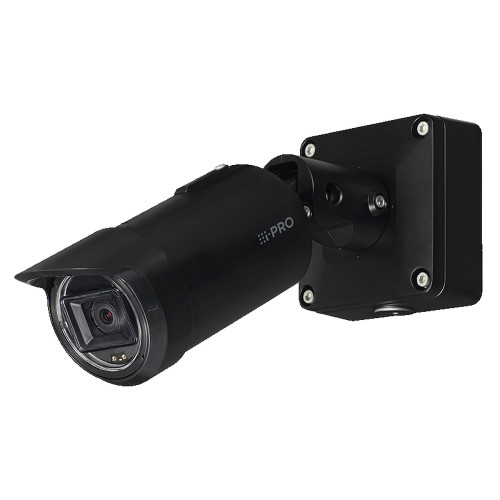
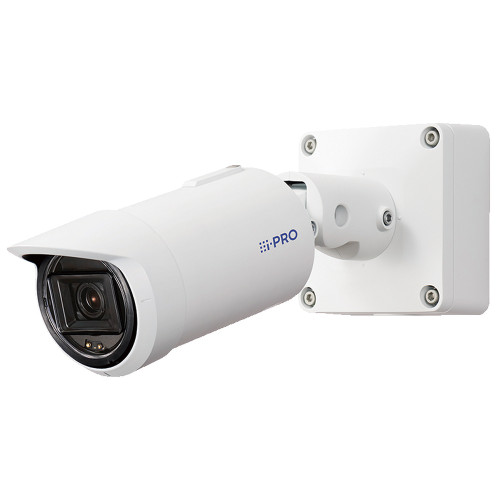
| Housing Color | Black | White |
| Warranty | 5-Year | 5-Year |
Frequently Asked Questions
Which should you choose: the S1536LA-B or the X15300-V3L?
The S1536LA-B is the stronger choice when PoE budget is constrained, ambient temperatures may exceed 55 °C, or the installation relies on 802.3af-only switches—it draws only 8.5–9.1 W versus the X15300-V3L's 14 W, and its rated operating ceiling is +60 °C versus +55 °C. Conversely, the X15300-V3L is preferable where the newer Ambarella CV52 SoC's processing headroom matters, where IP67 immersion protection is required (the S1536LA-B is IP66 only), or where electronic image stabilization via gyro sensor is needed for vibration-prone mounting locations. Both cameras are otherwise closely matched—same sensor, same 144 dB WDR, same IR range, same lens, and same ONVIF profile set. Choose the S1536LA-B for tighter power budgets and higher ambient temperatures; choose the X15300-V3L for newer silicon, IP67 immersion tolerance, and built-in image stabilization, provided PoE+ infrastructure is in place.
Is the S1536LA-B or X15300-V3L better for low light?
Based on the provided specs, both cameras are identical in low-light performance: 0.007 lx (color) and 0.005 lx (B&W) at 30IRE, 0 lx with IR active, and 70 m IR range. Neither camera has a specified low-light advantage over the other.
Can I use either camera on a standard PoE switch, or do I need PoE+?
The S1536LA-B is rated for 802.3af (PoE, Class 0) at 8.5–9.1 W, so it works on any standard PoE port. The X15300-V3L requires PoE+ (802.3at, Class 4) at 14 W; a switch port that only delivers 802.3af's maximum of 15.4 W may be insufficient under worst-case conditions, and a dedicated PoE+ port is recommended.
Does the X15300-V3L offer better protection against water and dust than the S1536LA-B?
Yes, to a degree. Both cameras are rated IP66 and NEMA 4X. The X15300-V3L additionally carries an IP67 rating, meaning it is certified for temporary immersion per IEC 60529—a protection level not listed in the S1536LA-B's spec sheet. For standing-water or flood-prone environments, the X15300-V3L's dual IP66/IP67 rating provides an added margin.
Get a Second Opinion on Your Camera Choice
Share your site layout, coverage goals, and budget. Our team will validate the camera selection, flag anything we would change, and recommend products that match the use case.