
i-PRO MR-4C-I3-1TB-V5 vs i-PRO MR-4C-I3-2TB-V5: Specification Comparison
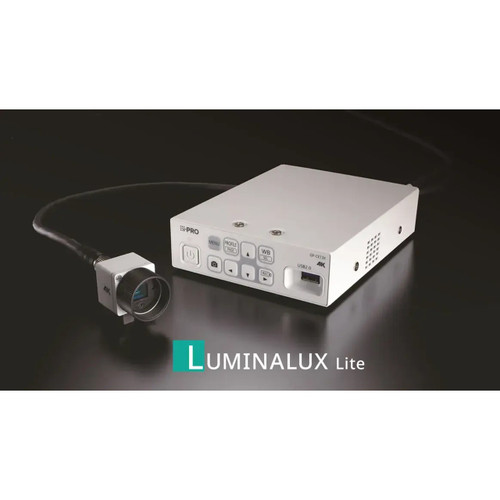
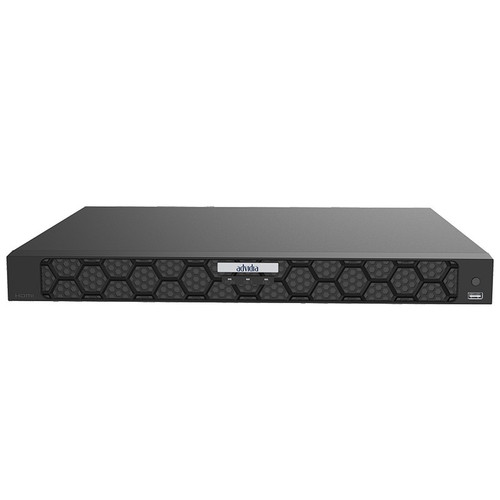
Both the i-PRO MR-4C-I3-1TB-V5 and MR-4C-I3-2TB-V5 are 4-channel mobile NVRs built on an Intel Core i3 platform, designed for vehicle-based surveillance deployments such as fleet, transit, and law enforcement applications. The two units share identical channel capacity, processor, codec support, power input range, form factor dimensions, and warranty terms. The primary differentiator is storage: 1TB ruggedized microSD in the -1TB variant versus 2TB ruggedized SSD in the -2TB variant — a distinction that carries meaningful implications for retention duration, media durability, and total deployment cost.
In This Guide
- How do the storage capacity and media type differ between the two units?
- Are the power input range and environmental ruggedization equivalent across both models?
- Do the two models differ in channel count, codec support, or camera/software compatibility?
- Which should you choose: the MR-4C-I3-1TB-V5 or the MR-4C-I3-2TB-V5?
- Side-by-Side Specs
- FAQ
How do the storage capacity and media type differ between the two units?
The MR-4C-I3-1TB-V5 ships with 1TB of ruggedized microSD storage. microSD is a removable flash medium; its ruggedized designation indicates resistance to vibration and temperature, but the card itself is a removable, consumer-format medium subject to the wear characteristics of NAND flash in high-write surveillance workloads.
The MR-4C-I3-2TB-V5 doubles the capacity to 2TB and specifies a ruggedized SSD as the storage medium. An internal SSD typically offers higher sustained write endurance ratings, faster sequential throughput, and no removable-card interface — reducing insertion/extraction failure points in a mobile environment.
At identical bitrates across all 4 channels, the 2TB model provides roughly twice the continuous recording retention of the 1TB model before the oldest footage is overwritten. Neither spec sheet states a rated write-endurance figure (DWPD or TBW), so direct endurance comparison cannot be made from the provided data alone. Installers with strict retention-window mandates should verify minimum footage-hours calculations against their camera bitrate profiles before selecting either unit.
Are the power input range and environmental ruggedization equivalent across both models?
Both units specify a wide-voltage DC input of 9–36V, covering standard 12V and 24V vehicle electrical systems without requiring additional DC-DC converters. This is a shared specification; neither model holds an advantage in power compatibility based on the provided data.
Both models indicate an extended operating temperature range suited to vehicle compartments. The -1TB spec references 'vehicle compartments' and the -2TB references 'vehicle environments'; neither spec sheet provides explicit minimum/maximum temperature figures in the data supplied, so a numerical thermal comparison cannot be drawn from these specs alone.
Both units are described as solid-state or compact mobile-optimized designs with vibration resistance. Physical dimensions are identical for both: 7.7" (W) × 10.23" (D) × 2.6" (H), per the provided specs. Housing color is White for both. No IP or MIL-STD rating is listed in the provided data for either unit.
Do the two models differ in channel count, codec support, or camera/software compatibility?
Both the MR-4C-I3-1TB-V5 and MR-4C-I3-2TB-V5 are rated for 4-channel simultaneous recording. Neither spec identifies a maximum resolution per channel beyond the listed VGA (640×480) spec; installers requiring higher per-channel resolution should verify against the full datasheet at the respective PDF paths provided.
Codec support is identical across both models: H.265 and H.264 are listed for each unit. H.265 reduces storage consumption per hour of footage relative to H.264, which is relevant to maximizing usable retention on the 1TB model in particular.
Both units share the same bundle IDs (19428, 44317, 44134, 18074), indicating that compatible accessories, camera licenses (including third-party and transit/Vi licenses), and back-up unit pairings are the same for each model. PoE standard is listed as 802.3af for both. No difference in software platform, VMS integration, or network interface specs is indicated in the provided data.
Which should you choose: the MR-4C-I3-1TB-V5 or the MR-4C-I3-2TB-V5?
Our take: The MR-4C-I3-2TB-V5 is the stronger choice when recording retention, storage endurance, or reduced field-maintenance burden are the primary deployment requirements. The core spec delta is storage: the -2TB model delivers double the capacity (2TB vs. 1TB) and uses a ruggedized internal SSD rather than a removable microSD card — a medium difference that reduces single-point-of-failure risk at the card interface and typically improves sustained write performance in high-duty-cycle mobile recording. All other decision-relevant specifications — 4-channel recording, Intel Core i3 processor, H.265/H.264 codec support, 9–36V DC wide-voltage input, form factor dimensions, PoE 802.3af, and 3-year warranty — are identical between the two models. The MR-4C-I3-1TB-V5 is appropriate where 1TB retention meets operational requirements and the microSD format offers a workflow advantage, such as card-swap evidence collection in the field.
Side-by-Side Comparison
Spec-for-spec, from manufacturer data.
| Specification | i-PRO MR-4C-I3-1TB-V5 | i-PRO MR-4C-I3-2TB-V5 |
|---|---|---|
| Product Type | Mobile NVR | Mobile NVR |
| Recording Channels | 4-channel simultaneous | 4-channel simultaneous |
| Processor | Intel Core i3 | Intel Core i3 |
| Storage Capacity | 1TB | 2TB |
| Storage Media Type | Ruggedized microSD | Ruggedized SSD |
| Video Codecs | H.265 and H.264 | H.265 and H.264 |
| Power Input | 9–36V DC wide-voltage | 9–36V DC wide-voltage (9–36V DC) |
| PoE Standard | 802.3af | 802.3af |
| Resolution (listed) | VGA (640×480) | VGA (640×480) |
| Dimensions (W×D×H) | 7.7" × 10.23" × 2.6" | 7.7" × 10.23" × 2.6" |
| Housing Color | White | White |
| Operating Temperature | Extended range for vehicle compartments | Extended range for vehicle environments |
| Construction | Solid-state, vibration-resistant | Compact mobile-optimized, vibration-resistant |
| Warranty | 3 Year(s) | 3 Year(s) |
| Compatible Bundle IDs | 19428, 44317, 44134, 18074 | 19428, 44317, 44134, 18074 |
| Datasheet | /content/product-datasheets/MR-4C-I3-1TB-V5.pdf | /content/product-datasheets/MR-4C-I3-2TB-V5.pdf |
Frequently Asked Questions
Which should you choose: the MR-4C-I3-1TB-V5 or the MR-4C-I3-2TB-V5?
The MR-4C-I3-2TB-V5 is the stronger choice when recording retention, storage endurance, or reduced field-maintenance burden are the primary deployment requirements. The core spec delta is storage: the -2TB model delivers double the capacity (2TB vs. 1TB) and uses a ruggedized internal SSD rather than a removable microSD card — a medium difference that reduces single-point-of-failure risk at the card interface and typically improves sustained write performance in high-duty-cycle mobile recording. All other decision-relevant specifications — 4-channel recording, Intel Core i3 processor, H.265/H.264 codec support, 9–36V DC wide-voltage input, form factor dimensions, PoE 802.3af, and 3-year warranty — are identical between the two models. The MR-4C-I3-1TB-V5 is appropriate where 1TB retention meets operational requirements and the microSD format offers a workflow advantage, such as card-swap evidence collection in the field.
Is the MR-4C-I3-1TB-V5 or MR-4C-I3-2TB-V5 better for longer video retention in transit deployments?
The MR-4C-I3-2TB-V5 provides 2TB of storage versus 1TB on the -1TB model, delivering approximately twice the recording retention at any given bitrate across all 4 channels. For transit or fleet deployments with mandated footage-retention windows, the 2TB model reduces overwrite frequency and extends the window available for incident review without additional hardware.
Do these two mobile NVRs support the same cameras and accessories?
Yes. Based on the provided specifications, both units share identical bundle IDs (19428, 44317, 44134, 18074), the same PoE standard (802.3af), the same codec support (H.265/H.264), and the same third-party and transit/Vi camera license compatibility. No difference in camera or accessory compatibility is indicated in the provided data.
What is the practical difference between the ruggedized microSD in the 1TB model and the ruggedized SSD in the 2TB model?
The -1TB unit uses a ruggedized microSD card, a removable flash medium. The -2TB unit uses a ruggedized internal SSD. An internal SSD eliminates the removable-card interface as a mechanical failure point, typically offers higher sustained write endurance suited to continuous 4-channel recording, and is not subject to accidental removal or card-seat wear. The -1TB microSD format may be preferred where card-swap evidence workflows are required. Neither model's spec sheet provides explicit endurance ratings (DWPD or TBW) in the data supplied, so a quantitative endurance comparison cannot be made from the provided specs alone.
Get a Second Opinion on Your Camera Choice
Share your site layout, coverage goals, and budget. Our team will validate the camera selection, flag anything we would change, and recommend products that match the use case.