
Honeywell CW45-X0N-BND10SG vs Unitech HT730-LJ6142BG: Specification Comparison
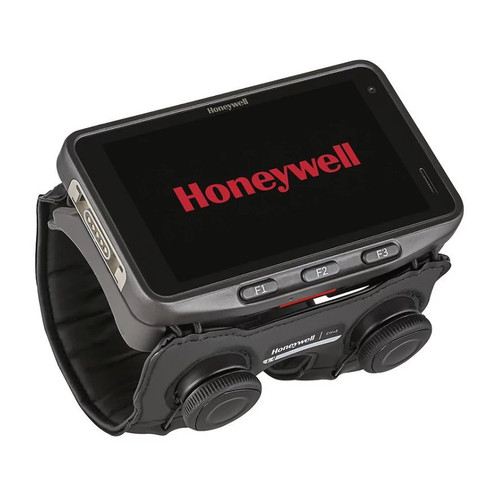
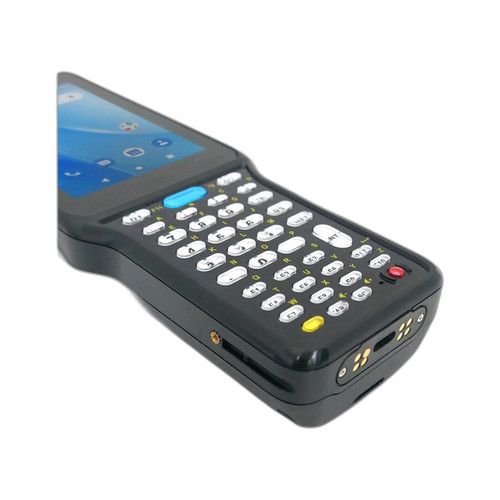
Both the Honeywell CW45-X0N-BND10SG and the Unitech HT730-LJ6142BG are wearable Android devices designed for hands-free warehouse and field operations. The CW45 is a full wearable mobile computer with a 4.7-inch display, octa-core processor, and dual cameras, while the HT730 is a wearable 2D barcode scanner with a 47-key keypad and extended-shift battery. Buyers evaluating wearable data-capture solutions for distribution, logistics, or light manufacturing will frequently cross-shop these two form factors.
In This Guide
- Which device delivers stronger scanning and computing performance for data-capture workflows?
- Which device provides better battery endurance for full-shift or multi-shift operations?
- How do the two devices compare on environmental durability, wireless connectivity, and operating platform?
- Which should you choose: the CW45-X0N-BND10SG or the HT730-LJ6142BG?
- Side-by-Side Specs
- FAQ
Which device delivers stronger scanning and computing performance for data-capture workflows?
The Unitech HT730-LJ6142BG is purpose-built around its 2D imaging engine, scanning at 60 fps across a broad symbology set that includes QR Code, Data Matrix, PDF417, Dot Code, Code 128, Code 39, UPC, and EAN. Its 30-degree tilt-down scan pattern is optimized for wrist or hand-mount ergonomics in pick-and-pack environments. No processor specification is provided in the available HT730 spec data.
The Honeywell CW45-X0N-BND10SG centers its compute story on a Qualcomm QCS4290 octa-core 2.0 GHz processor paired with 6 GB RAM and 64 GB internal flash storage, with additional microSD expansion. While it carries a 13 MP side camera capable of barcode capture, no dedicated scan engine specification or scan rate is listed in the provided specs. Buyers who need a certified, high-throughput 1D/2D scan engine should verify the CW45's scanning credentials independently before assuming parity with the HT730's dedicated imager.
Which device provides better battery endurance for full-shift or multi-shift operations?
The Unitech HT730-LJ6142BG carries a 6700 mAh removable battery rated for 20–26 hours of continuous operation, giving it a strong argument for full-shift or even multi-shift deployments without a swap or recharge cycle.
The Honeywell CW45-X0N-BND10SG uses a 3400 mAh Li-Ion battery described as hot-swappable. Hot-swap capability allows workers to replace the battery without powering down, which can sustain continuous operation if spare batteries and a charging infrastructure are in place. However, at 3400 mAh versus 6700 mAh, the raw capacity is roughly half that of the HT730. No rated hours of operation figure is provided in the CW45 spec data, so direct hour-for-hour comparison cannot be made from specifications alone.
How do the two devices compare on environmental durability, wireless connectivity, and operating platform?
The Honeywell CW45-X0N-BND10SG carries dual IP65/IP67 ratings and an operating temperature range of -20°C to 50°C (-4°F to 122°F), with a storage range of -30°C to 70°C. It supports WiFi 6 (802.11 a/b/g/n/ac/ax), Bluetooth 5.1 BLE, USB, and NFC. It runs Android (non-GMS). The device weighs 263 g with the standard battery.
The Unitech HT730-LJ6142BG specifies a 1.8 m (6 ft) drop rating to concrete, extendable to 2.4 m with a bumper case. It is described as sealed industrial construction, but no IP ingress-protection rating is listed in the provided specifications. Connectivity includes WiFi 2×2 MU-MIMO, 4G dual-SIM, and Bluetooth (standard); no Bluetooth version is specified. It runs Android 10. No operating temperature range or weight is provided in the available spec data. The presence of 4G dual-SIM gives the HT730 an out-of-WiFi-range connectivity option the CW45 does not list.
Which should you choose: the CW45-X0N-BND10SG or the HT730-LJ6142BG?
Our take: The CW45-X0N-BND10SG is the stronger choice when buyers need a full mobile computing platform—rich processor (Qualcomm QCS4290 octa-core, 2.0 GHz), 6 GB RAM, 64 GB storage, WiFi 6, Bluetooth 5.1, NFC, dual cameras, and proven IP65/IP67 sealing—on the wrist. The HT730-LJ6142BG is the stronger choice when the primary requirement is extended-shift scanning endurance and dedicated 2D imaging: its 6700 mAh battery (rated 20–26 hours continuous) is nearly double the CW45's 3400 mAh, its 2D imager runs at 60 fps across a formally specified symbology set, and its 4G dual-SIM option supports connectivity beyond WiFi coverage. Key gaps exist: the HT730 carries no published IP rating or operating temperature, while the CW45 carries no published scan-engine speed or rated operating hours. Teams running Android enterprise workflows with heavy app compute loads should lean toward the CW45; teams running high-volume scan-only shifts with long run times should lean toward the HT730.
Side-by-Side Comparison
Spec-for-spec, from manufacturer data.
| Specification | Honeywell CW45-X0N-BND10SG | Unitech HT730-LJ6142BG |
|---|---|---|
| Product Type | Wearable Mobile Computer | Wearable 2D Scanner |
| Operating System | Android (non-GMS) | Android 10 |
| Processor | Qualcomm QCS4290 Octa-Core 2.0 GHz | — |
| RAM | 6 GB | — |
| Internal Storage | 64 GB Flash + microSD | — |
| Display Size | 4.7 in HD Gorilla Glass 5 | 4 in |
| Scan Engine | — | 2D Imager, 60 fps |
| Symbologies | — | QR, Data Matrix, PDF417, Dot Code, Code 128, Code 39, UPC, EAN |
| Camera | 8 MP front + 13 MP side | 13 MP |
| Battery Capacity | 3400 mAh Li-Ion (hot-swappable) | 6700 mAh removable |
| Battery Life (rated) | — | 20–26 hours continuous |
| Wi-Fi | WiFi 6 (802.11 a/b/g/n/ac/ax) | WiFi 2×2 MU-MIMO |
| Cellular | — | 4G dual-SIM |
| Bluetooth | 5.1 BLE | Yes (version not specified) |
| NFC | Yes | — |
| IP Rating | IP65 / IP67 | — |
| Drop Rating | — | 1.8 m to concrete (2.4 m with bumper) |
| Operating Temperature | -20°C to 50°C | — |
| Keypad | — | 47-key |
| Weight | 263 g (9.3 oz) | — |
| FCC Approval | Yes | — |
Frequently Asked Questions
Which should you choose: the CW45-X0N-BND10SG or the HT730-LJ6142BG?
The CW45-X0N-BND10SG is the stronger choice when buyers need a full mobile computing platform—rich processor (Qualcomm QCS4290 octa-core, 2.0 GHz), 6 GB RAM, 64 GB storage, WiFi 6, Bluetooth 5.1, NFC, dual cameras, and proven IP65/IP67 sealing—on the wrist. The HT730-LJ6142BG is the stronger choice when the primary requirement is extended-shift scanning endurance and dedicated 2D imaging: its 6700 mAh battery (rated 20–26 hours continuous) is nearly double the CW45's 3400 mAh, its 2D imager runs at 60 fps across a formally specified symbology set, and its 4G dual-SIM option supports connectivity beyond WiFi coverage. Key gaps exist: the HT730 carries no published IP rating or operating temperature, while the CW45 carries no published scan-engine speed or rated operating hours. Teams running Android enterprise workflows with heavy app compute loads should lean toward the CW45; teams running high-volume scan-only shifts with long run times should lean toward the HT730.
Is the CW45-X0N-BND10SG or the HT730-LJ6142BG better for outdoor or cold-storage environments?
Based on available specifications, the CW45-X0N-BND10SG has a documented advantage here: it carries IP65/IP67 ratings and an operating temperature range of -20°C to 50°C. The HT730-LJ6142BG lists a 1.8 m drop rating and sealed industrial construction, but no IP rating or operating temperature range is provided in its published specs, so cold-storage or outdoor suitability cannot be confirmed from specifications alone.
Which device is better suited for a full 10-hour warehouse shift without battery swaps?
The HT730-LJ6142BG's 6700 mAh battery is rated for 20–26 hours of continuous operation, making it the stronger candidate for single-charge full-shift coverage. The CW45-X0N-BND10SG offers a hot-swappable 3400 mAh battery, which can support continuous operation if spare charged batteries are available, but no rated operating hours are listed in its specifications.
Does either device support cellular connectivity for use outside of WiFi coverage?
Yes—the Unitech HT730-LJ6142BG lists 4G dual-SIM as part of its wireless interface, providing cellular data connectivity independent of WiFi infrastructure. The Honeywell CW45-X0N-BND10SG does not list cellular connectivity in its published specifications; its wireless options are WiFi 6, Bluetooth 5.1, and USB.
More Mobile Computer Comparisons
- Honeywell CW45-X0N-AND10XG vs Unitech HT730-LJ6122BG
- Honeywell CW45-X0N-AND10XG vs Unitech HT730-LJ6142BG
- Honeywell CW45-X0N-AND10XG vs Unitech HT330-QA62TM3G-Z3
- Honeywell CW45-X0N-AND10XG vs Zebra TC2205-0G1250SS-US
- Honeywell CW45-X0N-AND10XG vs Honeywell CW45-X0N-AND10SG
- Honeywell CW45-X0N-AND10XG vs Honeywell CW45-X0N-BND10XG
Mobile Computer Buying Guides
Get a Second Opinion on Your Camera Choice
Share your site layout, coverage goals, and budget. Our team will validate the camera selection, flag anything we would change, and recommend products that match the use case.