
Honeywell CW45-X0N-BND10SG vs Unitech HT330-QA62TM3G-Z3: Specification Comparison
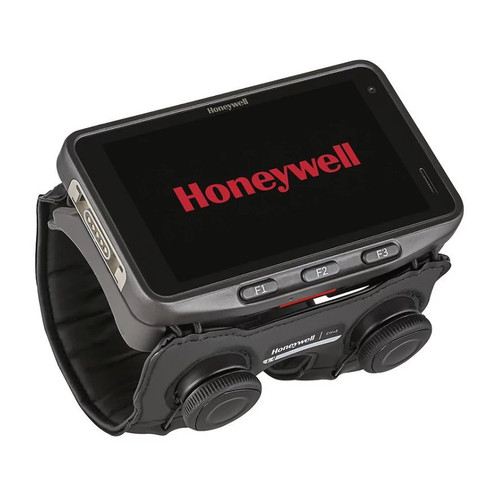
Both the Honeywell CW45-X0N-BND10SG and the Unitech HT330-QA62TM3G-Z3 are wrist- or body-worn computing devices targeting warehouse, logistics, and field operations—environments where hands-free data capture and extended shift endurance are primary concerns. The CW45 is a fully self-contained wearable mobile computer with its own display, OS, and processing; the HT330 is a wearable scanner terminal that pairs over Bluetooth with a host device. Buyers evaluating both are typically weighing standalone compute capability against scan-focused simplicity and battery runtime.
In This Guide
- Which device delivers more onboard compute power and usable display for standalone operation?
- How do the two devices compare on environmental sealing, drop protection, and operating temperature range?
- Which unit offers broader wireless connectivity and longer untethered runtime?
- Which should you choose: the CW45-X0N-BND10SG or the HT330-QA62TM3G-Z3?
- Side-by-Side Specs
- FAQ
Which device delivers more onboard compute power and usable display for standalone operation?
The Honeywell CW45-X0N-BND10SG is a fully standalone wearable computer built around a Qualcomm QCS4290 Octa-Core 2.0 GHz processor with 6 GB RAM and 64 GB internal flash storage, running Android (non-GMS). Its 4.7-inch HD touchscreen with Gorilla Glass 5 provides a full-resolution interface capable of running enterprise applications, WMS clients, and browser-based workflows without any paired host device.
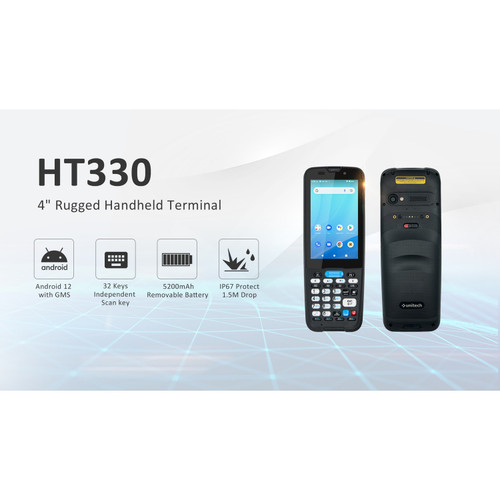
The Unitech HT330-QA62TM3G-Z3 specifies a 4-inch touchscreen, 3 GB RAM, 32 GB internal flash, Android 12, and a 32-key physical keypad. While it carries its own OS and storage, its product classification as a 'Wearable Bluetooth Scanner' and its primary Bluetooth-pairing workflow position it closer to a companion terminal than a primary compute node. The CW45 holds a clear advantage in raw processing headroom (6 GB vs. 3 GB RAM; 64 GB vs. 32 GB storage) and display size (4.7 in vs. 4.0 in) for applications demanding local compute or richer UI.
How do the two devices compare on environmental sealing, drop protection, and operating temperature range?
The Honeywell CW45-X0N-BND10SG carries dual IP ratings of IP65 and IP67, covering both dust ingress and temporary water immersion. Its specified operating temperature range is -20°C to 50°C (-4°F to 122°F), and storage temperature extends to -30°C to 70°C. Weight is stated at 263 g (9.3 oz) with the standard battery.
The Unitech HT330-QA62TM3G-Z3 specifies IP67 sealing and a 1.5 m drop specification to concrete. Operating temperature and storage temperature ranges are not provided in the available specifications. The HT330 meets IP67 water-immersion protection on par with the CW45's IP67 rating, and adds a concrete drop spec (1.5 m) that the CW45 specs do not explicitly state. However, the absence of operating temperature data for the HT330 means cold-chain or outdoor-range suitability cannot be confirmed from the provided specs.
Which unit offers broader wireless connectivity and longer untethered runtime?
The Honeywell CW45-X0N-BND10SG supports Wi-Fi 6 (802.11 a/b/g/n/ac/ax), Bluetooth 5.1 BLE, NFC, and USB. Its standard battery is 3,400 mAh Li-Ion, described as hot-swappable. Wi-Fi 6 support is a meaningful differentiator in dense RF environments such as large DCs or cross-dock facilities where 802.11ax reduces channel congestion.
The Unitech HT330-QA62TM3G-Z3 specifies Bluetooth 5.0, 2.4 GHz + 5 GHz Wi-Fi, and GPS as its wireless stack, with a 5,200 mAh Li-ion removable battery rated at 20 hours of runtime. The HT330's battery capacity is 53% larger than the CW45's (5,200 mAh vs. 3,400 mAh) and carries an explicit 20-hour runtime claim, which is absent from the CW45 spec sheet. The HT330 also adds GPS, not listed for the CW45. The CW45 counters with the newer Wi-Fi 6 standard and Bluetooth 5.1 vs. the HT330's Bluetooth 5.0, and NFC support not listed for the HT330.
Which should you choose: the CW45-X0N-BND10SG or the HT330-QA62TM3G-Z3?
Our take: The CW45-X0N-BND10SG is the stronger choice when the deployment requires a fully self-contained wearable computer with high-performance local processing, Wi-Fi 6 connectivity, and NFC capability. It leads on RAM (6 GB vs. 3 GB), storage (64 GB vs. 32 GB), wireless generation (Wi-Fi 6 vs. Wi-Fi 5), and adds Bluetooth 5.1, NFC, and dual cameras (8 MP front + 13 MP side) not listed for the HT330. The HT330-QA62TM3G-Z3 is the better fit where shift-long untethered runtime is the priority: its 5,200 mAh battery (vs. 3,400 mAh) with a stated 20-hour rating and an explicit 1.5 m drop-to-concrete spec give it an endurance and ruggedization edge on the available data. The HT330 also adds GPS. Buyers running Android-based WMS applications that need standalone compute and modern RF infrastructure should favor the CW45; operations prioritizing scan endurance and GPS on a Bluetooth-companion model should evaluate the HT330.
Side-by-Side Comparison
Spec-for-spec, from manufacturer data.
| Specification | Honeywell CW45-X0N-BND10SG | Unitech HT330-QA62TM3G-Z3 |
|---|---|---|
| Product Type | Wearable Mobile Computer | Wearable Bluetooth Scanner |
| Operating System | Android (non-GMS) | Android 12 |
| Processor | Qualcomm QCS4290 Octa-Core 2.0 GHz | — |
| RAM | 6 GB | 3 GB |
| Internal Storage | 64 GB Flash | 32 GB Flash |
| Display Size | 4.7 in HD, Gorilla Glass 5 | 4.0 in touchscreen |
| Physical Keypad | — | 32-key |
| IP Rating | IP65 / IP67 | IP67 |
| Drop Specification | — | 1.5 m to concrete |
| Operating Temperature | -20°C to 50°C | — |
| Wi-Fi Standard | Wi-Fi 6 (802.11 a/b/g/n/ac/ax) | 2.4 GHz + 5 GHz (standard not specified) |
| Bluetooth | 5.1 BLE | 5.0 |
| GPS | — | Yes |
| NFC | Yes | — |
| Battery Capacity | 3,400 mAh Li-Ion (hot-swappable) | 5,200 mAh Li-ion removable |
| Stated Battery Runtime | — | 20 hours |
| Cameras | 8 MP front + 13 MP side | — |
| Weight | 263 g (9.3 oz) with standard battery | — |
Frequently Asked Questions
Which should you choose: the CW45-X0N-BND10SG or the HT330-QA62TM3G-Z3?
The CW45-X0N-BND10SG is the stronger choice when the deployment requires a fully self-contained wearable computer with high-performance local processing, Wi-Fi 6 connectivity, and NFC capability. It leads on RAM (6 GB vs. 3 GB), storage (64 GB vs. 32 GB), wireless generation (Wi-Fi 6 vs. Wi-Fi 5), and adds Bluetooth 5.1, NFC, and dual cameras (8 MP front + 13 MP side) not listed for the HT330. The HT330-QA62TM3G-Z3 is the better fit where shift-long untethered runtime is the priority: its 5,200 mAh battery (vs. 3,400 mAh) with a stated 20-hour rating and an explicit 1.5 m drop-to-concrete spec give it an endurance and ruggedization edge on the available data. The HT330 also adds GPS. Buyers running Android-based WMS applications that need standalone compute and modern RF infrastructure should favor the CW45; operations prioritizing scan endurance and GPS on a Bluetooth-companion model should evaluate the HT330.
Is the Honeywell CW45-X0N-BND10SG or the Unitech HT330-QA62TM3G-Z3 better for all-day warehouse shifts without battery swaps?
Based on the provided specs, the Unitech HT330-QA62TM3G-Z3 has the larger battery at 5,200 mAh with a stated 20-hour runtime claim, compared to the Honeywell CW45's 3,400 mAh standard battery for which no explicit runtime figure is provided. If avoiding mid-shift battery swaps is the priority, the HT330's specs support that use case more directly. The CW45 does specify a hot-swappable battery, which allows a charged spare to be inserted without powering down.
Can either device operate as a standalone computer without being paired to a phone or separate terminal?
Yes, both carry their own Android OS and onboard storage. The Honeywell CW45-X0N-BND10SG runs Android (non-GMS) on a Qualcomm QCS4290 Octa-Core 2.0 GHz processor with 6 GB RAM and 64 GB storage, and is classified as a wearable mobile computer designed for standalone operation. The Unitech HT330-QA62TM3G-Z3 specifies Android 12, 3 GB RAM, and 32 GB storage; however, its primary product classification as a Bluetooth scanner suggests it is frequently used in a paired-host workflow, though the onboard OS enables independent operation.
Which unit is better suited for outdoor or cold-storage environments?
The Honeywell CW45-X0N-BND10SG explicitly specifies an operating temperature range of -20°C to 50°C (-4°F to 122°F), making it documentably suitable for cold-storage and outdoor use within that range. The Unitech HT330-QA62TM3G-Z3's operating temperature range is not stated in the available specifications, so its cold-storage suitability cannot be confirmed from the provided data. Both carry IP67 sealing; the CW45 additionally holds IP65 certification.
More Mobile Computer Comparisons
- Honeywell CW45-X0N-AND10XG vs Unitech HT730-LJ6122BG
- Honeywell CW45-X0N-AND10XG vs Unitech HT730-LJ6142BG
- Honeywell CW45-X0N-AND10XG vs Unitech HT330-QA62TM3G-Z3
- Honeywell CW45-X0N-AND10XG vs Zebra TC2205-0G1250SS-US
- Honeywell CW45-X0N-AND10XG vs Honeywell CW45-X0N-AND10SG
- Honeywell CW45-X0N-AND10XG vs Honeywell CW45-X0N-BND10XG
Mobile Computer Buying Guides
Get a Second Opinion on Your Camera Choice
Share your site layout, coverage goals, and budget. Our team will validate the camera selection, flag anything we would change, and recommend products that match the use case.