
Honeywell CW45-X0N-BND10SG vs Honeywell CW45-X0N-AND10SG: Specification Comparison
Both the CW45-X0N-BND10SG and CW45-X0N-AND10SG are Honeywell CW45-series wearable mobile computers sharing identical core hardware — same processor, memory, storage, display, cameras, battery, wireless radios, IP rating, OS, and physical dimensions. The sole specified difference between the two SKUs is mount type: the BND10SG ships with a wrist band while the AND10SG ships with an arm mount. This comparison helps buyers select the correct wearable form factor for their specific workflow ergonomic and body-placement requirements.
In This Guide
- Which mount type — wrist band or arm mount — better fits your workers' workflow and ergonomic needs?
- Do both models offer the same processing power, wireless performance, and data-capture capabilities for real-time WMS integration?
- Are both models equally ruggedized for the same temperature ranges, dust, and moisture exposure?
- Which should you choose: the CW45-X0N-BND10SG or the CW45-X0N-AND10SG?
- Side-by-Side Specs
- FAQ
Which mount type — wrist band or arm mount — better fits your workers' workflow and ergonomic needs?
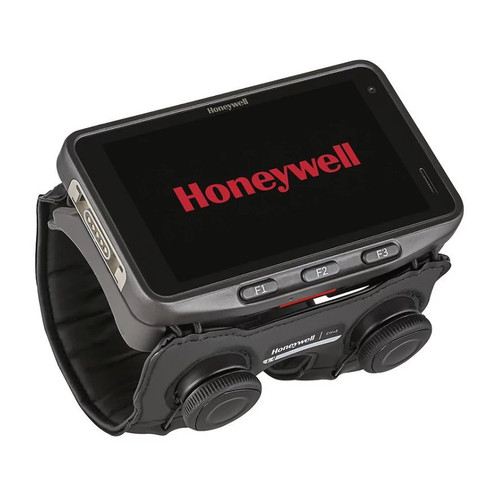
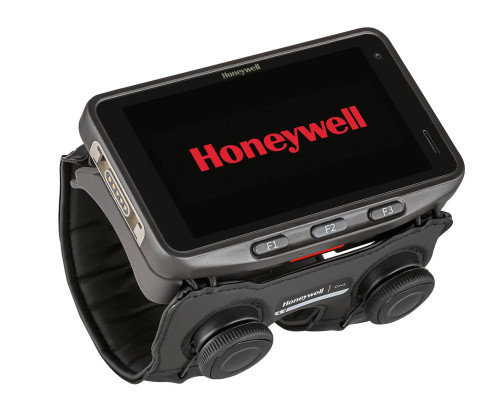
The CW45-X0N-BND10SG uses a wrist band mount, positioning the 4.7-inch HD Gorilla Glass 5 display and 13 MP side camera directly on the wrist. This placement keeps the screen in the operator's natural line of sight during picking and scanning tasks and is typically preferred in environments where workers need frequent glances at the display without raising their forearm.
The CW45-X0N-AND10SG uses an arm mount, securing the same 133 x 86 x 14 mm, 263 g unit to the forearm rather than the wrist. Arm mounting distributes the device weight over a larger surface area, which can reduce fatigue during extended shifts, and positions the unit higher on the limb — often preferred in order fulfillment or conveyor-feed environments where wrist articulation must remain fully unobstructed.
Both mounts deliver the same hands-free operation. Mount choice should be driven by task cadence, glove compatibility, and site ergonomic assessments rather than any hardware performance difference, since all other specifications are identical.
Do both models offer the same processing power, wireless performance, and data-capture capabilities for real-time WMS integration?
Both SKUs are built on the Qualcomm QCS4290 Octa-Core 2.0 GHz processor paired with 6 GB RAM and 64 GB Flash storage, expandable via microSD. This configuration is identical across both models; no specification distinguishes compute performance between them.
Wireless connectivity is also identical: WiFi 6 (802.11 a/b/g/n/ac/ax), Bluetooth 5.1 BLE, NFC, and USB are present on both units. WiFi 6 support enables high-throughput, low-latency connections in dense RF environments typical of large distribution centers.
Data capture hardware is the same on both: an 8 MP front camera and a 13 MP side-mounted camera, with day/night capability noted in the specs for both. NFC is included on both models. No specification indicates any scanner engine difference between the two SKUs.
Are both models equally ruggedized for the same temperature ranges, dust, and moisture exposure?
Both the BND10SG and AND10SG carry IP65/IP67 dual ratings, providing full dust ingress protection and resistance to low-pressure water jets (IP65) as well as temporary immersion up to 1 meter (IP67). Neither model has a specified MIL-STD drop rating in the provided specs for Product A; Product B references MIL-STD-810H in its spec data, though the structured spec field for Product A does not list this standard — buyers requiring confirmed MIL-STD-810H compliance should verify against the BND10SG datasheet at /content/product-datasheets/CW45-X0N-BND10SG.pdf.
Operating temperature is -20 to 50 °C (-4 to 122 °F) on both units, and storage temperature is -30 to 70 °C (-22 to 158 °F) on both. The 4.7-inch Gorilla Glass 5 display provides identical impact and scratch resistance on both models.
Weight is 263 g (9.3 oz) with standard battery on both, and the 3400 mAh Li-Ion battery is described as hot-swappable in both product records, supporting continuous operation during shift changes.
Which should you choose: the CW45-X0N-BND10SG or the CW45-X0N-AND10SG?
Our take: The CW45-X0N-BND10SG is the stronger choice when workers need the display positioned at wrist level for rapid, low-arm-movement screen checks, while the CW45-X0N-AND10SG is the stronger choice when forearm mounting reduces wrist fatigue or keeps the wrist joint completely free. Beyond mount type, the two models are specification-identical: both run the Qualcomm QCS4290 Octa-Core 2.0 GHz with 6 GB RAM, both carry IP65/IP67 ratings, and both deliver WiFi 6 with Bluetooth 5.1 BLE. One noted asymmetry: MIL-STD-810H is referenced in the AND10SG spec data but is absent from the BND10SG structured specs — verify the BND10SG datasheet before specifying either unit in a contract requiring that standard. Select the BND10SG for wrist-worn deployments and the AND10SG for forearm-worn deployments; all other hardware, software, and environmental parameters are shared.
Side-by-Side Comparison
Spec-for-spec, from manufacturer data.
| Specification | Honeywell CW45-X0N-BND10SG | Honeywell CW45-X0N-AND10SG |
|---|---|---|
| Series / Family | CW45 | CW45 |
| Part Number | CW45-X0N-BND10SG | CW45-X0N-AND10SG |
| Mount Type | Wrist Band | Arm Mount |
| Processor | Qualcomm QCS4290 Octa-Core 2.0 GHz | Qualcomm QCS4290 Octa-Core 2.0 GHz |
| RAM | 6 GB | 6 GB |
| Storage | 64 GB Flash + microSD | 64 GB Flash + microSD |
| Display | 4.7 in HD Gorilla Glass 5 | 4.7 in HD Gorilla Glass 5 |
| Operating System | Android (non-GMS) | Android (non-GMS) |
| IP Rating | IP65/IP67 | IP65/IP67 |
| MIL-STD | — | MIL-STD-810H (per spec data) |
| Operating Temperature | -20 to 50 °C (-4 to 122 °F) | -20 to 50 °C (-4 to 122 °F) |
| Storage Temperature | -30 to 70 °C (-22 to 158 °F) | -30 to 70 °C (-22 to 158 °F) |
| Wi-Fi | WiFi 6 (802.11 a/b/g/n/ac/ax) | WiFi 6 (802.11 a/b/g/n/ac/ax) |
| Bluetooth | 5.1 BLE | 5.1 BLE |
| Cameras | 8 MP front, 13 MP side | 8 MP front, 13 MP side |
| Battery | 3400 mAh Li-Ion (hot-swappable) | 3400 mAh Li-Ion (hot-swappable) |
| Weight | 263 g (9.3 oz) with standard battery | 263 g (9.3 oz) with standard battery |
| Dimensions | 133 x 86 x 14 mm | 133 x 86 x 14 mm |
| NFC | Included | Included |
| Approvals | FCC | FCC |
Frequently Asked Questions
Which should you choose: the CW45-X0N-BND10SG or the CW45-X0N-AND10SG?
The CW45-X0N-BND10SG is the stronger choice when workers need the display positioned at wrist level for rapid, low-arm-movement screen checks, while the CW45-X0N-AND10SG is the stronger choice when forearm mounting reduces wrist fatigue or keeps the wrist joint completely free. Beyond mount type, the two models are specification-identical: both run the Qualcomm QCS4290 Octa-Core 2.0 GHz with 6 GB RAM, both carry IP65/IP67 ratings, and both deliver WiFi 6 with Bluetooth 5.1 BLE. One noted asymmetry: MIL-STD-810H is referenced in the AND10SG spec data but is absent from the BND10SG structured specs — verify the BND10SG datasheet before specifying either unit in a contract requiring that standard. Select the BND10SG for wrist-worn deployments and the AND10SG for forearm-worn deployments; all other hardware, software, and environmental parameters are shared.
Is the CW45-X0N-BND10SG or CW45-X0N-AND10SG better for high-volume warehouse picking shifts lasting 8+ hours?
Based on the provided specs, the core hardware is identical on both — same 263 g weight, same 3400 mAh hot-swappable battery, and same processor and display. The ergonomic difference is mount placement: the AND10SG arm mount distributes the device over the forearm, which may reduce localized wrist fatigue over long shifts, while the BND10SG wrist band keeps the screen closer to the hand. The better choice depends on your workers' tasks and glove requirements, not on any hardware performance difference between the two SKUs.
Can I mix CW45-X0N-BND10SG and CW45-X0N-AND10SG units in the same deployment managed by the same MDM or WMS?
Yes — both models run Android (non-GMS), share the same Qualcomm QCS4290 platform, 6 GB RAM, 64 GB storage, WiFi 6, Bluetooth 5.1 BLE, and NFC. No spec difference affects software compatibility or MDM enrollment. The only difference is the physical mount accessory, so both SKUs should enroll identically in the same management environment.
Does either model support cellular connectivity for use outside a Wi-Fi-covered warehouse?
Neither the CW45-X0N-BND10SG nor the CW45-X0N-AND10SG lists cellular (LTE/5G) in the provided specifications. Connectivity specs for both are limited to WiFi 6 (802.11 a/b/g/n/ac/ax), Bluetooth 5.1 BLE, NFC, and USB. If cellular connectivity is required, consult Honeywell's CW45 product family for cellular-equipped variants, as this spec is not present in either SKU reviewed here.
More Mobile Computer Comparisons
- Honeywell CW45-X0N-AND10XG vs Unitech HT730-LJ6122BG
- Honeywell CW45-X0N-AND10XG vs Unitech HT730-LJ6142BG
- Honeywell CW45-X0N-AND10XG vs Unitech HT330-QA62TM3G-Z3
- Honeywell CW45-X0N-AND10XG vs Zebra TC2205-0G1250SS-US
- Honeywell CW45-X0N-AND10XG vs Honeywell CW45-X0N-AND10SG
- Honeywell CW45-X0N-AND10XG vs Honeywell CW45-X0N-BND10XG
Mobile Computer Buying Guides
Get a Second Opinion on Your Camera Choice
Share your site layout, coverage goals, and budget. Our team will validate the camera selection, flag anything we would change, and recommend products that match the use case.