
Honeywell CW45-X0N-AND10SG vs Unitech HT330-QA62TM3G-Z3: Specification Comparison
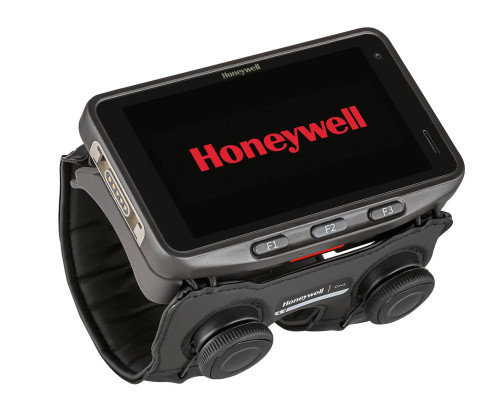
Both the Honeywell CW45-X0N-AND10SG and the Unitech HT330-QA62TM3G-Z3 are wearable mobile computing devices targeting hands-free warehouse, logistics, and field operations workflows. The CW45 is a full wearable mobile computer with an integrated display, onboard processing, and Wi-Fi/Bluetooth connectivity, while the HT330 is a wearable Bluetooth scanner terminal that pairs to a host device. Despite differing architectures, both occupy the wearable data-capture segment and would be cross-shopped by operations buyers evaluating hands-free picking and scanning solutions.
In This Guide
- Which device delivers more onboard processing power and platform capability?
- Which device offers broader wireless connectivity and scanning capability?
- Which device is built for harsher environments and longer shift operation?
- Which should you choose: the CW45-X0N-AND10SG or the HT330-QA62TM3G-Z3?
- Side-by-Side Specs
- FAQ
Which device delivers more onboard processing power and platform capability?
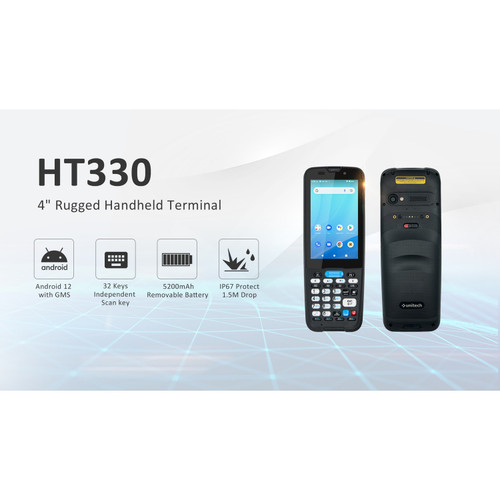
The Honeywell CW45-X0N-AND10SG is a standalone mobile computer powered by a Qualcomm QCS4290 Octa-Core 2.0 GHz processor with 6 GB RAM and 64 GB internal flash storage, running Android (non-GMS). It operates independently of any host device, running WMS applications, Wi-Fi communication, and barcode capture natively on-unit. The Unitech HT330-QA62TM3G-Z3 specifies a lower-tier platform: 3 GB RAM, 32 GB internal flash, and Android 12. The HT330 also includes a 32-key physical keypad and a 4-inch touchscreen, positioning it as a more traditional terminal form factor.
For deployments requiring on-device application execution, the CW45's 6 GB RAM versus the HT330's 3 GB RAM and its higher-grade octa-core processor represent a meaningful difference. The HT330's Android 12 OS version is explicitly stated; the CW45's Android version is not specified beyond 'Android (non-GMS).' Buyers deploying GMS-dependent applications should note the CW45's non-GMS designation explicitly.
Which device offers broader wireless connectivity and scanning capability?
The Honeywell CW45-X0N-AND10SG supports Wi-Fi 6 (802.11 a/b/g/n/ac/ax), Bluetooth 5.1 BLE, USB, and NFC. Its Wi-Fi 6 support is significant for high-density warehouse RF environments where channel congestion and throughput matter. It also includes an 8 MP front camera and a 13 MP side-mounted camera for barcode scanning, with night vision noted in the product bullets.
The Unitech HT330-QA62TM3G-Z3 specifies Bluetooth 5.0 as its primary wireless link, with 2.4 GHz and 5 GHz Wi-Fi and GPS also listed under wireless specifications. Its scanner type is described as a wearable handheld terminal. NFC is not specified for the HT330. The CW45 holds a clear advantage in wireless generation (Wi-Fi 6 vs. Wi-Fi not generationally specified on HT330), Bluetooth version (5.1 vs. 5.0), and NFC inclusion. GPS is listed for the HT330 but not specified for the CW45.
Which device is built for harsher environments and longer shift operation?
The Honeywell CW45-X0N-AND10SG carries dual IP65/IP67 ratings and meets MIL-STD-810H, with an operating temperature range of -20 to 50°C and storage range of -30 to 70°C. Its display uses Corning Gorilla Glass 5. Battery capacity is 3,400 mAh Li-Ion, noted as hot-swappable. The device weighs 263 g with the standard battery.
The Unitech HT330-QA62TM3G-Z3 specifies IP67 and a drop specification of 1.5 m to concrete. Battery capacity is 5,200 mAh Li-Ion removable, with a stated 20-hour operating runtime. Operating temperature range is not specified in the provided data. MIL-STD rating is not specified for the HT330.
On raw battery capacity, the HT330's 5,200 mAh is substantially larger than the CW45's 3,400 mAh, and its 20-hour runtime claim supports multi-shift use without a swap. The CW45 offsets this with a hot-swap capability (per product bullets) and a MIL-STD-810H rating not present on the HT330. Both carry IP67; the CW45 adds IP65.
Which should you choose: the CW45-X0N-AND10SG or the HT330-QA62TM3G-Z3?
Our take: The CW45-X0N-AND10SG is the stronger choice when the deployment requires a fully autonomous wearable computer running on-device WMS or enterprise applications, high-density Wi-Fi 6 infrastructure, and broad environmental certifications. Its Qualcomm Octa-Core 2.0 GHz processor with 6 GB RAM versus the HT330's 3 GB RAM provides headroom for complex application stacks; its Wi-Fi 6 support outclasses the HT330's unspecified Wi-Fi generation in congested RF warehouses; and its dual IP65/IP67 plus MIL-STD-810H rating adds a ruggedness certification the HT330 does not list. The HT330-QA62TM3G-Z3 is the more practical choice for operations prioritizing shift-long battery endurance—its 5,200 mAh battery with a stated 20-hour runtime significantly exceeds the CW45's 3,400 mAh—and for environments where a physical 32-key keypad improves operator accuracy. Buyers should also note the HT330 includes GPS (not specified on the CW45) and the CW45 is non-GMS Android, which may restrict app availability.
Side-by-Side Comparison
Spec-for-spec, from manufacturer data.
| Specification | Honeywell CW45-X0N-AND10SG | Unitech HT330-QA62TM3G-Z3 |
|---|---|---|
| Device Class | Wearable Mobile Computer | Wearable Bluetooth Scanner / Terminal |
| Processor | Qualcomm QCS4290 Octa-Core 2.0 GHz | — |
| RAM | 6 GB | 3 GB |
| Internal Storage | 64 GB Flash | 32 GB Flash |
| Expandable Storage | microSD | — |
| Operating System | Android (non-GMS) | Android 12 |
| Display | 4.7-inch HD, Corning Gorilla Glass 5 | 4-inch touchscreen |
| Keypad | — | 32-key physical keypad |
| Wi-Fi | Wi-Fi 6 (802.11 a/b/g/n/ac/ax) | 2.4 GHz + 5 GHz (standard not specified) |
| Bluetooth | 5.1 BLE | 5.0 |
| NFC | Yes | — |
| GPS | — | Yes |
| Camera | 8 MP front; 13 MP side | — |
| IP Rating | IP65 / IP67 | IP67 |
| Drop Specification | — | 1.5 m to concrete |
| MIL-STD | MIL-STD-810H | — |
| Battery Capacity | 3,400 mAh Li-Ion (hot-swappable) | 5,200 mAh Li-Ion (removable) |
| Stated Battery Runtime | — | 20 hours |
| Operating Temperature | -20 to 50°C (-4 to 122°F) | — |
| Storage Temperature | -30 to 70°C (-22 to 158°F) | — |
| Weight | 263 g (9.3 oz) with standard battery | — |
| Mount / Form Factor | Arm mount | Strap or belt-attached wearable |
| USB Connectivity | Yes | — |
| Approvals | FCC | Manufacturer Warranty noted; regulatory approvals not specified |
Frequently Asked Questions
Which should you choose: the CW45-X0N-AND10SG or the HT330-QA62TM3G-Z3?
The CW45-X0N-AND10SG is the stronger choice when the deployment requires a fully autonomous wearable computer running on-device WMS or enterprise applications, high-density Wi-Fi 6 infrastructure, and broad environmental certifications. Its Qualcomm Octa-Core 2.0 GHz processor with 6 GB RAM versus the HT330's 3 GB RAM provides headroom for complex application stacks; its Wi-Fi 6 support outclasses the HT330's unspecified Wi-Fi generation in congested RF warehouses; and its dual IP65/IP67 plus MIL-STD-810H rating adds a ruggedness certification the HT330 does not list. The HT330-QA62TM3G-Z3 is the more practical choice for operations prioritizing shift-long battery endurance—its 5,200 mAh battery with a stated 20-hour runtime significantly exceeds the CW45's 3,400 mAh—and for environments where a physical 32-key keypad improves operator accuracy. Buyers should also note the HT330 includes GPS (not specified on the CW45) and the CW45 is non-GMS Android, which may restrict app availability.
Is the Honeywell CW45-X0N-AND10SG or the Unitech HT330-QA62TM3G-Z3 better for all-day single-shift use without battery changes?
Based on stated specifications, the Unitech HT330-QA62TM3G-Z3 has the advantage: its 5,200 mAh battery with a specified 20-hour operating runtime is substantially larger than the Honeywell CW45's 3,400 mAh battery, for which no runtime figure is provided in the available specs. The CW45 does note hot-swap capability, which can offset a smaller pack if spare batteries are staged, but raw capacity favors the HT330.
Can the Honeywell CW45-X0N-AND10SG run our WMS app independently, or does it need a paired phone like the Unitech HT330?
The CW45-X0N-AND10SG is a standalone mobile computer with a Qualcomm Octa-Core processor, 6 GB RAM, 64 GB storage, and an onboard display—it runs applications independently without a paired host device. The HT330-QA62TM3G-Z3 also specifies Android 12, 3 GB RAM, and 32 GB storage with a 4-inch touchscreen, indicating it too can run applications on-device; however, its product classification as a 'Wearable Bluetooth Scanner' and its Bluetooth-primary connectivity profile suggest it is commonly paired with a host. Buyers should verify their specific WMS client requirements against each device's Android version and GMS status—the CW45 is explicitly non-GMS.
Which device is more rugged—the Honeywell CW45-X0N-AND10SG or the Unitech HT330-QA62TM3G-Z3?
Both carry IP67 ratings. The Honeywell CW45-X0N-AND10SG additionally holds IP65 and meets MIL-STD-810H, a standardized U.S. military environmental test protocol covering shock, vibration, temperature, and humidity. It also uses Corning Gorilla Glass 5 on the display. The Unitech HT330-QA62TM3G-Z3 specifies a 1.5 m drop-to-concrete resistance but does not list a MIL-STD rating in the provided specifications. For deployments with documented MIL-STD compliance requirements, the CW45 is the verifiable choice.
More Mobile Computer Comparisons
- Honeywell CW45-X0N-AND10XG vs Unitech HT730-LJ6122BG
- Honeywell CW45-X0N-AND10XG vs Unitech HT730-LJ6142BG
- Honeywell CW45-X0N-AND10XG vs Unitech HT330-QA62TM3G-Z3
- Honeywell CW45-X0N-AND10XG vs Zebra TC2205-0G1250SS-US
- Honeywell CW45-X0N-AND10XG vs Honeywell CW45-X0N-AND10SG
- Honeywell CW45-X0N-AND10XG vs Honeywell CW45-X0N-BND10XG
Mobile Computer Buying Guides
Get a Second Opinion on Your Camera Choice
Share your site layout, coverage goals, and budget. Our team will validate the camera selection, flag anything we would change, and recommend products that match the use case.